by Chris Fremantle, Stabbers McGillicutty, Julie Hernandez, Erika Svendsen, David Maddox, Michelle Johnson, Cara Broadley Glasgow, New York, Amsterdam, New York, New York, New York, Glasgow
—
In the context of the increased complexity of socio-ecological challenges and the growing involvement of arts and culture in climate action (increasingly framed as culture-based climate action), we need to be able to analyse and understand the dynamics of transdisciplinary work involving artists. Reports of artists’ collaborations with natural resource managers and researchers tend to take the form of case studies or vignettes, substantiated by descriptions of activities and artworks. The best of these capture what “made a difference” and what the benefits were to those involved. Patterns, such as the importance of transdisciplinary approaches, can be highlighted by grouping case studies. However, the specificity of the interactions and outcomes that make for a great case study can also make it difficult to understand how to apply the lessons elsewhere.
It is because of this challenge that Theories of Change have become a tool for programmes, whether in international development, health, or environment, to articulate underlying logics. Theories of Change draw out assumptions and provide a means to interrogate how an action might be linked to a particular outcome, which in turn serves the overarching mission.
The NaturePLACE Collaborative Arts Program team, a collaboration between the USDA Forest Service and non-profit The Nature of Cities, along with state and municipal partners, identified that a Theory of Change could be a useful asset. Developing a Theory of Change would support engaging with potential partners and funders, as well as underpin evaluation. Over the past 18 months, the team has workshopped internally and engaged with agency teams, alumni, and current participating artists.
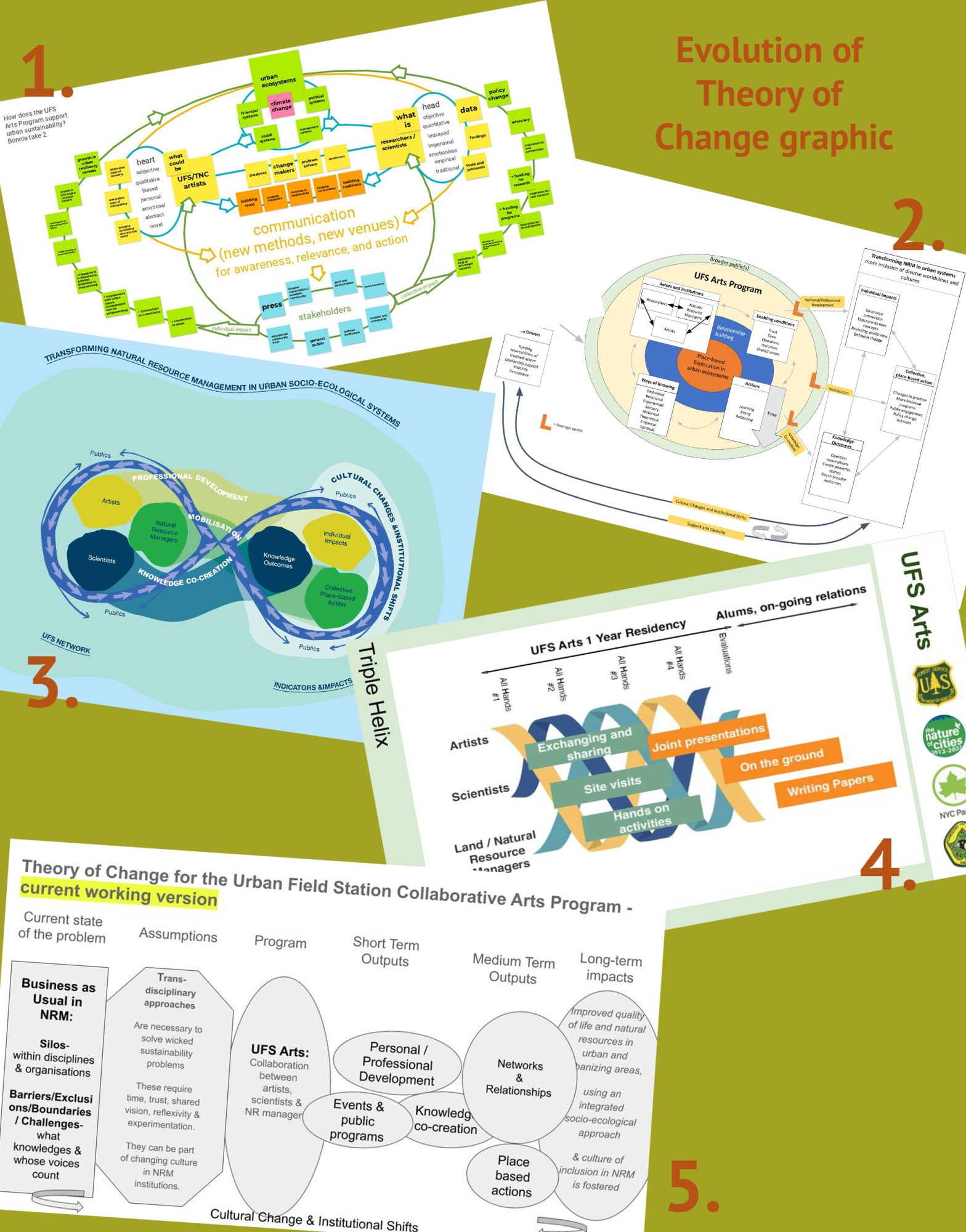
Fig. 1: NaturePLACE Simplified Theory of Change (Graphic Design: Cara Broadley)
The NaturePLACE Theory of Change
The process of developing a Theory of Change enabled the team to identify the main outputs and impacts (indicated in the diagram as short, medium, and long term) or “leverage points” of the program, as:
The artists, researchers, and natural resource managers involved in the program report on personal and professional development resulting from interacting in cohorts.[1]
New knowledge and understanding are co-created between artists, scientists, and natural resource managers, resulting in outputs including presentations, public programs, blogs, papers, and artworks.
The Program mobilises new activity and practices in specific places through facilitating collaborations between artists, scientists, and natural resource managers.
It also became apparent through this process that there was a fourth ‘leverage point’ which is the potential of the program to leverage cultural changes and institutional shifts to effectively address disciplinary silos and organisational barriers at the structural level (indicated in the diagram by “Sustaining factors” and “Enabling conditions for transdisciplinary action”). Cultural change and institutional shifts are achieved through the “feedback” from individuals’ development, co-created new knowledge, and the mobilization of on-the-ground activity.
Another key factor that emerged was the importance of time (indicated in the diagram by the triple helix), literally in the sense of the year-long duration of the residency as well as continued relationships during alumni status, but also in terms of time to find the outcomes and products that all participants value, time to learn and grow, time to do creative problem solving.
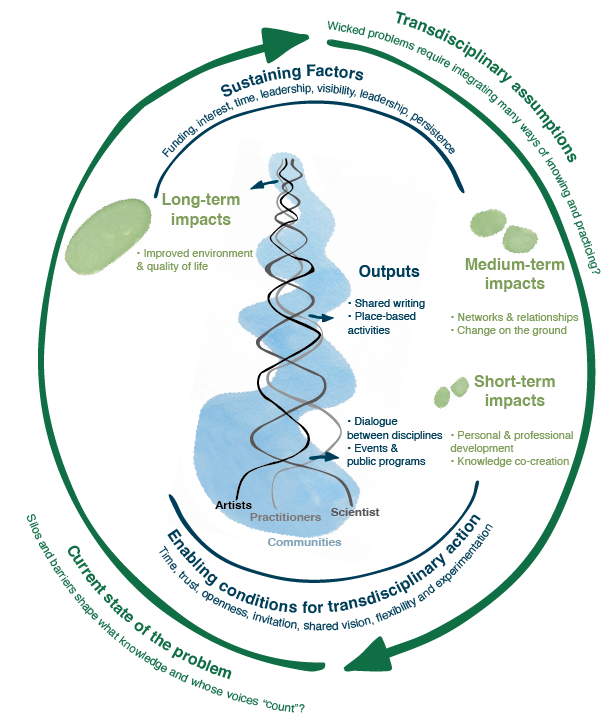
To develop the Theory of Change, the team started with a Fuzzy Cognitive Modelling exercise led by Forest Service Interdisciplinary Scientist Michelle Johnson. This exercise enabled all the core team members to co-create a visualisation of the dynamics of the Program. This generated two key aspects: firstly, that the problem was complex and not understood as linear by the team, and secondly, that there were “leverage points” in the system. By leverage points, we mean activities that in themselves might involve small changes but can have wider impacts. This resulted in a graphic that focused on complexity and helped highlight the assumptions.
Visual development is an important aspect of this work because one of the defining characteristics of Theories of Change is that they have a graphic representation. The usefulness of the Theory of Change is dependent on the visualisation. Visualisations are a useful tool for explaining complex programs and processes that drive change. Based on searches, the form of graphics in Theories of Change has been subject to no or limited scrutiny from a design research perspective. The usefulness of visual metaphors such as linear models, circular models, infinity loops, and triple helix devices has not been subject to consideration. The team brought Dr Cara Broadley of the Glasgow School of Art onto the project to co-develop the visual diagram above through an iterative process.
Fig 2: Various stages of development of the NaturePLACE Theory of Change: 1. Initial conceptualisation from Fuzzy Cognitive Modelling exercise; 2. Theory of Change following team revision; 3. Version using infinity loop as a visual metaphor ― strong sense of feedback; 4. Version using triple helix as a visual metaphor ― strong braiding of disciplinary perspectives; 5. Simplification following workshop ― lacks leverage points and time dimension.
What is NaturePLACE?
The NaturePLACE Collaborative Arts Program) has been involving artists in the USDA Forest Service’s Urban Field Station Network (UFS Network) since 2016, initially in New York City and later in other Field Stations (e.g., Baltimore, Springfield, Denver, Puerto Rico) as well as with other sites of long-term ecological research and practice (e.g., Honolulu, Hawaii; Santo Domingo, Dominican Republic).
The NaturePLACE program offers a one-year affiliation with agency partners in a location and a stipend in exchange for delivering a public program (an event, a workshop, a talk, a guided tour, a training session). Artists are able to use the Field Station and partner resources, participate in events such as regular Stewardship Salons, connect with scientists and natural resource managers, and access datasets and field sites. Projects can be on the table from the start or emerge during the year ― they often require additional resources (funding, materials, expertise, networks) beyond the stipend, and usually relationships and projects extend beyond the first year of engagement. It is useful to understand the program as the initial phase, enabling an artist to develop an idea or to engage with natural resources management and research as a “creative problem-solver”, finding the important issue on which they can collaborate. The NaturePLACE website documents the program, links to stories in various media, including with partner organisation The Nature of Cities. Papers focusing on case studies and analysing evaluations are published or under review.
Why a Theory of Change?
Generally speaking, Theories of Change are articulations of interventions. The interventions are aimed at addressing issues with “business as usual” (indicated in the diagram by “current state of the problem”). Natural resource management is faced with wicked problems ― problems with no single agreed definition, no single solution or point where it is solved, and multiple stakeholders with differing perspectives. One of the key challenges in natural resource management are silos, whether those are the silos of organisations focused on their specific missions and objectives, or the silos of disciplines. All of these create fragmentation where places and people are framed in terms of specific issues and methods. If silos are one challenge, then the other is barriers, resulting in some people being involved in decision-making and others less so; some people’s expertise, worldview, or way of knowing counts for more than others. Different perspectives don’t get heard. It raises issues with procedural and recognitional justice. Consistent feedback from researchers and natural resource managers highlights the need for better, two-way engagement.
The UFS Network is in itself intended to address these challenges. Its mission is to “improve quality of life and natural resources in urban and urbanizing areas, using an integrated socio-ecological approach”. The NaturePLACE Program contributes to this mission by facilitating transdisciplinary collaboration between artists, scientists, and natural resource managers. NaturePLACE curates events and public programs that explore ideas emerging from these collaborations with the overall aim of building understanding and engagement in social-ecological systems through the arts. We have in this process the bones of a Theory of Change.
Theories of Change are frequently developed starting with the mission, in this case, the UFS Network’s mission to improve quality of life through integrated socio-ecological approaches. The challenge with “business as usual”, in this case, siloes and barriers, provides the context for the intervention. The program activities and the expected outcomes should all be clearly directed to the overall mission. The NaturePLACE activities of “facilitating collaborations between artists, scientists and natural resource managers” and “curating events and public programs” supports the mission of the UFS Network (the three strands of the triple helix embedded in the wider field become increasingly tightly engaged as time passes, indicating that the collaboration can strengthen over time, generating different outputs and impacts).
Theories of Change have a second key function ― to articulate assumptions (indicated in the diagram by “Transdisciplinary assumptions”). There are two interlinked underpinning assumptions to the NaturePLACE Program. Firstly, that artists can be stimuli to transdisciplinarity, and secondly, that transdisciplinarity is the best way to develop “integrated socio-ecological approaches”. The assumptions in a ToC speak to the challenges of “business as usual”.
Why Artists?
The first assumption is that artists are specifically relevant to natural resource management and the wicked problems it faces. Artists focusing on social and ecological issues tend to take co-creative approaches, bringing different ways of working together. Artists might also approach circumstances without a hypothesis, i.e., without a preconceived idea of what might be useful. Even artists who might start with a project may actually be using this as a way of engaging people, rather than a proposed solution. The project may be “diagnostic” rather than “the answer”. What all these points add up to is that artists can be effective boundary spanners, interacting between scientists, natural resource managers, and inhabitants, bringing creative problem solving approaches to this nexus.
Natural resource management, often working on intergenerational timescales, needs both consistency (what “business as usual” does deliver) and also to involve people in different ways and at different stages, to value different ways of knowing, and to be open to emergence. Artists are perhaps a proxy for this ― they come into natural resource management in different ways and at different points in long-term processes. Artists bring different ways of knowing, but also the ability to imagine and shape value and meaning. Artists imagine and experiment, generating novel ways of making sense.
Why Transdisciplinarity?
Transdisciplinarity is one of a cluster of terms that address the way knowledge is produced. Disciplines are not the only ways that knowledge is produced, but they are a focus for the development of knowledge across the natural and social sciences, medicine, computing, as well as humanities. However, disciplines can also become silos. The proliferation of terms (multi-, inter-, trans-, cross-disciplinary ) is a reflection of the need to work in a range of different ways, not solely within disciplines. To understand the role of transdisciplinary approaches, it is useful to relate them to other varieties:
disciplinary approaches ― disciplines within their own methods, forms of verification, and outlets (and intra-disciplinary refers to people of the same discipline collaborating within their discipline);
multi-disciplinary approaches ― which are groupings of disciplines working together, such as are found in healthcare, where disciplines maintain their methods and frameworks;
interdisciplinary approaches ― disciplines sharing, exchanging, and hybridising ― where methods and frameworks are integrated. This sometimes ends up with new disciplines such as biochemistry or nuclear medicine, but does require “compatibility”, shared assumptions about verifiability;
transdisciplinary approaches are approaches that put complex problems and social relevance foremost ― usually involve varied ways of knowing, some of which involve disciplinary knowledge and some of which might be vernacular or place-based. These can have incommensurable forms of verification, addressing different levels of reality, such as the scientific and the spiritual. Transdisciplinary work usually involves people who are living with the problem collaborating with social and natural sciences, as well as arts and humanities.
Transdisciplinary approaches are therefore not better than any of the others, but they are suited to complex socio-ecological contexts where residents have knowledge and ways of life embedded in places, stakeholders have differing agendas, and problems don’t have single solutions. Transdisciplinary approaches do assume epistemological equity ― starting from an assumption that everyone’s ways of knowing are equally valid, but also need to come into relationships with other ways of knowing, with all the attendant and inevitable negotiations. Disciplinary expertise needs to recognise and value organisational expertise, and both need to acknowledge the expertise of Indigenous and other place-based forms of knowledge. Here, the challenge of procedural justice comes in ― transdisciplinary approaches need to pay attention to power relations and enact equity.
Why do Transdisciplinary projects go wrong?
David Maddox, founder of The Nature of Cities, based on years of experience as a scientist, musician, and theatre-maker, has used a Theory of Change approach to ask some key questions focused on the difference between intra-disciplinary collaboration (i.e., collaboration between people in the same discipline) and transdisciplinary collaboration. “What are the relative strengths of different pathways to addressing wicked problems?” David’s thinking maps traditional and co-creative approaches, taking account of routes to mainstreaming as well as direct problem-solving. “Can engagement in transdisciplinary projects feed back into intra-disciplinary work?” Or as he puts it more directly, “Are you different when you go back to your desk?”
There is a non-exhaustive list of characteristics of what might make a transdisciplinary project more likely to succeed:
Trust
Shared vision
Varied methods
Transdisciplinarity from start to finish
Mixed working groups
Groups small enough to think radically
Enough time to learn and grow not just be tactical
Outcomes and products that all participants value
Integrated storytelling
Buy-in from leadership
David Maddox’s Theory of Change is more tactical and informs NaturePLACE’s Theory of Change. The characteristics needed for success are critical and have been carried over into the NaturePLACE effort.
Conclusion
A Theory of Change is a way of understanding an intervention, but the circumstances will change, and the process will need to adapt. A Theory of Change doesn’t solve a problem, but it can help to understand what sorts of activities are useful. On one level, a Theory of Change is relative to an intervention and might be specific to a team at a point in time.
The potential wider relevance becomes more apparent if NaturePLACE is seen as one of a type of program aiming at supporting the wider integration of artists and designers into long-term ecological research processes. The Theory of Change clarifies that NaturePLACE is focused on personal/professional development and building capacities to collaborate across artists, natural resource managers, and researchers. It provides a context for co-creation of knowledge manifest in exhibitions, essays, and articles as well as artworks. And it supports mobilisation of specific initiatives “on the ground”.
Any Theory of Change is, by definition, conceptual and aspirational. It needs to be explored, questioned, proved and improved, and the challenge of silos remains because they are not in themselves bad. Silos, whether disciplines or organizations, are important because they offer consistency. If a problem is “wicked” (has no single definition, solution, or point where it is solved), yet our approach needs to still be driven by a mission or vision, then our approach needs to have multiple points of entry, support different methods of working, and be open to emerging outcomes. The NaturePLACE Program builds the network of competence to collaborate and introduce imagination and creative problem solving. Exploring how this Theory of Change might relate to other long-term ecological research programs that work with artists is the next step we envisage.
Chris Fremantle, Stabbers McGillicutty, Julie Hernandez, Erika Svendsen, David Maddox, Michelle Johnson, Cara Broadley Glasgow, New York, Amsterdam, New York, New York, New York, Glasgow
The authors are very grateful to the artists and agency partners for their engagement and input, especially Bonnie Ralston. Chris Fremantle is very grateful to his wife Gill Fremantle for her feedback.
[1] These are captured through annual program evaluations, which use a “knowledge exchange” focus.
Murals are everywhere now—on schoolyards and salt boxes, buses and armories, waterfronts and wildlife refuges. They are declarations made in public, at the scale of daily life. And increasingly, they’re asked to do more than beautify: to cool streets, catalyze coalitions, shift behaviors, and tell a truer story about who “we” are and what futures we’re willing to work for. This roundtable brings together artists, planners, scientists, and civic leaders living inside that question: how can murals be catalysts for climate and community action?
A first theme is the power—and responsibility—of beauty. Kwadwo Adae argues that craft matters: skillful work earns public trust and ignites what he calls a “Contagious Encore Effect,” where one mural begets another and, ideally, trees and other green infrastructure follow. Jane Golden shows how Philadelphia’s practice has evolved from one-off neighborhood works to system-level interventions that literally move people toward greener choices. Here, beauty isn’t a frill; it’s an instrument that invites attention, curiosity, and pride—the preconditions for collective action.
Second, murals as connective tissue. Mark Johnson and Kilia Llano describe murals as living social instruments rather than static images—civic rituals that transform spectators into co-authors. Annie Lin calls mural-making an “OG icebreaker” that convenes officials, residents, businesses, and youth—rooms where climate science alone rarely gets a hearing. In New Haven, that energy has coalesced into “cool murals” blending climate data, reflective paints, and community storytelling—art that doesn’t just symbolize resilience but practices it.
Third, the medium is not neutral. Erika Svendsen foregrounds material choices: cool pigments that reflect heat, mineral binders that root us in earth, coatings that scrub pollution. If the message is in the medium, then the wall can become micro-infrastructure for adaptation. This raises practical questions that recur across essays: How do we specify materials for environmental benefit and durability? Who maintains them over time? How do we measure impact rigorously yet legibly?
Fourth, limits and unintended consequences. Lisa Lee and Tara von Schmidt insist that murals are not policy, nor are they filtration systems, safer streets, or affordable housing. Without links to tangible next steps—volunteering, advocacy, design changes, budget shifts—murals risk becoming decorative conscience. Tara urges vigilance when projects stand in for, rather than support, real change, especially where community voice is light and institutional branding heavy. Lisa’s intersection murals—useful for visibility and safety but subject to fading and regulations—remind us that design lives inside governance.
Fifth, place specificity. Mike Houck’s Portland story shows how a single heron could pull people’s gaze to a neglected wetland and mobilize policy attention toward an urban refuge. Shayna Rose’s Baltimore salt boxes flip humble winter infrastructure into a citywide canvas, seeding a different imagination for streets. In New Haven, Thermal Reflections and Take the Risk to Cool Down anchor conversations about heat, history, and apprenticeship. These are not generic backdrops; they are ecologies of memory, power, and possibility. A catalytic mural reads the room—and the watershed.
Finally, authorship and trust. Michael DeAngelo urges prioritizing excellence in the physical world of public art amid a rush toward disembodied, machine-generated imagery. His point isn’t tool panic; it’s about accountability and craft. If murals are to help us reattach to place, they must be anchored in human skill and lived experience.
From these threads arise the open questions we hope readers will carry forward:
What counts as impact, and on what timescale—surface temperatures, transit ridership, canopy growth, or the slower metrics of belonging and civic capacity?
Where is the line between catalyst and cover, and what safeguards—shared governance, community commissioning, maintenance funds—keep murals from substituting for policy?
How can materials, fabrication, and siting maximize climate benefit while minimizing environmental cost, and what standards help cities scale “cool murals” responsibly?
Who decides the story on the wall, and how do authorship, apprenticeship, and compensation reflect local knowledge and histories?
If a mural asks “What will you do?”, what proximate, doable actions are available within a five-minute walk of the wall?
Why does this matter now? Because climate change is a hyperlocal, uneven present, and the work of transition won’t happen in spreadsheets alone. It will happen where people can see themselves, bring their kids, meet neighbors, argue a little, learn a little, and leave with a task for tomorrow. Murals excel at staging that kind of public life. Our contributors aren’t offering cure-alls; they’re offering evidence and caution, technique and poetry. They ask us to raise the bar on craft, embed art in coalitions, mind the chemistry, budget for maintenance, measure what matters, and insist that every wall points past itself to a living network of people, policies, and places. More and more, art and science are working together — in comics, murals, residencies, such as TNOC’s work with NetworkNature and NaturePLACE — to mainstream important messages in sectors
beyond art and science.
In short: make beauty consequential; turn spectators into stewards; align materials with missions; refuse fig leaves; choose sites that teach; and bind images to invitations—clear steps that let the story on the wall walk into the world.
Shayna Rose is the Toward Zero Planner for the Baltimore City Department of Transportation. In her role, Shayna analyzes high-injury roadways and intersections and identifies systemic interventions to improve traffic safety at these locations, using a transportation design approach that centers pedestrians, bicyclists, and other vulnerable roadway-users.
How can murals be catalysts for climate and community action?
Every time one of these placemaking projects is installed, I imagine that it inspires several new people to dream up alternative visions for their own streets.
Baltimore is a supremely creative city. Home to the renowned Maryland Institute College of the Arts, offering a shockingly low cost of living, and benefitting from easy access to major cities along the Northeast Corridor, Baltimore has long been attractive to artists.
Art by Juliet Ames, Photo: Robert Atkinson
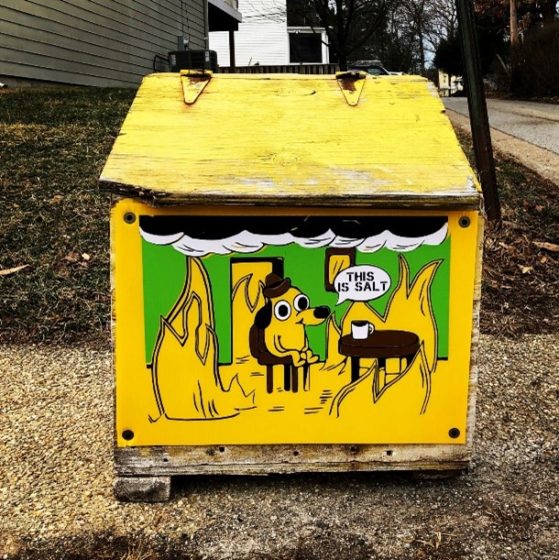
When you live in a city of artists, everything is a canvas. We have bountiful murals on public and private structures and on just about every sort of vertical surface you can imagine―walls, bridge columns, railings, and more―that depict neighborhood life, folk legends, local historical figures, national heroes, and abstract concepts. The latest and most popular canvas is our municipal salt boxes, a type of public service infrastructure that is unique to Baltimore. While the Baltimore City Department of Transportation takes care of salting the major roads, BCDOT distributes yellow wooden boxes filled with salt to neighborhoods so that Baltimoreans can tend to their own blocks of minor streets and sidewalks. In 2020, local artist Juliet Ames decided to decorate one―a simple bedazzled spruce-up of the typical black, boxy “SALT BOX” letters. Her act of small-scale muraling spurred a citywide phenomenon, prompting artists and everyday residents alike to enliven salt boxes in their neighborhoods. The artistic salt box became an official BCDOT program, allowing artists to secure artwork to the boxes at the beginning of the snow season and remove it at the end, and it remains an extremely popular way to add whimsy and cultural commentary to the public realm.
The artistic salt box is a prime example of how art can inspire people to reconsider the mundanity of everyday life, which in turn can inspire action. Before I became a transportation planner, like everyone else, I would walk down a street and listen to my music or call my mom without contemplating that a street could be anything other than it is. Now, it is second nature for me to look at a wide, multi-lane, high-speed street and imagine an entirely different setting ―one with a streetcar, a wide bicycle lane protected by vegetation, new tree cover, expanded sidewalks with plentiful public seating, and maybe just one car lane instead of five. My vision is for the angrily revving engines, blaring car horns, and air heavy with exhaust and tire microplastics to be replaced by the gentle clinks of changing gear chains, peaceful chatter, clean air, and the occasional whoosh of a bus going by. Maddeningly, I see this vision on every street I encounter, and it consumes me; it’s elusive, but I can feel it right at my fingertips. In their own way, the prevalence of salt boxes as an example of artistic community placemaking makes this vision feel just a bit more within reach.
As in many cities across the country, art that enhances roadway infrastructure is increasing in popularity in Baltimore. Each year, we have more murals inside intersection curb extensions, sidewalk wayfinding, and creative outdoor seating structures that replace parking. My favorite was a skate ramp placed in a parking spot outside of a tattoo shop in my own neighborhood (it unfortunately is no longer in place after it was destroyed by a reckless driver). Every time one of these placemaking projects is installed, I imagine that it inspires several new people to dream up alternative visions for their own streets. Some of those people may go on to do their own placemaking projects or become so consumed by the possibility of what a street could be that they get involved in transportation advocacy. The pace of change can feel slow, but I like to think that with these kinds of installations increasing exponentially each year, the groundswell of appetite for transformation is inevitable.
Lisa Lee is the Director of Sustainability Programs at EZ Ride, one of New Jersey’s Transportation Management Associations (TMAs). She oversees the statewide EV Accelerator Program and the Bike and Pedestrian Program and encourages schools and communities to implement asphalt art projects, complete and green streets and conducts walk-bike audits, speed studies, and air quality monitoring to improve safety for those who walk and bike, and to reduce air pollution, and global climate change.
When possible, we should use art to encourage people to consider our planet and live in a way that reduces global climate change.
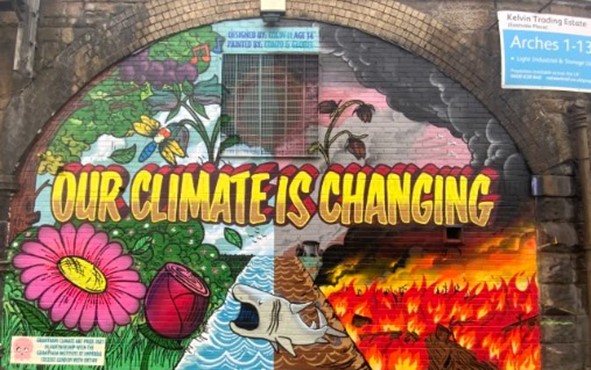
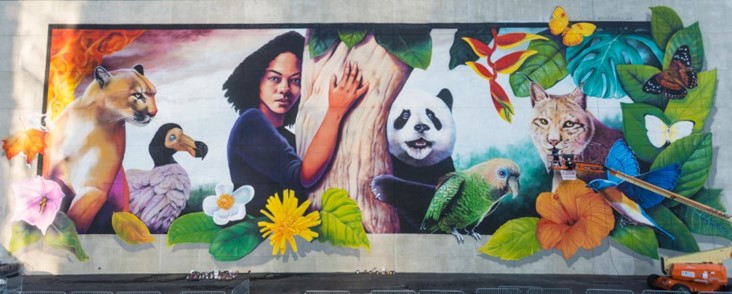
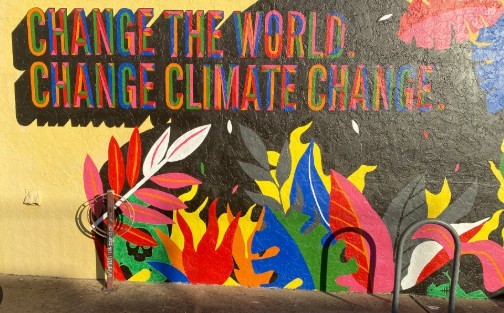
Murals in cities can serve as a visual message for all who see and encounter them. Besides being a way to improve the aesthetics of communities or to honor a community leader, they can be a call to action or can remind people of what is occurring and the need to change behavior. In the visual below, the right side of the mural demonstrates the negative impacts of climate change: the dead flowers, dirty ocean water, and wildfires are a powerful reminder that if nothing is done, these consequences will continue. In my view, I think the message could have also included a call to action, such as “What Will You Do?” to remind people that they can make a difference.
It is an important and good idea for more artists to go beyond the beautiful images they create to intentionally make their art a powerful statement and message for people in cities. Many artists create murals to honor local activists for their contributions or to improve community aesthetics. Murals that also convey a message can increase their effectiveness and help achieve a goal beyond making the community more attractive.
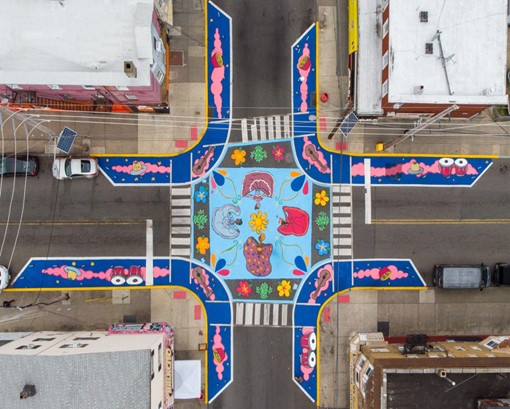
There are numerous issues that people in cities face, including crime, traffic safety concerns, poverty, hunger, and a lack of affordable housing. In my role, trying to make communities safer and to reduce traffic congestion and emissions and encourage walking or biking as active transportation, we created an intersection mural in the City of Passaic at an intersection where a few pedestrians and cyclists were struck and injured by traffic. The mural included a painting of ladies dancing in the center by a local student. Unfortunately, the high amount of traffic on this roadway caused the center artwork to fade quickly. The mural also included painted curb extensions and plastic delineators to prevent illegal parking on street corners and improve pedestrian visibility.
We also painted striped, high-visibility crosswalks to make them more visible to drivers and had the City repaint the stop bars and yellow curbs to let drivers know that parking by the curbs is illegal. The curb extensions also play a role in shortening the crosswalks, which is helpful for seniors and children who walk slower. The extensions feature traditional Mexican and Puerto Rican foods, Pozole and Mofongo, and bongo drums and cuatros from the dominant Latino culture in the city. Due to MUTCD regulations, written messages are not permitted on roads as it may be distracting to drivers, but a sign can be placed to explain the point of the art for residents.
Lisa Lee, EZ Ride
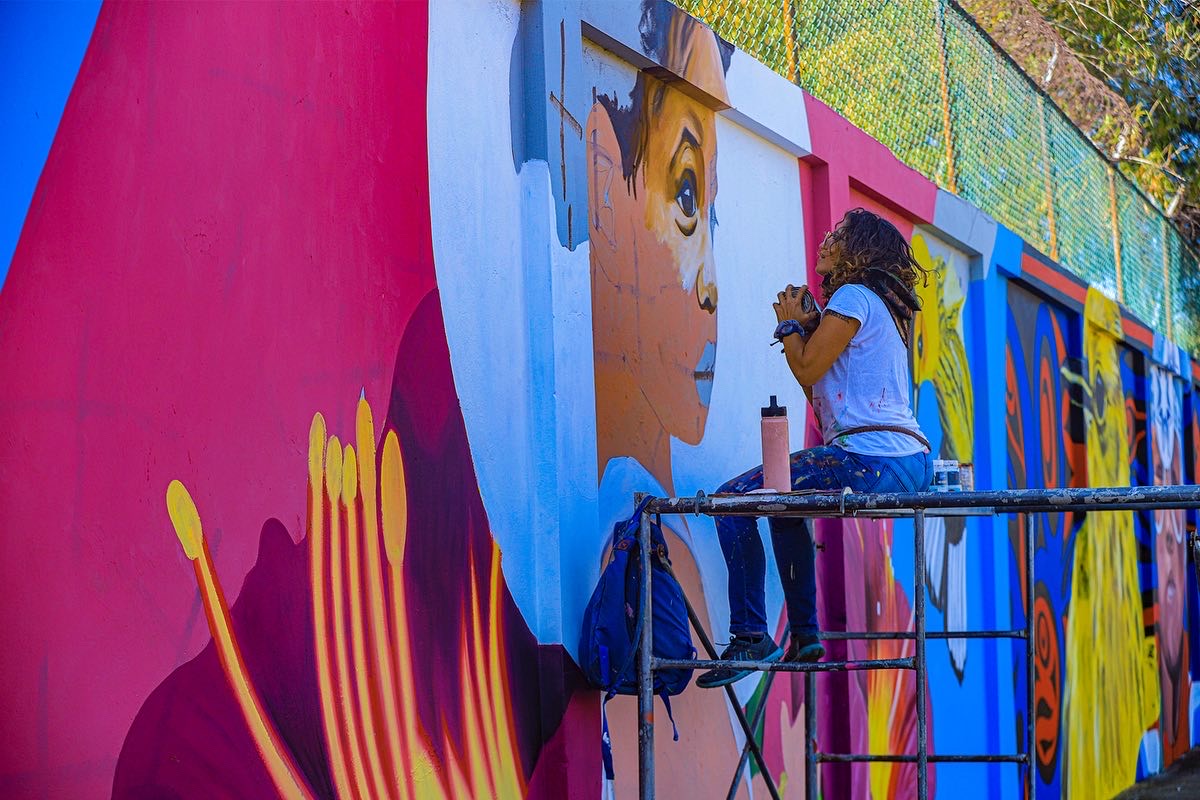
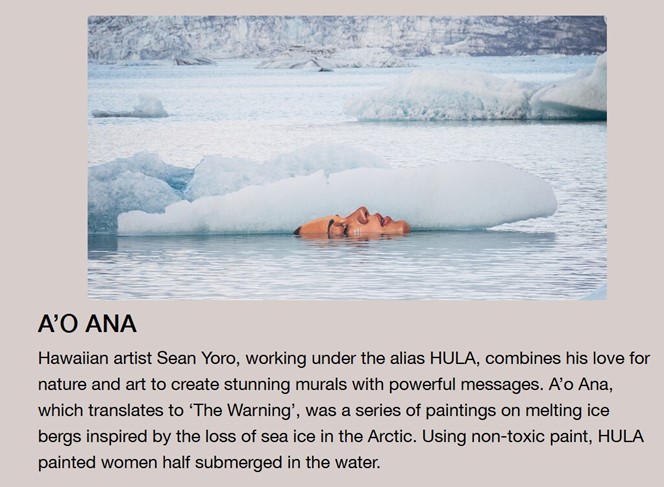
The mural below, made by a local Hawaiian artist, shows a woman being submerged in the ocean. The visual draws attention to the impacts of the melting icebergs but lacks a written message and loses an opportunity to emphasize the artist’s point that the loss of sea ice will affect society.
I would encourage artists and environmental advocates to use community art installations to emphasize important messages that can motivate the community to take steps to reduce our impact on climate and the environment. We can remind people to drive less and bike & walk more, or use transit to reduce transportation emissions. When possible, we should use art to encourage people to consider our planet and live in a way that reduces global climate change.
In 2018, Richard founded Chess Angels Promotions Inc., an art-based nonprofit organization dedicated to inspiring and empowering communities through action, education, and self-expression. His work has brought art into public spaces as a tool for dialogue, healing, and change. In 2023, he joined the Board of Directors for Commonwealth Murals, helping shape a city that now boasts over 75 vibrant public murals. Richard teaches science at Aspire Academy highschool, where his mission aligns with the school’s vision to create a personalized pathway that caters to the needs of every student. His dedication to youth development is fueled by a belief that education, creativity, and community engagement are powerful catalysts for personal and collective growth.
In every brushstroke lies an invitation to remember our interconnectedness both to the planet and to one another.
Murals are invisible force fields that activate communities from within. They hold the power to transform space, spirit, and consciousness. While often seen as static public art, murals are in truth dynamic social instruments that generate energy, dialogue, and healing. They are symbolic meeting grounds where culture, environment, and identity converge. In this way, murals serve as catalysts not only for climate awareness but also for community cohesion and empowerment.
Murals can be understood as both cultural texts and civic rituals. They communicate layered narratives that merge artistic expression with collective memory. When a mural appears in an urban environment, it does more than beautify a wall. It disrupts invisibility. It reminds the people who walk by that they belong to a living ecosystem of history and hope. Murals invite engagement through color, symbol, and story. Each brushstroke becomes an act of resistance against alienation and a reminder that art has the capacity to shape the physical and emotional landscape of a community. The mural becomes a focal point for participation and reflection, turning observation into action.
As a community artist, I believe the work must always be done for the community and by the community. True impact happens when residents become co-creators rather than passive viewers. The process of designing and painting together builds relationships that mirror the natural balance of an ecosystem. Each person plays a role, each voice contributes a color, and each story becomes part of a collective vision. This participatory model reflects what scholars of community development describe as cultural democracy, a process through which art becomes both education and empowerment.
Involving the community in the creative process also keeps the artist and the people informed about one another. The conversations that take place during planning, painting, and unveiling reveal what residents care about most. This also gives a chance to spark much-needed dialogue. Listening to these voices ensures that art remains relevant and grounded in lived experience. For me, these dialogues serve as a form of research and reflection. They help me understand what is happening socially, economically, and environmentally within the community. In turn, the community gains insight into the purpose and intention behind the artwork. This exchange of knowledge builds mutual trust and creates a culturally responsive masterpiece.
In many urban environments, this process also becomes a form of therapy. The act of creating a mural allows individuals to release emotion, confront trauma, and reimagine possibility. It offers a sense of purpose and belonging that can counter the disconnection often felt in marginalized spaces. For youth in particular, mural projects can foster agency and leadership by giving them a visible role in shaping their surroundings. When the wall transforms, so does the neighborhood’s sense of identity and pride.
Murals also function as instruments of environmental consciousness. By embedding imagery of nature, sustainability, and regeneration within city spaces, artists translate global concepts of climate action into a local visual language. This can encourage people to see environmental stewardship as an immediate cultural responsibility rooted in care and awareness.
Ultimately, murals are living fields of energy that expand the boundaries of what art can do. They fuse aesthetics with activism, imagination with restoration, and personal healing with collective transformation. In every brushstroke lies an invitation to remember our interconnectedness both to the planet and to one another. Murals remind us that change begins with visibility, collaboration, and care. They teach us that the walls that divide us can also become the canvases that unite us.
Michael DeAngelo is an internationally known multidisciplinary creative with 15+ years in fine art, design, illustration and fabrication who is passionate about visual experiences and relationships. He is currently exploring experience design and framework design across multiple platforms, both digital and analog. He is known for his graffiti and public art, and for organizing projects that consider community dialogue and development. He excels in design-build projects, utilizing robust skills in multiple disciplines from painting to metalwork.
If we prioritize excellence in the physical world over the digital experience in public art, we may inspire those to do the same in their own life.
Presently, our relationship with physical art is becoming increasingly strained as we are continually consumed by digital affectations. Murals, and more broadly public art, may be a last bastion for creations that attempt to live mostly in physical reality and not in the semiconductor realm. Trillions of dollars are being funded towards machines that are being trained to make “art”, to conjure images for those who not only have no mastery of the visual arts but also have absolutely no respect for them. Before we can ask, “How can we harness public art?”, we must first navigate what visual art is and what is the place for visual artists currently?
Visual art is an organization of visual language. Like the English language, it can be communicative, perscriptive, ornamental, salutary, poetic, or catalytic; it can be harnessed for many different means. At its base it is a way for the artist to communicate with the viewer, and the better the artist learns to master this visual language the clearer the message can be heard. The essence of this can be paraphrased from “The Practice & Science of Drawing” by Harold Speed (1913): “There is a need for both expression and technique, a work of art with no expression is a loud scream no one can understand and a work with only technique and no expression only says, look how good at technique I am.” Valuable art is born from the unique, individual, mastery of our collective visual language, the expression deriving therefrom, and all the human error found between the lines. Nothing valuable can come from generating imagery, despite the delusions many share. The value in art is that it is communicative, from one human to another, one human to many, or many humans to many. What does it mean if the author is a computer? Is it just more noise drowning out the real world for the digital? Are we forgetting the problems in our real world for those in the digital? Through mastery, visuals can be created relaying a unique, nuanced perspective of the natural world, and the audience can receive it pure. Visual artists are a lifeline to the physical world.
Public art, most times, is an experience that lives in the physical world, inherently. If the question is how can we make it catalytic, the answer is that it always is. Well-made art always is a catalyst for thought; even something as seemingly benign as ornamentation will catalyze a state of awe, slow us down, and capture us with beauty to be considered. It’s better to ask, how can we strengthen the catalytic nature of art? Leaning into physicality, leaning into public nature, leaning into the human element, accomplishes this. What does that mean? In today’s age, where we have sacrificed our real human networks to be digitized and commodified, it means growing ones that are not digital. Thousands of artists have their work unconsensually fed into machines so the unskilled can “create” digital artifacts masquerading as art. We can create projects consensually with artists in the physical world and grow a network separate from the World Wide Web. We can prioritize and support artists who strive to master our collective visual language, for its those that are the artists who will catalyze an individual, valuable perspective and communicate it succinctly to their community. If we prioritize excellence in the physical world over the digital experience in public art, we may inspire those to do the same in their own life.
Dr. Erika Svendsen is a social scientist with the U.S. Forest Service, Northern Research Station and is based in New York City. Erika studies environmental stewardship and issues related to hybrid governance, collective resilience and human well-being.
How Murals Become Catalysts for Climate and Community Action
The paint matters—cool pigments reflecting heat, natural minerals connecting us to earth, coatings scrubbing pollution from the air.
Murals capture the moment when communities pause to envision their futures. Through observation, urban design, and collaboration, mural making becomes a catalyst for both climate and community action. The questions artists ask during this process matter: Does the imagery tell stories that need telling? Will it spark curiosity or contention, or both? What makes this place symbolic? And crucially—can the materials themselves transform the environment, with paints that cool buildings or capture pollutants from the air?
The answers to these questions reveal something deeper about communities themselves. They speak to our collective capacity not merely to represent, but to reflect and act to improve our environment. Community-created public art offers a more nuanced perspective about a place and a people—one that reveals a clear capacity for innovation, connection, and transformation.
When artists, scientists, and communities come together to design and paint murals addressing environmental themes, they engage in a form of biocultural stewardship. They steward not only the physical space but also the cultural narratives that will shape how their community interprets and responds to environmental challenges. The physical act of painting becomes environmental intervention: pigments derived from natural minerals, reflective coatings that can reduce urban heat islands, surfaces that filter particulate matter from the air. Unlike traditional policy documents, murals convey emotion, making issues accessible and personally relevant—while simultaneously making a local corner of the world more livable.
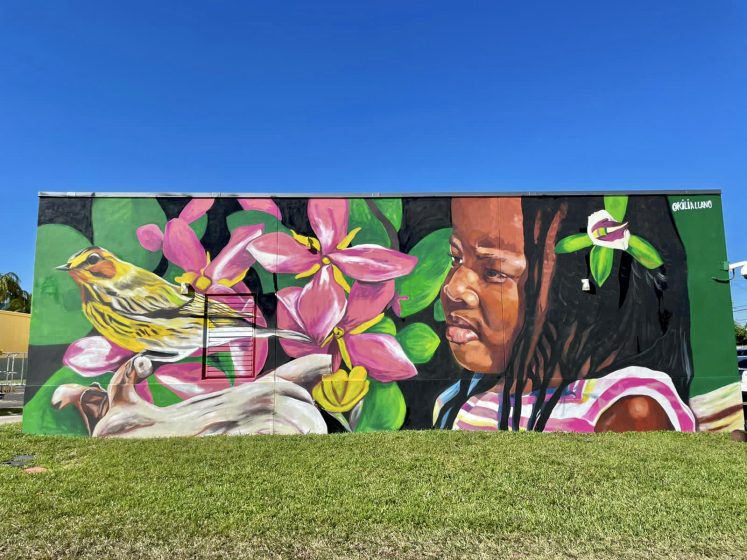
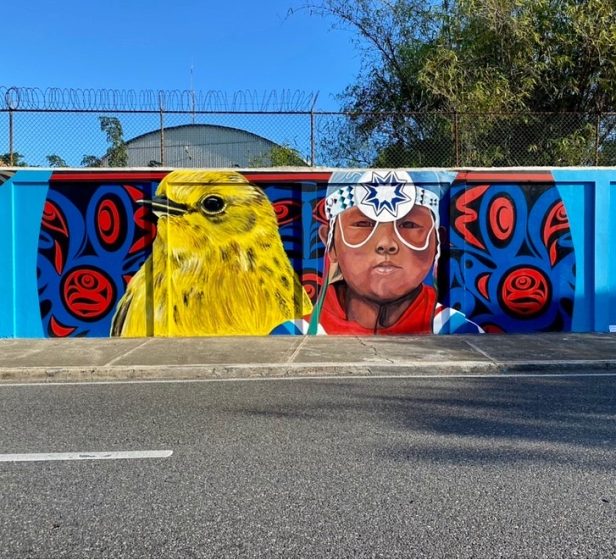
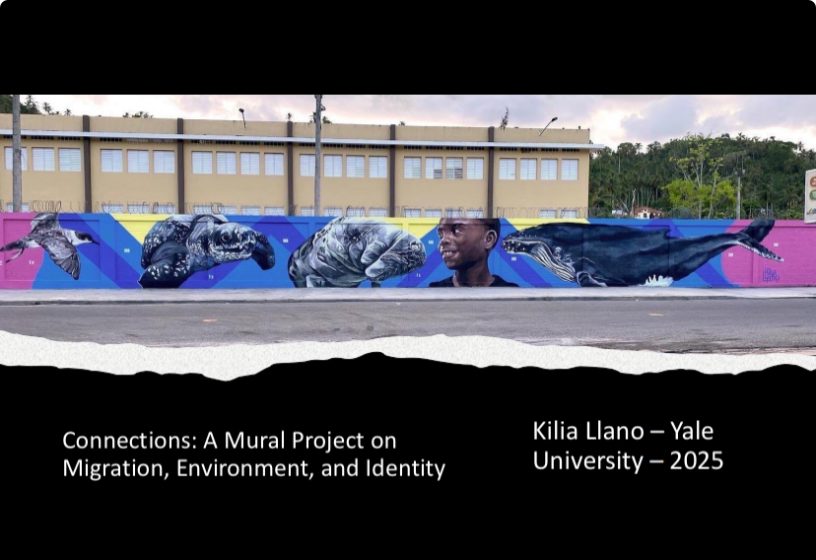
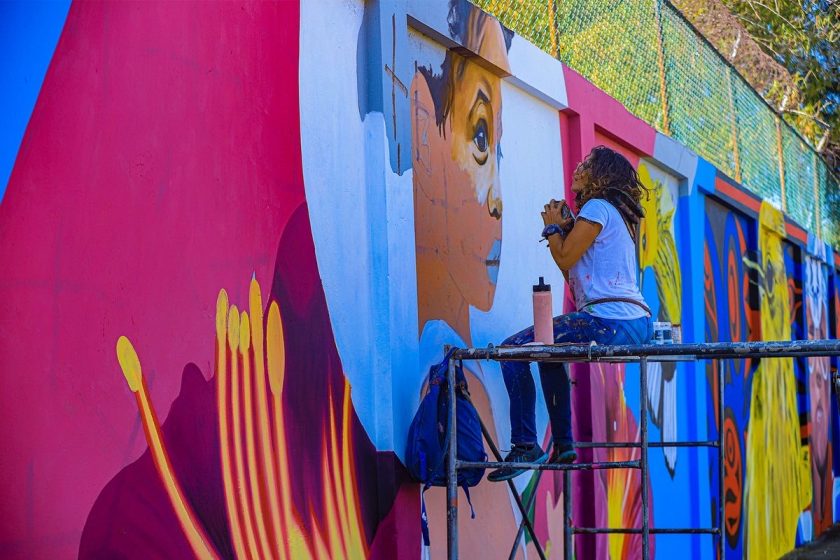
Kilia Llano’s “Conexión” project exemplifies this integrated approach. Rooting her practice deeply in the landscapes and ecosystems she inhabits—from Santo Domingo to Miami to New York—Kilia once paused her creative work to advocate for endangered flamingos, demonstrating how she sees art as inseparable from ecological stewardship. “I want murals to encourage people to be able to admire, and most of all respect these animals, and understand that nature creates a bond between humans that is unbreakable,” she explains. Her vibrant murals become acts of witness to migratory patterns connecting the Caribbean, Central America, and North America, celebrating species like the Cape May Warbler while revealing how migration connects us across borders and generations.
Mark Johnson’s work in Springfield, Massachusetts offers another powerful example. Through his art-based non-profit Chess Angels Promotions Inc., he creates collaborative spaces, such as “Bee the Change”, where art becomes a vehicle for both personal reflection and collective action. His method invites community members to see themselves in the work, transforming public art from something merely observed into something deeply felt and co-created. The physical labor of painting together—brushes in hand, conversations flowing—builds the trust and comfort necessary for meaningful dialogue about identity, history, and shared futures. These conversations are fundamental to building climate resilience.
This is the power murals hold for climate action. They remind us that addressing climate change requires reimagining our relationships with people, places, and materials. The paint matters—cool pigments reflecting heat, natural minerals connecting us to earth, coatings scrubbing pollution from the air. But so do the many hands that apply it and the neighbors who see their corner of the world transform. Beautiful work, inside and out.
Jane Golden has been the driving force of Mural Arts Philadelphia since its inception, overseeing its growth from a small city agency into the nation’s largest public art program. Under her direction, Mural Arts has created over 4,000 works of transformative public art. In partnership with innovative collaborators, she has developed groundbreaking and rigorous programs that employ the power of art to transform practice and policies related to youth education, restorative justice, environmental justice and behavioral health. Golden currently serves on the Mayor’s “Clean and Green” Initiative cabinet, and as Critic-in-Residence at the Maryland Institute College of Art.
The Transformative Power of Murals
For over four decades, Mural Arts has been at the forefront of creating murals that not only beautify neighborhoods but also generate memorable, cohesive, and sometimes even magical experiences.
For over four decades, Mural Arts has been at the forefront of creating murals that not only beautify neighborhoods but also generate memorable, cohesive, and sometimes even magical experiences. These projects have been instrumental in changing attitudes and behaviors within communities. In the early years, the focus was on episodic efforts—individual projects that highlighted a single community’s histories and heroes. These murals brought vibrancy and pride to neighborhoods while providing technical and team-building skills to former graffiti writers and apprentices, expanding their portfolios and creative ambitions.
From Neighborhood Beautification to Systemic Change
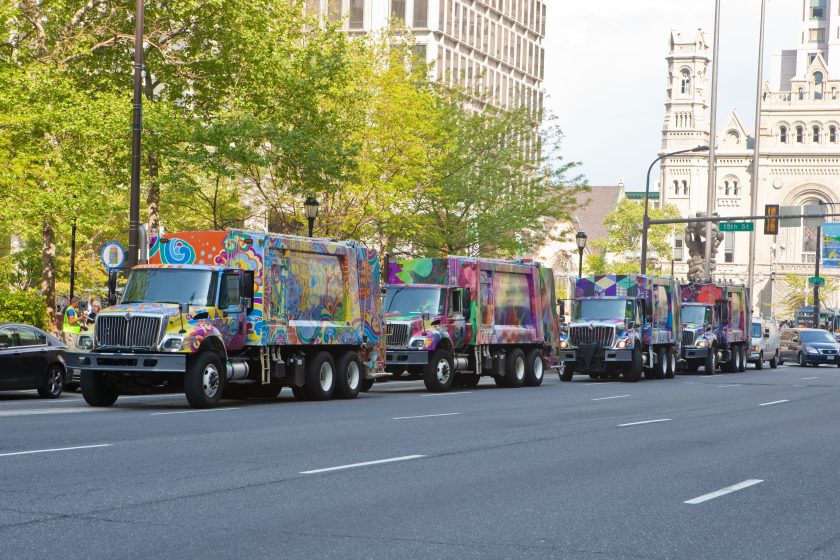
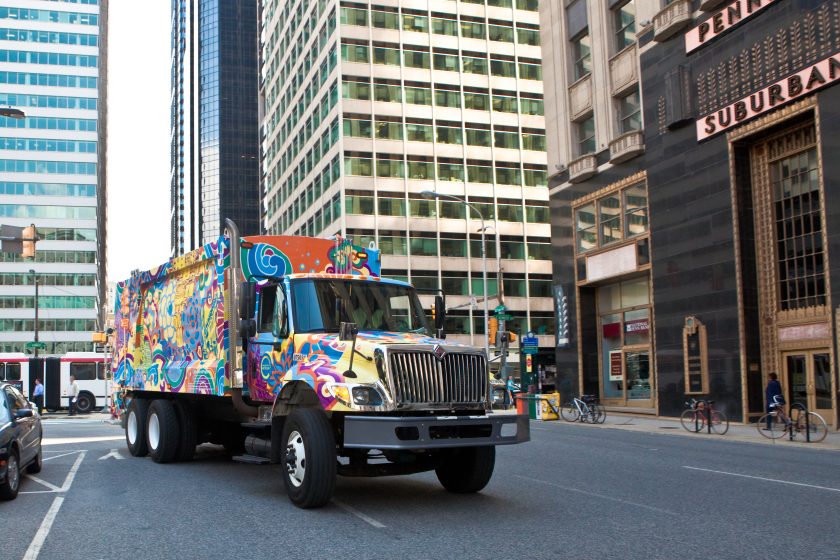
As Mural Arts’ work expanded into new sites and systems, the ambitions and challenges grew more complex. The organization was called upon to transform neighborhoods with vacant lots and to turn tagged and graffitied schoolyards into dynamic history lessons. One of the early mobile initiatives was the “Design in Motion” project, launched in 2009 and 2010. This effort involved creating a fleet of 20 multi-colored, exuberantly designed recycling trucks. Led by artist Desireé Bender and art education students, and in collaboration with Philadelphia University’s Design Center and the Philadelphia Streets Department Recycling Office, “Design in Motion” coincided with the introduction of the city-wide single-stream recycling program.
The trucks, covered in vinyl wraps featuring artwork inspired by textile studies from The Design Center’s now-closed collection, became moving murals throughout Philadelphia. Their dedication was marked by grand parades down Broad Street on Earth Day in 2009 and 2010. Public elementary schools, their teachers, students, and sanitation workers were actively involved in the selection of designs, making the project a shared civic experience. The initiative encouraged Philadelphians to participate in recycling efforts, and it had a lasting impact—students would eagerly watch for the recycling trucks, celebrating both the drivers and themselves as local heroes.
Connecting Communities to Green Spaces
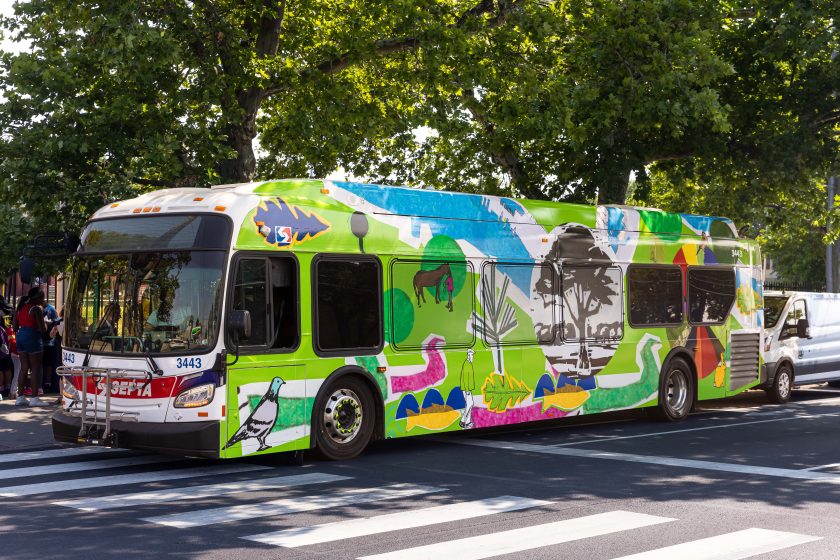
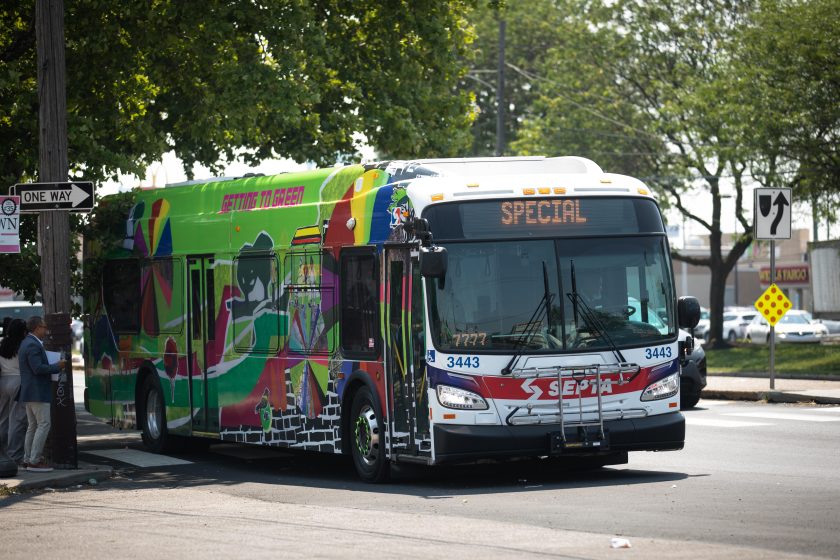
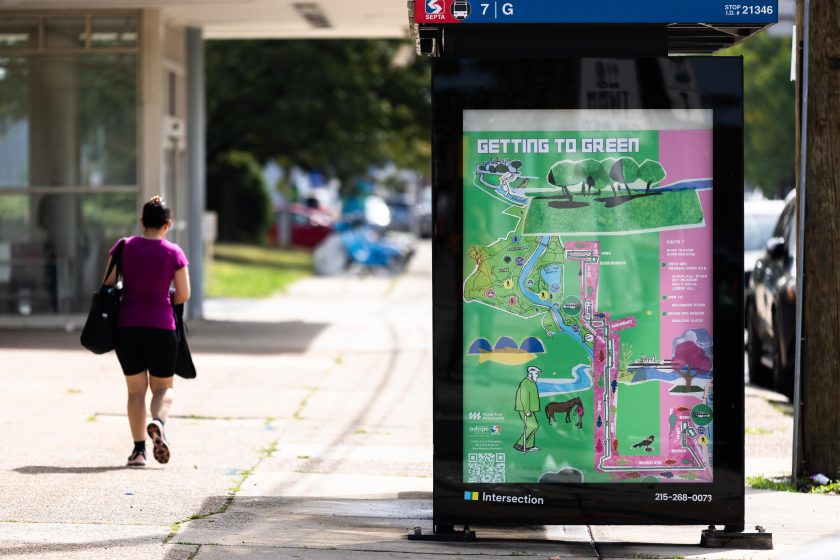
In 2023, “Getting to Green: Routes to Roots”, developed by artists Laura Deutsch and Shira Walinsky, sought to inspire Philadelphia residents to use public transportation to explore the city’s green spaces. The project included unique artwork such as bus wraps featuring images of nature and local monuments, posters in bus shelters, and print materials with hand-drawn maps. These resources encouraged riders to discover new pathways and routes, while short video profiles shared the personal stories of riders, drivers, and the routes themselves.
A key focus of the project was to promote equity in public transportation by engaging immigrant, refugee, and non-native English-speaking communities. By facilitating access and understanding of the bus system, the project encouraged these communities to venture beyond familiar areas and enjoy the city’s natural beauty. Throughout the year, “Getting to Green: Routes to Roots” highlighted transit routes to nature walks, picnic spots, bike paths, and special events, creating opportunities for residents to connect with both their city and its environment.
Note: This project is ongoing.
Getting to Green—Bus shelter. Photo by Steve Weinik
Looking Ahead: FloatLab at Bartram’s Gardens
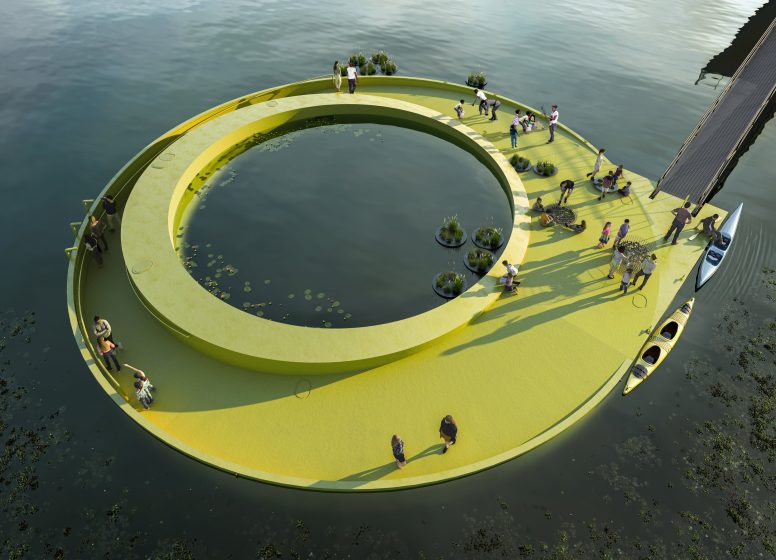
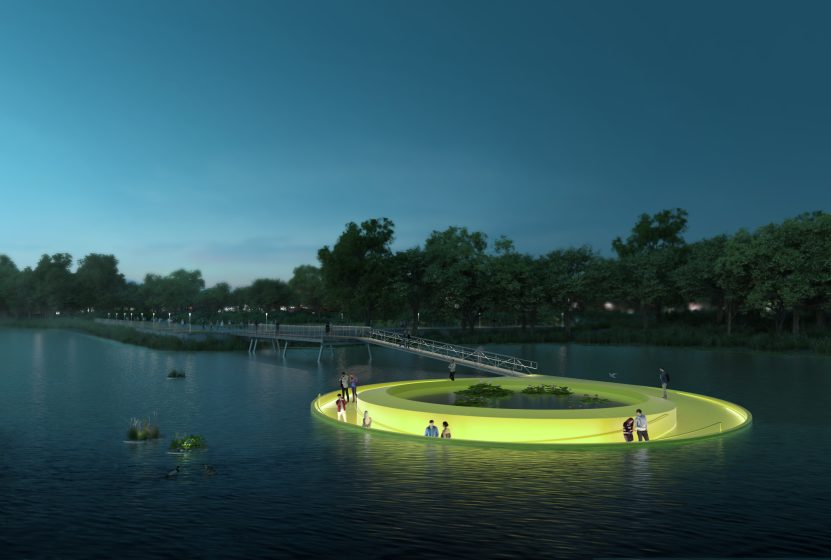
Looking to 2026, the FloatLab will be situated along the southern shoreline of Bartram’s Gardens, adjacent to natural tidal wetlands and historic Lenni Lenape sites. Designed by Höweler + Yoon Architecture, the FloatLab is an ADA-compliant, sloped circular platform that invites visitors to engage with the Schuylkill River at eye level. This unique structure is intentionally multi-valent and multi-functional—serving as a platform, vessel, lens, and threshold for meaningful and unprecedented public engagement with the river’s ecology.
FloatLab—Concept Images provided by Höweler & Yoon Architecture and Brick VisualFloatLab—Concept Images provided by Höweler & Yoon Architecture and Brick Visual
The FloatLab will reconnect Philadelphians and visitors with their natural environment and the historic Bartram’s Gardens site, fostering new relationships between the site and nearby immigrant and working-class communities. The higher portion of the loop can accommodate a full classroom or arts audience, while the sloping ramp enables visitors to connect with the river in their own way—be it collecting water samples, painting outdoors, exploring floating gardens or freshwater mussel beds, or simply spending time reflecting on the living, tidal river that has sustained life for thousands of years.
Colleen Murphy-Dunning is Executive Director of both the Hixon Center for Urban Sustainability and the Urban Resources Initiative (URI) at the Yale School of Environment (YSE). URI carries out community-driven urban forestry to improve both the social and physical environment of the City of New Haven.
Ian French is the Director of Communications and External Relations at the Hixon Center for Urban Sustainability. He holds a Bachelor of Science (BS) from Yale-NUS College in Singapore, and a Master of Environmental Management (MEM) from the Yale School of the Environment. Ian believes that cities are the crucial unit for addressing the climate crisis, and he finds hope in equitable science-backed solutions that revitalize ecosystems while centering communities.
While science tells us why action is needed, murals show us what we’re fighting for and who we’re fighting with.
Urban areas like New Haven are disproportionately affected by the impacts of climate change. With 85% of local residents at risk of experiencing extreme heat, there is an urgent need for both climate mitigation and adaptation strategies that are accessible to all. Here and elsewhere, murals are not just art. They are tools for urban climate resilience.
Take New Haven’s growing “cool mural” movement, which represents a unique blend of climate science, artistic expression, and community engagement. Cooling murals use heat-reflective paint and design techniques to lower surface temperatures, making them both visually striking and functionally impactful. But beyond their physical cooling effects, these murals ignite something deeper: collective empowerment and ownership of climate solutions.
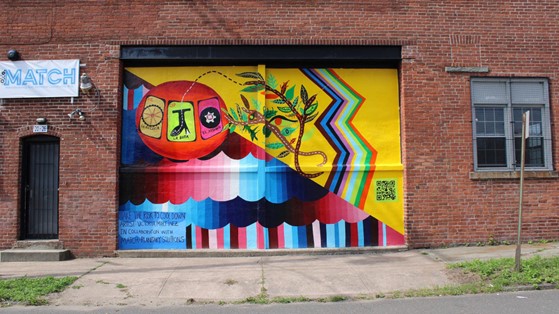
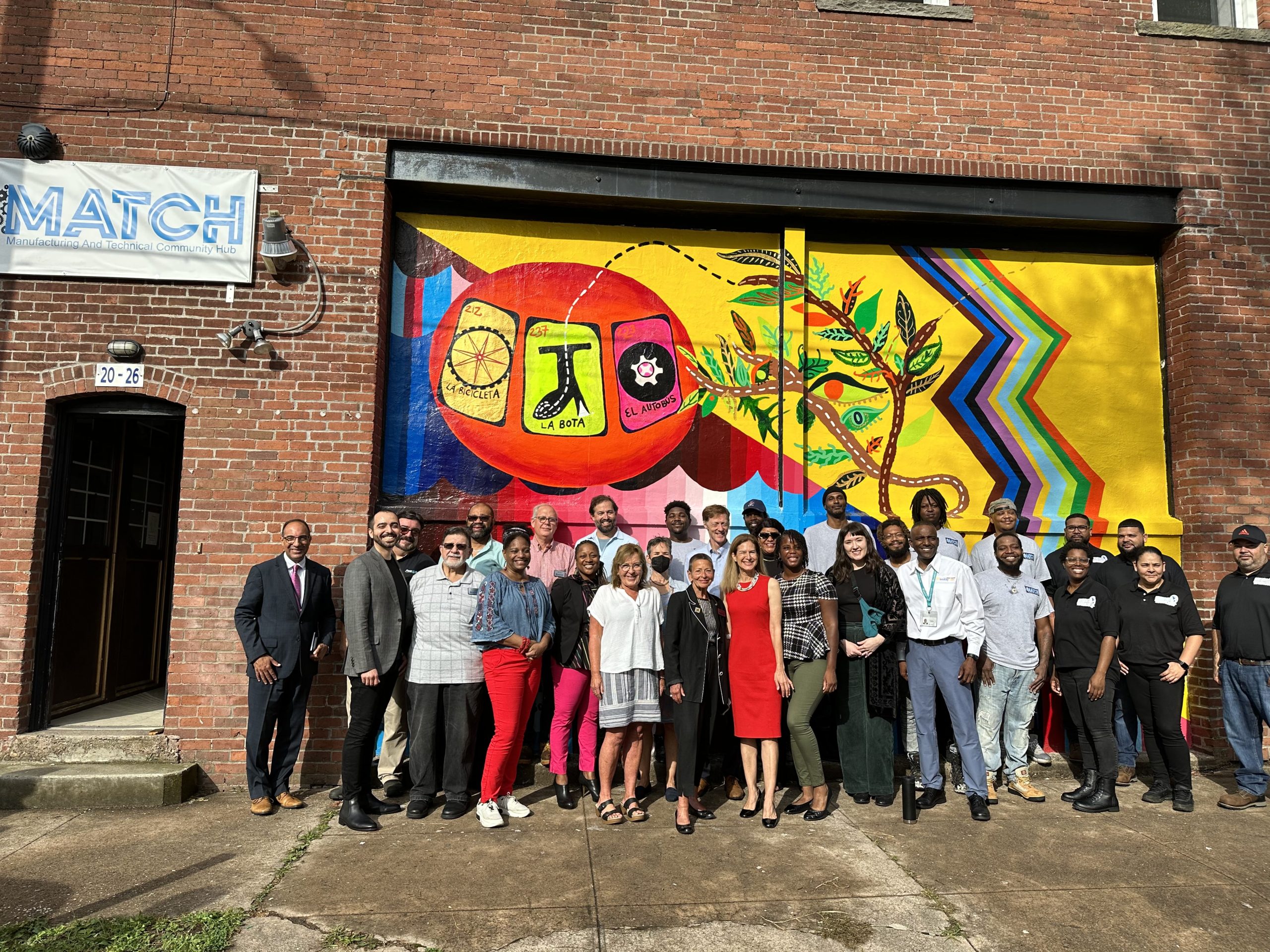
Two cooling murals were completed in New Haven in 2023 and 2024, demonstrating what is possible when art and science intersect. These murals resulted from a partnership between the Yale School of Art, Yale School of the Environment, Yale School of Architecture, the New Haven Department of Arts, Culture, and Tourism, and community members. Located in Fair Haven, Take the Risk to Cool Down is a vibrant mural by Yale School of Art alum Victoria Martinez (MFA ’20), created in collaboration with a team of Yale artists and climate communicators. Installed outside MATCH, a community manufacturing hub, the mural combines artistic expression with climate action. Inspired by climate data like warming stripes and painted using heat-reflective cooling paint, the piece reduces local heat while spreading awareness about the need for investment in resilient, livable urban spaces.
Take the Risk to Cool Down is a vibrant mural by Yale School of Art alum Victoria Martinez (MFA ’20)
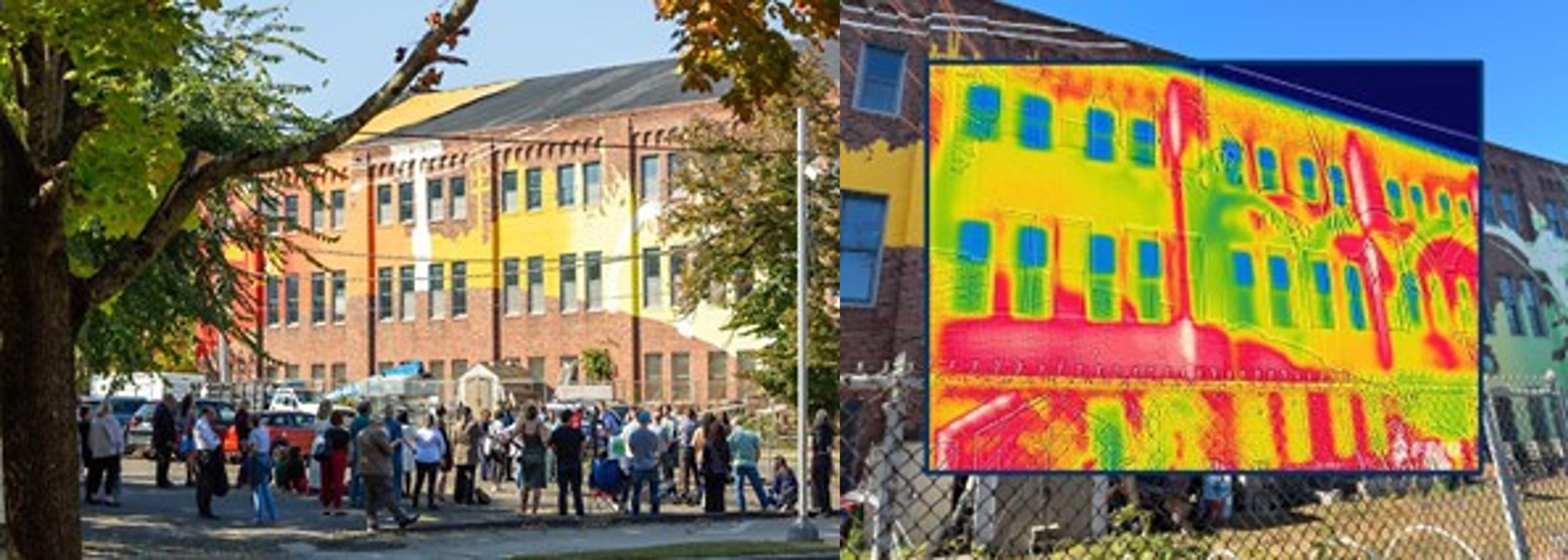
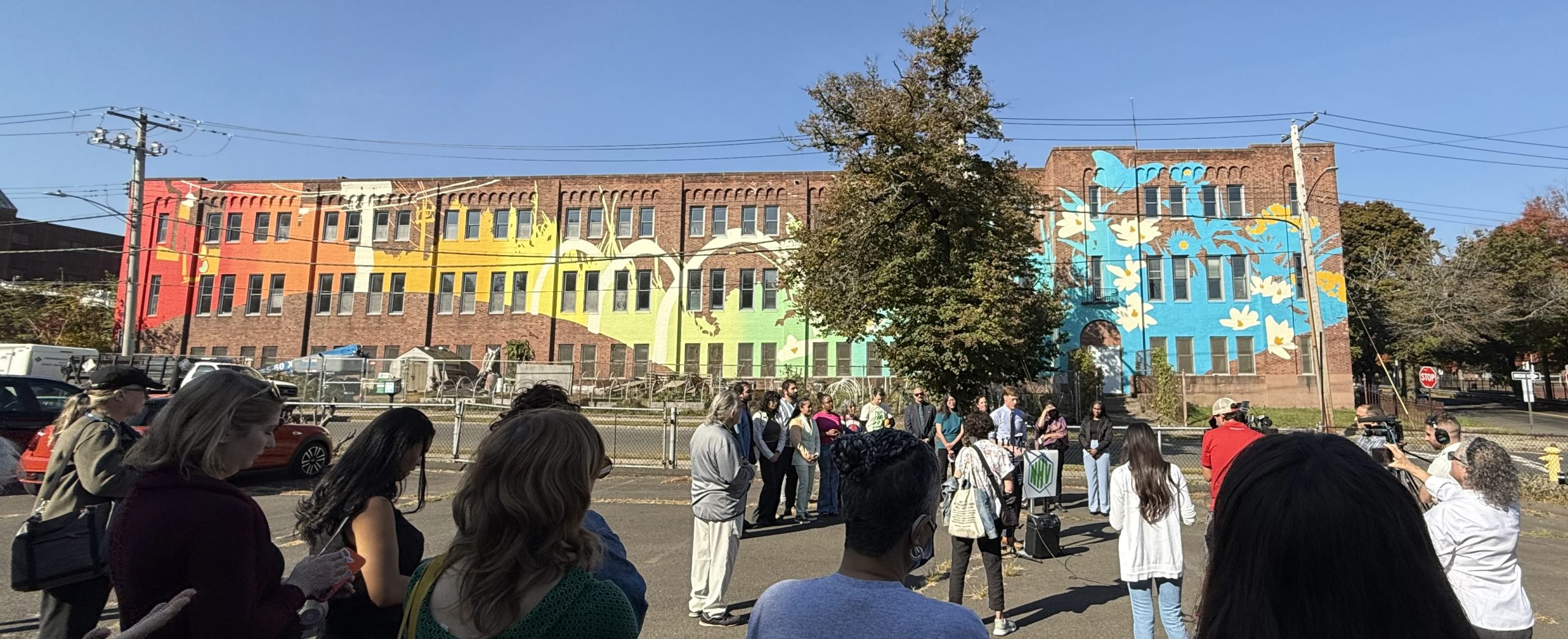
The second mural, Thermal Reflections, is located on the historic Goffe Street Armory in New Haven’s Dixwell neighborhood and was co-created with the community to reflect local history, climate challenges, and environmental stewardship. Overlooking a community garden by Gather, the design features a red-to-blue gradient symbolizing rising heat and the cooling power of nature. Developed through the city’s first Mural Apprenticeship Program, lead artist Michael DeAngelo trained four local artists in mural-making and cooling paint techniques. Now the city’s largest mural, Thermal Reflections stands as a vibrant symbol of community healing and climate engagement.
Thermal Reflections by Michael DeAngelo
Building on this momentum, a third cooling mural is underway at Betsy Ross Arts & Design Academy. Led by recent Yale graduate Haejin Park and supported by the Hixon Center for Urban Sustainability, Urban Resources Initiative, and the City of New Haven, the mural will transform the school’s basketball court. Through design workshops, students have helped shape the mural’s message of hope and resilience, becoming co-creators of the space they play in each day.
When community members participate in creating these cool murals, they don’t just contribute to the artwork, they become ambassadors for the message. They become invested. The act of painting together creates space for dialogue, reflection, and collaboration. And through the creative process, volunteers build a personal connection to the cause, making them more likely to advocate for change long after the paint dries.
This participatory model works because it allows murals to tell a story that people see themselves in. Where science often struggles to connect on an emotional level, art excels. A mural can make passersby stop, look, feel, and think. It can express urgency, hope, and interconnectedness in ways a report or policy memo simply cannot. And when it reflects nature, it taps into biophilia: our innate desire to connect with the natural world.
Art like this makes climate action visible, emotional, and inclusive. While science tells us why action is needed, murals show us what we’re fighting for and who we’re fighting with. In cities facing the front lines of climate change, that kind of movement building is not just powerful; it’s necessary.
Kilia Llano is a multidisciplinary Dominican artist with more than fifteen years of experience in public art, muralism, and art education. Her practice integrates visual creation with a deep reflection on Caribbean identity, colonial legacies, the denial of Blackness, and the ancestral relationship between humanity and nature.
Murals have the power to create moments of pause and reflection in the middle of a busy street or a forgotten wall.
Murals in public space can be powerful catalysts for climate and community action because they operate in the most democratic way possible: they are visible to everyone. You don’t need a ticket, an education, or even a shared language to engage with them. Their visual nature allows them to communicate complex climate issues quickly and emotionally, often more effectively than text or data can. A single image can cross language barriers, connect generations, and evoke feelings of urgency, beauty, grief, and hope all at once.
In the context of the climate crisis—where scientific language can be intimidating or inaccessible—murals speak directly to the heart. They allow people to feel something before they are asked to understand it. There is also a spiritual element to public art that should not be overlooked. Murals have the power to create moments of pause and reflection in the middle of a busy street or a forgotten wall. When they depict elements of nature—oceans, trees, animals, fire, water—they remind us that we are part of something larger than ourselves. This emotional and even spiritual connection to the natural world is essential if we want people to not only care, but act.
Connections: A Mural Project on Migration, Environment, and Identity by Kilia Llano 2025
In my own community-based work, I’ve seen how murals can also function as tools for empowerment and collaboration. When local residents, artists, and young people come together to design and paint a mural, the process becomes a form of collective storytelling. The mural is no longer just an image—it is a shared voice, a symbol of presence, resilience, and vision. Of course, murals alone won’t solve the climate crisis. But they can open the door. They can invite people in, generate awareness, spark dialogue, and create a sense of ownership and responsibility. And when they are connected to broader organizing, education, and local initiatives, they become not just symbols, but instruments of transformation.
Tara von Schmidt leads public art initiatives that bring vibrancy and connection to Downtown New Haven. With more than ten years of experience in the performing and visual arts, she champions the power of creativity to shape places and build community. She is dedicated to making the arts accessible and impactful, weaving culture into the everyday life of the city.
When that is linked to actual action, then one day a mural reaches beyond art on a wall and becomes part of a living thing.
Murals are often talked about as powerful catalysts for change—and they can be. They transform blank walls into places where stories are told and conversations begin. Sometimes, just one image on a building can catch someone’s eye in a way charts or news articles never could. Murals can really do a good job of rendering complex matters—like rising sea levels or disappearing species—very personal and intimate. Artful transformation of science is a rare kind of magic: public art does exactly that.
That said, I think we need to be honest about the limits of murals, especially when it comes to climate action and community impact. A mural does not automatically move change. And its impact hinges on the way in which it’s produced, who’s involved, and what comes after. Beautiful or not, a climate-themed mural that doesn’t connect to real opportunities—volunteering, advocacy, or minor behavioral changes —threatens to turn into a simply pleasant thing to glance at. It can be noticed for a second, then quickly disappears into the hum of everyday life.
There’s also this tricky place where murals begin to function in the place of real change. They enhance a neighborhood’s appearance and create a sense of progress—and that absolutely has worth. But a mural about clean air doesn’t clean the air and a mural about equity doesn’t fix policy. And when such works are commissioned by institutions or developers without community involvement, they often begin to appear more like cover-up than dialogue. Here’s a way of saying “look, we care”: while not doing much to prove it.
There comes then the question of who’s getting represented. When murals do not reflect the people who live in a community, they often miss the point. If it’s not a message or picture that reflects local voices, people cannot resonate. And when the ones trying to come up with the artist or the theme don’t represent that community, there’s already a disconnect present in the project. Rightly, people want to be seen and heard in their own community.
Yet, murals can have meaningful value. They occupy this neat space between awareness and action. When they’re co-created purposefully and in service of something larger than themselves, they have the potential to bring real momentum in climate action and awareness. A mural has real power, but that doesn’t mean having the right paint or the right wall, it means what gets built after it; the conversations, the partnerships, the connections that come from it.
So, I wouldn’t say that murals don’t contribute to climate awareness. I would say it’s how we wield them. A mural can’t fix a system alone, but it can brace the work that does. It can provide an opportunity for reflection, a moment of pride or just a reminder that something matters here. And when that is linked to actual action, then one day a mural reaches beyond art on a wall and becomes part of a living thing.
Kwadwo Adae is a Ghanaian-American visual & muralist based in New Haven, CT. He is the Founder & Director of Adae Fine Art Academy; an independent art school specializing in the individualized instruction of drawing and painting to children, teenagers, and adults. His practice of community collaborative public art is responsible for the installation of over thirty works of public art since 2014, including four international collaborative mural projects with children in India, Guatemala, Ecuador, and Finland.
The public realizes the lasting beautification effects of public art are highly desirable on both a personal and community-wide scale.
In the 11 years that I have been a muralist, I have witnessed countless ways and tested multiple theories on how mural installations have the ability to serve as catalysts for community action and climate change. The most important aspect of this to understand is that people do not inherently possess an innate understanding of how a mural installation will change any given public space until the work is fully installed. However, once a mural is successfully installed and the public has a chance to live with a completed, well executed meaningful design, the changes are often profound, and the inherent value holds the capacity to be intrinsically perceived.
One caveat in this process is that muralists must have a certain level of artistic proficiency in their public art practice in order for their work to be embraced most effectively. Due to the fact that mural installations may largely be a consentless process, a well-received mural should be impressive to a certain degree. If the artwork showcases sub-amateur level skills, the community response may be overwhelmingly negative. In order for mural installations to be used as effective catalysts for climate change, the message needs to be proficiently executed.
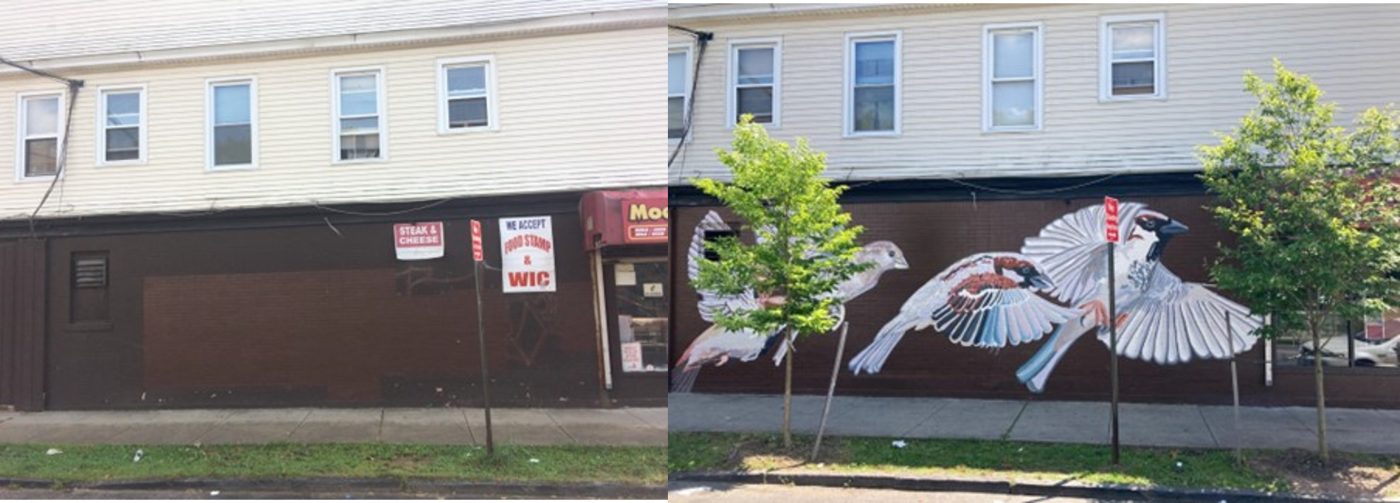
A common response to mural installations fully embraced by the community is something I call “The Contagious Encore Effect” where the shared public experience of the beautifying effects of a new mural installation suddenly allows people to see subsequent blank wall spaces as potential opportunities for additional public art. The public realizes the lasting beautification effects of public art are highly desirable on both a personal and community-wide scale. Using the highest quality materials, the life of a mural is approximately ten years. Extending beautification efforts with the longevity of trees is what started beautiful partnership between Urban Resources Initiative and myself to have street trees planted as an important part of subsequent mural installations. Whenever possible, I utilize street trees from URI to create murals that fight climate change. For example, I created Sparrow Squadron in 2020 in response to an egregious act of police violence that occurred when Yale & Hamden Police officers fired 16 shots into the car of an unarmed black couple in 2019. I requested Urban Resources Initiative plant two serviceberry and a hackberry tree as part of the public art installation as a means to restore peace and freedom that police violence steals from a community.
Sparrow Squadron-URI Serviceberry & Hackberry Trees 11×38 ft, Dixwell Ave/Division St New Haven- 2020 by Kwadwo Adae
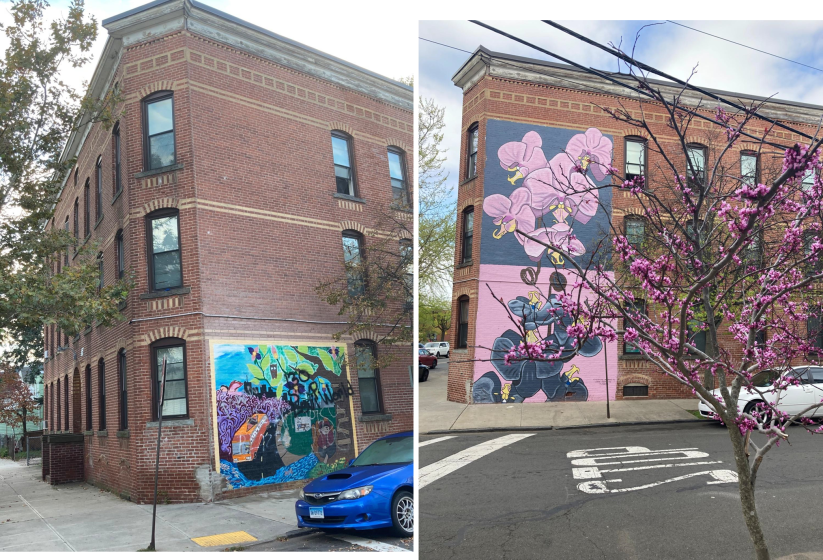
In 2023, in The Hill neighborhood, a few months after completing the installation of EveryoneDeservesTo ComeHomeToFlowers, I requested that URI plant an Eastern Redbud tree across the street whose flower buds are the same color as the orchid blooms in the installation. Months later I witnessed a new mural installation on the convenience store across the street featuring Gorilla Lemonade on the Sylvan Ave corner of the street. In the last ten years New Haven has blossomed with muralists. Seeing that the installation of well executed murals is contagious, I am hopeful that other New Haven muralists will begin to incorporate tree plantings in their mural installation designs. Our urban forests need augmenting, especially in all of the formerly redlined neighborhoods of New Haven, Newhallville, Dixwell, Fair Haven, West River, and The Hill.
Everybody Deserves To Come Home To Flowers-URI Eastern Redbud 45 x 24 ft. Sylvan Ave/Steven St New Haven, CT 2023
Mike Houck, co-founder of TNOC engages urban nature conservation, land use planning, green infrastructure advocacy. He founded the Urban Greenspaces Institute whose motto is “In Livable Cities is Preservation of the Wild” reflecting the belief that without creating livable and loveable cities it will be impossible to protect “pristine” areas outside the city. To be livable and loveable people must have access to nature where they live, work and play. He co-edited Wild in the City, A Guide to Portland’s Natural Areas (2000) and Wild in the City, Exploring The Intertwine (2011) and The Routledge Handbook of Urban Ecology (2011).
Ugly Building, Threatened Wetland? Put A Bird On It!
What had begun as a beautification project had become an artful tool that piqued enough interest to attract more resources to restore and manage the city’s first official urban wildlife refuge.
My relationship with the 160-acre wetland dates back more than 50 years, a relationship that began with imploring city leaders to designate it as an urban wildlife refuge. Then, over a few pints, our always colorful mayor, Bud Clark―who revered the herons―designated it as the city bird. Inspired by Bud’s action poet laureate, William Stafford, wrote Spirit of Place*, perfectly capturing the city’s ethos toward nature.
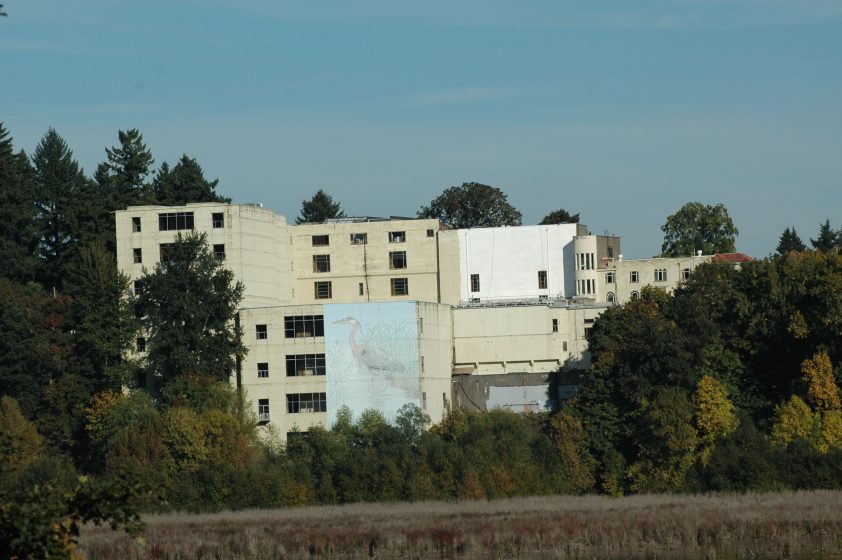
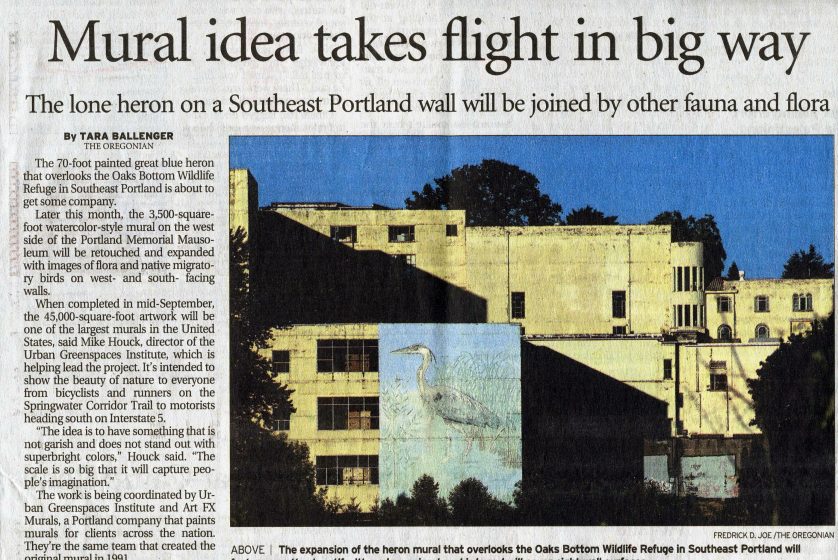
How to use those actions to advocate for better management and public involvement to protect and manage the newly designated Oaks Bottom Wildlife Refuge? A brilliant Blitz Weinhard beer bottle mural ad on a shabby brick wall inspired me to think a galactically huge image of a heron on an equally shabby wall might do the trick. I left a cryptic note on the muralist’s desk: “Love your mural, willing to do a heron”? Serendipitously, ArtFx muralist Mark Bennett’s house faced the refuge. He had long mused about “muralizing” that “butt-ugly” building.
Before. Photo: Mike Houck
A medical illustrator created the watercolor; scaffolding came from a local resident; a local paint store donated paint; and I kicked in $1,500 to hire a fine art assistant. Soon, the gray monolith was brightened by a 70-foot-tall, stately Great Blue Heron. People who had previously raced by the wetlands stopped, gawking at the massive artwork. For many passersby, it was the first time they stopped, watching herons swallowing huge carp or carting them off to the nearby nesting colony; spying arrays of diving and dabbling waterfowl, and gasping as they saw osprey and eagles dragging carp from the muddy shallows.
What had begun as a beautification project had become an artful tool that piqued enough interest to attract more resources to restore and manage the city’s first official urban wildlife refuge.
Twenty years later, Bennett called me, asking, “Houck, when are we going to finish that building?”. The heron occupied only one of eight on the mausoleum’s gray walls. Asking what it would cost me, Bennet replied, $35,000. At market rate, it would have cost $185,000. Gulping, I realized it would likely take even more and major public involvement effort to accomplish what would be a gargantuan mural.
Oregonian Mural Story
Even more formidable challenges lie ahead. I needed buy-in from the neighborhood, the building’s new owners’ permission, and, most importantly, I needed the Arts and Culture Council’s Public Art Murals Program blessing. I could hardly complain, given that the purpose for creating the mural wasn’t merely to beautify an ugly building but to bring public attention and involvement to care for the wetlands. I needed to weave together the permits and permissions, raise $75,000, and create a design that would celebrate the biodiverse wetland as a green oasis for nature and people within a short paddle to the city’s urban core.
Shane Bennett. Photo: Mike Houck
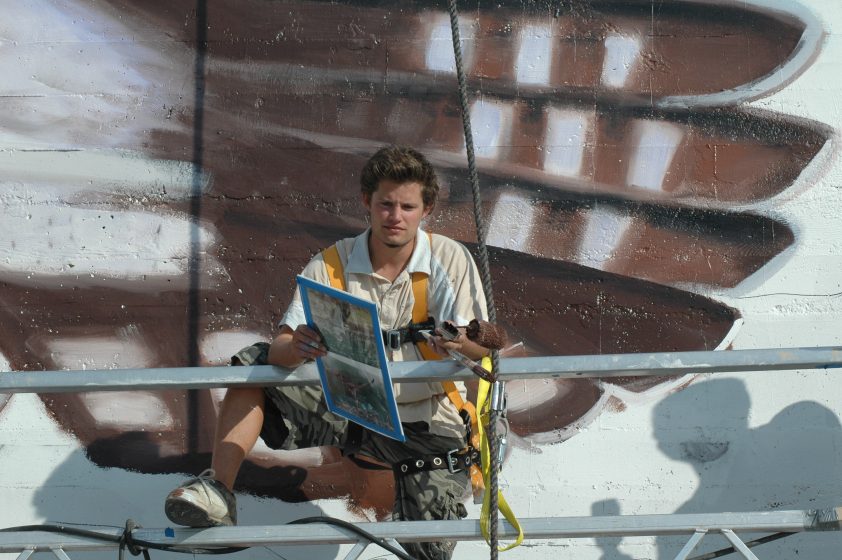
Shane, Mark’s son, had to grind off thousands of tiny rebar to allow access to the walls; each wall was power washed; He projected photos I gave him onto sheets of paper, tracing each with an electric pen that burned holes in the paper; laid paper grids on the wall and rubbed charcoal, leaving faint outlines of each critter, a process not unlike the paper cartoons Michaelangelo used in the Sistine Chapel.
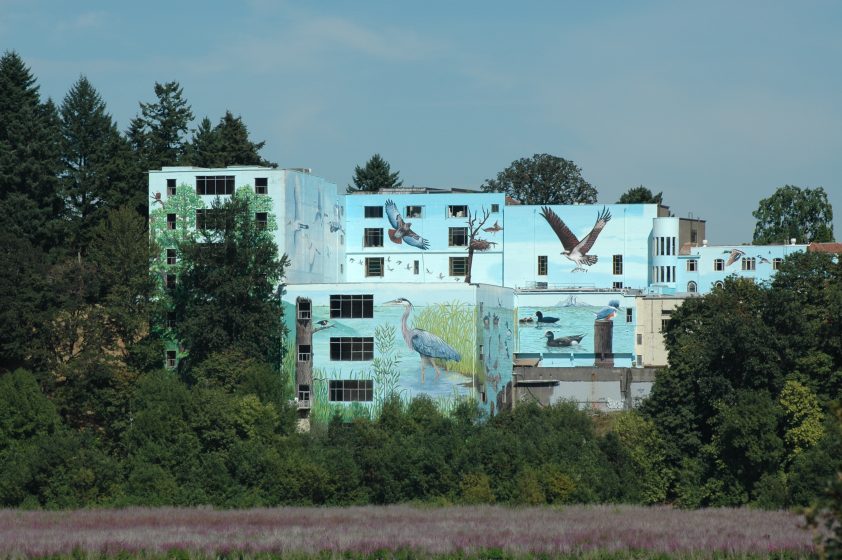
After. Photo: Mike Houck
He and his assistant then painted exquisitely detailed herons, egrets, hawks, hummingbirds, and dragonflies. The result―a stunning 55,000 ft.² wetland mosaic. As with the earlier heron mural, cyclists, runners, walkers, and entire families lingered on the trail, awestruck at the artwork and enjoying the diverse wildlife they previously had raced by.
Annie Lin (she/her/她) loves to be around artmaking and artmakers. As the Director of Community Engagement and Strategies at the Yale School of Art, Annie explores intersections between community and creativity through partnerships. Annie currently serves on the boards of the International Festival of Arts & Ideas and the New Haven Symphony Orchestra and has a background in U.S.-China arts programming. Annie studied music and education and is passionate about cultural equity as an instrument of change.
Creating a mural is a powerful, hyperlocal first step toward modeling collective change in your environment.
Alicia Keys calls it a concrete jungle. Architects call it the built environment. My research colleagues call it urbanization. Whatever this man-made thing is, it is ours. When we see the extensive systems our civilization has erected, it is awe-inspiring, but in its sheer scale has now become a threat to our existence.
We’ve built a world that is too big to fail, and now we stand in the chasm between living our lives and confronting the consequences. What can one person possibly do against societal habits that have a real environmental cost? Consider the pureed fruit pouch, a lifesaver in every parent’s lunchbox. It represents just one of the countless dependencies—convenient, seemingly small—that lock us into patterns of consumption that are impossible to disrupt.
The cooling mural “Thermal Reflections” by artist Michael DeAngelo on the historic Goffe Street Armory building shown here at a press conference with Mayor Justin Elicker and Kym Pinder, Dean of the School of Art – October 2024 in New Haven.
Enter a process that, without fail, buoys its participants through shared work and aligned values: mural making. A mural can be the antidote to divisions that segregate our communities. It empowers a neighborhood to publicly declare its values and to demand the attention of all who pass by to pronounce: we will be seen, we will be heard. Delightfully, it is a fun and democratic exercise that anyone can participate in.
As an avid arts administrator, I’ve had the privilege of being part of the mural renaissance in New Haven, a city home to hundreds of public works of art celebrating culture and history. Every time I saw a community mural go up, I saw a space of welcome being created. This is key. So how do we bridge our cutting-edge global climate science with the people who experience its harshest impact?
Sponsored by Yale Planetary Solutions, the cooling mural “Take the risk to cool down” by Victoria Martínez brightens the Fair Haven building that houses MATCH – a nonprofit workforce development hub – shown here at the mural unveiling with MATCH’s first cohort of manufacturing students and municipal and state officials, October 2023 in New Haven.
Mural making breaks the ice. The process forces elected officials, residents, business owners, artists, and activists to come together for a common good. It is so easy to be willfully divided―our modern world almost seems to demand it, to our societal detriment. It is much harder to find the narrow path forward toward collective accountability. Art simply makes it easier. It’s the OG icebreaker. It’s a vehicle for restorative dialogue. If there’s anything I’ve learned from art, it’s that people will rally around something beautiful that changes our perspective―through an aria, an exhibition, or a one-man show about being stuck in an elevator…
Art cannot solve the climate crisis at its core, but it can turn heads. It can bring together rare cross-sections of society to begin a conversation about the shared human condition―a necessary precondition for any collective effort. Dialogue that starts with people in the room can lead anywhere.
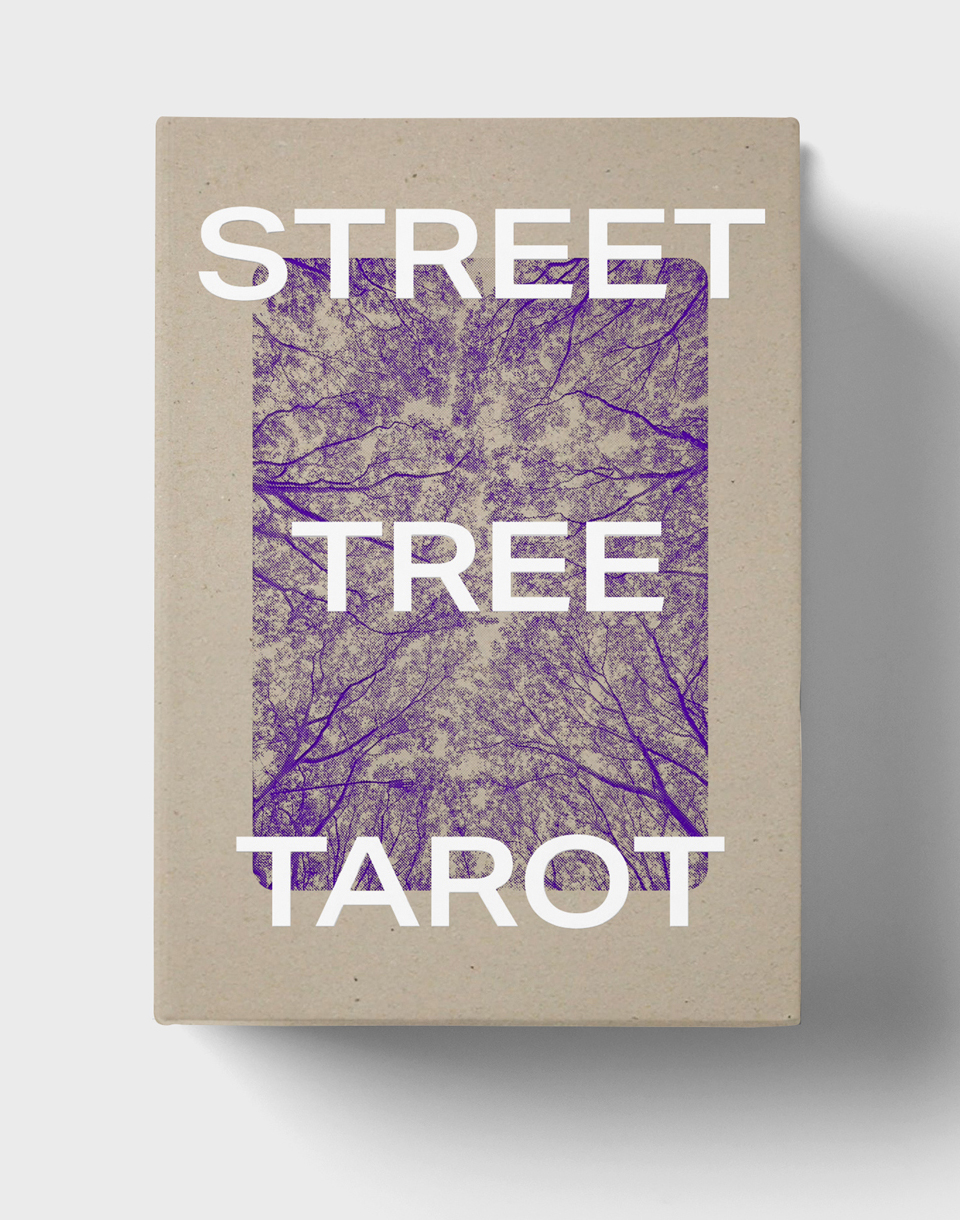
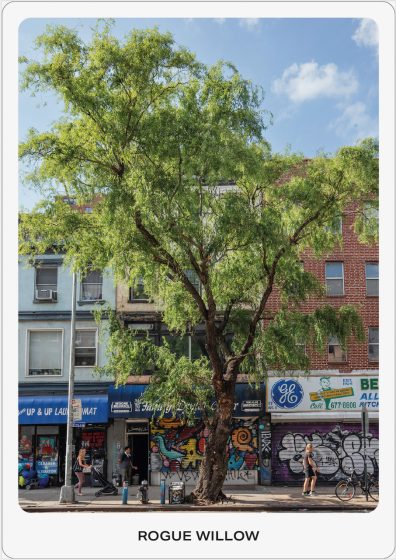
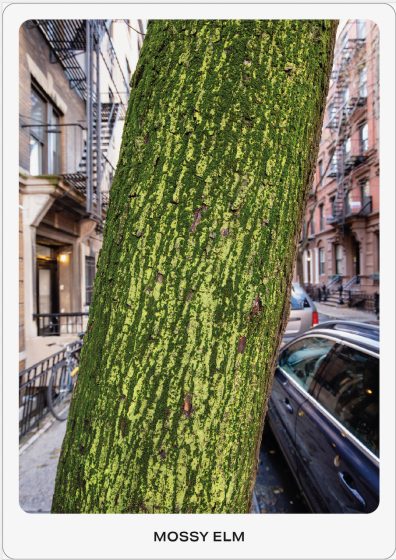
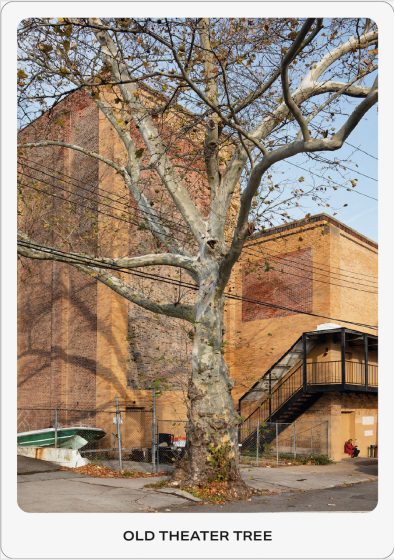
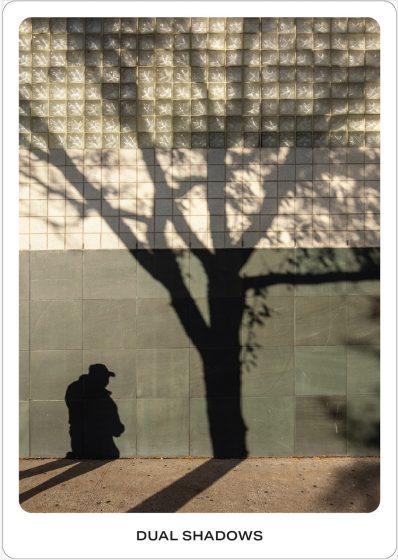
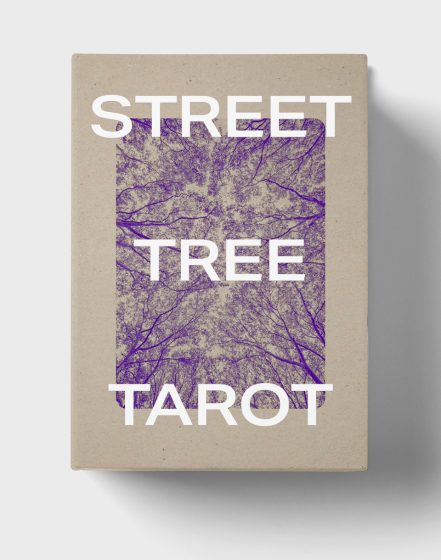
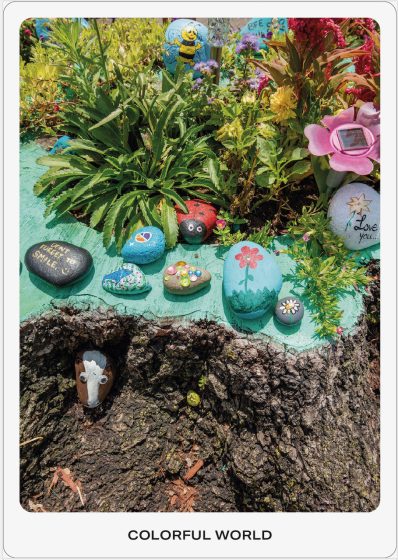
Matthew López-Jensen, the artist, author, and educator behind New York City Street Tree Tarot. The Street Tree Tarot deck is a photography deck designed to be used like any other tarot deck, but with the hope that users will bring their own meaning to the cards and develop new patterns and ways of interacting with trees and stewardship. The crowdfunded tarot deck will be published in June of 2026 by Verlag Kettler. Lindsay Campbell sat down with Matthew and asked questions about the project, street trees, and the creative process.
Lindsay Campbell: How did you first get interested in street trees?
Matthew López-Jensen: When I was young, I would climb every tree with a branch low enough to reach. I loved spending time up high and out of view. Sometimes I’d bring a book. It’s not a huge surprise that my first creative projects as an artist focused on human/tree relationships. Every Tree in Town, an archive of over 3,000 trees in Willimantic, Connecticut, explored the relationship between spruce trees and immigration patterns during the Industrial Revolution. Among Trees and Stones, an archive of beech trees at Green-Wood Cemetery, explored the layered relationships between beech trees, landscape painters, and the rural cemetery movement. I’ve also photographed trees in parks all over New York City.
Photo: Matthew López-Jensen
Street trees, the ones growing between the curb and sidewalk, are in a category all their own. Street trees are out of place and must work harder than other trees. That they can survive growing out of little squares in the sidewalk is nothing short of a miracle. They struggle to access water, spread their roots, and reach nutrients. They also deal with so many other stresses: dog waste, bike chains, over-pruning, extreme heat, vandalism, chemical dumping, construction, scaffolding, overhead wires, perpetual impacts from trucks, on top of ongoing blights. When they do survive, it is often because the humans on the block have stepped up to care. It is this care, the fact that every street tree can also be a site for environmental activity, that made me especially interested in street trees. Their resilience is inspiring. They hold space in the built environment like works of art.
LC: Tell me more about your process of walking, observing, selecting subjects, photographing, and editing. Do you consider this project a type of archive?
Photo: Matthew López-Jensen
ML: This project started as an archive of street trees and stewardship. I walked all over the five boroughs looking for street trees in all shapes and forms and for any evidence of care around the trees. I photographed street trees that were broken, regenerating, dead, or dying, enormous, loved, ignored, decorated, or defaced. There are so many street trees, almost 700,000 in New York City, but some trees have character and call out for attention (just like people). I photographed the gardens and decorations that are sometimes installed in the small tree beds surrounding street trees. I also photographed tree guards installed to protect the trees and surrounding gardens. The City has a very standard version of a tree guard, but these are cost-prohibitive for some, too bland for others. As a result, homemade tree guards are found all over. These vernacular structures reflect community pride, creativity, and thrift.
Photo: Matthew López-Jensen
Walking is structured into my creative practice, like sharpening pencils or cleaning brushes. The act of collecting is also a technique I use to create work about place. When you build an archive or collection, be it of objects or photographs of things, layers of meaning and history reveal themselves. One offshoot of my street tree work is an archive within an archive at The New School. To create The New School Forest Archive, I cataloged every street tree and tree bed on every block with a university building. I created a unique data collection form for each tree, made measurements, recorded stewardship activity, sketched the tree guards, and included a photograph of the tree. The archive was exhibited as a tactile work of art and then donated to the school’s archive. It offers a very comprehensive record of what is (or was) growing around campus buildings. The project included a walking map to some of the more sensational trees and an essay about some of the discoveries along the way. The intention of the archive was to highlight the educational potential of these trees as sites of learning and care. The New School doesn’t have a campus; it only has sidewalks. Why not treat the trees on the sidewalks as though they were an extension of the system that benefits from their presence?
LC: How have you interacted with NYC Parks and the wider urban forestry community in creating this work?
Photo: Matthew López-Jensen
ML:Street Tree Tarot grew out of my time as artist-in-residence with the New York City Urban Field Station (NYCUFS). I knew I wanted to focus on street trees, but my time as a resident helped expand my focus to stewardship. The walking and photographing and research parts were the first step. Becoming a Citizen Pruner through Trees New York was also a fantastic way to help and understand street trees. Now, when I scan a street tree, I can see evidence of care that I might not have noticed. I can estimate when pruning happened and tell if the tree is healing properly. I am also a part of forest restoration initiatives in my neighborhood and part of the coalition that helped craft City of Forest Day. I’ve been given the occasional “tree tip” from friends in these advocacy spaces and have donated images for publication in different forms. I’ve also had the opportunity to exhibit the work in museum and gallery settings. The exhibition Who Takes Care of New York? at the Queens Museum was a great example of the work manifesting alongside other artists and researchers exploring urban landscapes and stewardship.
LC: Why tarot?
ML: I have been using tarot as a teaching tool in the classroom for years. It is a great storytelling tool that encourages conversation and self-reflection. It is also a fantastic tool for teaching about symbols in art. Historic still-life and landscape paintings are filled with meaning and stories presented as collections of objects, foods, plants, and animals. I have students create their own decks, by hand, based on a series of personal prompts. The final decks they create take a wide range of forms, generate great conversations, and become amazing additions to their portfolios.
Street Tree Tarot Box
The Kickstarter for Street Tree Tarot is live, and it’s a great place to see the deck in action (and the best way to help make it a reality).
ML: New York City Street Tree Tarot is both an artist book and a teaching tool. The tactile nature of the 78-card deck is conducive to learning. Users can hold the cards, rearrange them, spread them out, and see connections between scenes that would not be possible in a typical book. I also wrote an interpretive text for each card, and these are organized in the companion booklet. The texts help users read each card as a tarot card while also sharing facts about trees, stewardship, and urban ecology. For tarot lovers, the deck contains layers of inspiration derived from traditional decks. The Lovers, Tower, World, Fool, and Death cards all have parallels. There are major and minor arcana. Instead of suits, there are tree guards, acts of care, tree shadows, and tree damage. Even without any background in tarot, users will establish their own interpretations and relationships with the imagery.
Photo: Matthew López-Jensen
One of the challenges with a project like this is that it blurs boundaries and, therefore, isn’t so easy to fund. It’s not a standard photography book, it’s not a stewardship how-to guide, and it’s not strictly scientific. The word “tarot” also makes some people nervous. It’s why crowdfunding has been so important to making the project a reality. It is very much a labor of love. Even if the Kickstarter hits the target amount, the production will cost much more than is raised.
LC: How have people responded when you have given these readings?
Photo: Matthew López-Jensen
ML: Using my mock-up deck with friends and at different events (like the World Forum on Urban Forests) is what inspired me to push the deck into publication. The reactions were emotional and immediate. The deck is photo-based and place-based, so the imagery is instantly accessible. Tree lovers, gardeners, horticulturalists, stewards, and everyone familiar with these spaces have developed deep connections to trees and plants. Some of these connections are unlocked when spending time with the scenes featured in the cards. For example, if you draw the Pierced Tree card, you are confronted with a London Plane tree being deeply scarred by the surrounding tree guard. One might instantly connect to the tree’s suffering while wanting to revolt against the forces doing the damage.
Flipping through the deck also seems to transform how people see street trees out in the world. Suddenly, they experience them more intensely. The trees have always been around as part of the City, but now they are more present during a walk around the block. Users start to notice the damage and resilience exhibited by street trees and the potential for each tree bed to be a garden–or at least cleaned and mulched. Usually, folks already have a favorite street tree, and now they have a renewed sense of pride and commitment to care for the trees on their block.
LC: What is your relationship to NYC trees like now that you have completed this project?
Photo: Matthew López-Jensen
ML: Well, I have a date with a friend and fellow Citizen Pruner to visit our local trees next weekend. We’ve got some work to do! I’ll continue to advocate for more resources for stewardship. Planting trees only gets us halfway. Local stewardship is good for the trees and builds community, but stewards need support and resources. When trees appear on a block, seemingly out of nowhere, there should be a group of locals ready to steward and educate the community. Investing in care should be an extension of expanding the urban canopy. Most cities treat street trees as “green infrastructure,” and that’s fine if it means money is being allocated for planting. But street trees are also beings, and that idea is lost at so many levels. I hope the tarot deck helps people “feel” for trees.
LC: How does this project connect to your overall artistic practice?
ML: Most of my projects are designed to find new ways (or old ways) of connecting people to the landscape. Pictures on a wall are great, sometimes, but alone, they don’t do much good. A picture of a tree that is a picture of a tree is a picture of a tree. And don’t get me wrong, I love any pictures of trees. But I need to have a connection between what I’m making and showing indoors and what is going on outdoors. I’ve used walks, maps, writing, and outdoor education as tools to expand these conversations and help people connect to local landscapes.
LC: What are some of your favorite photos in the series and why?
ML: I’ll include some of my favorite cards, but I think I’ll let readers respond without my commentary. Each of the cards featured in this post is a favorite, but for different reasons. Really, they are favorites among favorites. I expound on each scene in the booklet that comes with the tarot deck.
Matthew López-Jensen & Lindsay Campbell New York City
By Lindsay Campbell, New York. Robin Cline, Chicago. Laura Landau, New York. Georgia Silvera Seamans, New York City. Ben Helphand, Chicago. Paola Aguirre, Chicago. Sonya Sachdeva, Chicago. Natalie Campbell, Washington D.C.. Nora Almeida, New York City.
—
As part of The Nature of Cities Festival, on 29 March 2022, a team of practitioners and researchers at NeighborSpace, Borderless, and the USDA Forest Service – Northern Research Station organized a seed session, entitled “Caring in Public,” to explore the building blocks of social infrastructure with a group of 27 participants from around the world. Starting from a synthesis of the literature and a case study of community gardens, we framed questions, synthesized concepts, and led an interactive exercise of diagramming visible and invisible systems that produce known benefits and outcomes that could be applied to multiple community-managed spaces.
The framework was built around the example of community gardens and focuses on three connected themes:
Neighbors: This theme relates to organizational aspects of the community ― the core and consistent caretakers, and the community leaders who are behind the scenes organizing people, building relationships with the broader community, planning both the physical space and activities, and identifying resources to support the community.
Place-keeping: This is how the space is protected and held for the neighborhood, how the physical features of the space reflect the values and aesthetics of the community of caretakers and stewards. This also refers to the spatial typology, and their accessibility and communication systems.
Community connections: This theme refers to the network of relationships and supporters that neighbors from community-managed spaces seek to develop to engage their community assets and resources. The stronger the network and the capacity for collaboration with other community groups, organizations, and initiatives, the greater the sense of belonging and inclusion.
These themes led us to map the existing activities and the conditions supporting the activities and to define the values, principles, and outcomes that are supportive of community-managed spaces, particularly community gardens.
Framework for social infrastructure visibility in community-managed open space with key elements of community connections, neighbors, and place-keeping. Diagram: Borderless for Partnerships Lab + NeighborSpace
We wanted to explore social infrastructure sites and systems, including community gardens, public libraries, alternative archives, street trees, and community fridges in order to test, refine, and reflect on our framework. To do so, we posed the following framing questions in our TNOC Seed Session:
What are the physical sites and spaces in your city that support civic life and community care?
Who are the groups and what are the governance structures that support these sites?
What are the values and principles shaping these collective spaces?
How do they do stewardship through specific practices and activities?
Following an introduction to the framework and a community garden example, participants selected community sites of interest to them (e.g., libraries, parks, urban farms, publicly accessible private spaces) and went into break-out groups on zoom to brainstorm components and processes of these social infrastructure sites and systems at work. They went through three rounds of brainstorming on the activities, conditions, values, and outcomes of these sites – quickly covering their virtual whiteboards in sticky notes.
Screengrab from break-out group brainstorming session on testing the framework, brainstorming activities, conditions, values, and outcomes of libraries as social infrastructure. The Nature of Cities Festival – Caring in Public Seed Session. 29 March 2022.
The aim was for participants to develop collaborative group models of various greenspace types and community spaces. By the end of the 90-minute session, we realized we were only just beginning to unfold key components and relationships in these spaces. The author team continued to meet and reflect after the session, sharing vignettes about our work, and observing patterns and differences across different sites and systems. This essay shares, reflects, and builds on what we learned throughout that process.
Different models and arrangements in social infrastructure, from publicly supported to community-managed to mutual aid
“Public” places exist on a spectrum of access from public rights of way to public parks and libraries to privately owned public spaces. Access to and possible uses of these spaces are shaped by who owns and manages them, as well as their location and enclosure (or lack thereof). For example, adults are sometimes not allowed in public playgrounds without a child, and university campuses within cities are often monitored by security guards who restrict access. Even in publicly managed parks and libraries, surveillance measures can make certain people excluded or unsafe ― specifically Black, Indigenous, and people of color, as well as queer people, folks with mental illness, and anyone from a community facing a history of police violence. These barriers can mean that the most marginalized are in some cases prevented from accessing the resources they need.
These spaces operate via different institutional structures and contexts ― well beyond the simple binary of ‘top-down’ or ‘bottom-up’ organizing. They include government-supported spaces, to ones in collaboration with institutions and organizations, to those that are actively counter-institutional or that expand how we conceive of institutional contexts. Below, we present five vignettes written by individual authors who are embedded in the sites and systems of community gardens (our original case), public libraries, community archives, street trees, and community refrigerators. A closer look at these different types of social infrastructure helps to better understand particular challenges that stewards face and points to ways that strategies for visibility described above might be applied to support community investment and care.
Plotting Care in Chicago Community Gardens By Robin Cline and Ben Helphand
South Merrill Community Garden visualized using the framework – Neighbors, Place-keeping, and Community Connections. Borderless & Ellie Mejía for Partnerships Lab + NeighborSpace
We at NeighborSpace are witness to the shifting of community governance over time. As a long-term land trust, watching change is one of the unique vantage points of our organization. South Merrill Community Garden is a powerful example of the shifting yet constant social infrastructure of a community space and was a key garden to illustrate using the modeling system described here.
South Merrill Community Garden, located in the South Shore neighborhood of Chicago, is an art and wellness garden long focused on violence prevention, health programming, and community healing. The garden holds 40-plus years of community open-space use; as is the case with many community projects, the space holds the memories of different eras of effort. In 1984, children and adults of the Genesis Cooperative and the Merrill Square Co-op came together to revitalize a vacant space of a former apartment building. Families removed bricks by hand and dedicated this lot for residents of the block to grow food and get to know each other. In 1997, after several iterations of different community leadership, the garden became the 6th garden of the now 130 gardens that are protected by the land trust NeighborSpace. In 2006, the garden was transformed again, this time into a living memorial for 10-year-old student Troy Law, a gifted student who died as a result of domestic violence. Through the efforts of a Mrs. Emily Kenny, a Chicago Public School teacher from nearby O’Keefe Elementary School, the garden still stands, with Law’s memorial sculpture bringing community members together to both honor and heal the community. From 2006 to 2014, the garden functioned with the support of the women’s auxiliary board of a nearby Methodist Church, one member taking particular leadership and investment, as her apartment overlooks the garden. In 2015, the Genesis Cooperative, coming full circle, again stepped in to support leadership and support at this garden. Today, the garden functions as a memorial garden and a gathering garden; a space to honor community loss, heal, and celebrate intergenerational joy. The garden leadership at Merrill uses consistent and visible intergenerational and youth public programming to invite neighbors in and, because of this, neighbors look to this space as a place for resources, and recognize it as a community venue. At the founding moment of this garden’s history, the garden was mostly a food and flower garden, but as Natalie Perkins, one of the garden leaders, puts it “ We learned we are better at growing community than growing kale!” While educational vegetable beds are still active, the garden group has shifted its primary attention to public programming that includes youth programs, art and music classes, cooking demonstrations, and yoga and dance programming.
The garden is embedded in the neighborhood between two large apartment buildings, with one of the former garden leaders’ apartments looking directly over the garden. Another leader is an active member of a housing co-op across the street, which is home to a community room, allowing for indoor programming and meeting space during inclement weather. Leadership at this garden has touched many institutions; originally founded and supported by O’Keefe Elementary School, the garden was later adopted by the South Shore United Methodist Church Women’s Auxiliary Board, in partnership with the local block club and the Genesis Housing Cooperative. Neighbors and stakeholders include both a local chef and an architect who helped design and build an outdoor oven space, with the support of garden members. While the community organizations that have adopted this garden shift in a cycle of care, the garden is always handed off with some connection and history still intact, which creates constancy during changing times.
The leadership of the garden is rather informal; the leaders have known each other for quite some time, are familiar with and like each other, and acknowledge that decision-making is a slow and steady process. “It sometimes takes a long time for us to make decisions, but that’s okay,” says Dianne Hodges, co-garden leader and community activist. Some leaders have more time than others and are able to meet contractors, artists, or other program providers in the space. They have adopted the process of video recording these meetings instead of taking notes to make sure the conversations are captured in their entirety.
This garden has a welcoming entrance, with flower beds and seating in their public parkway, as well as art sculptures and hand-painted signs. The garden is locked during non-use periods, but it is still sometimes used in ways other than intended (sleeping, alcohol, some vandalism). The garden addresses this with direct communication, invitation, and consistent positive presence. Care and maintenance of the garden usually occur during public programming hours and is not necessarily a separate activity.
The garden is open to unique partnerships – because several of the garden leaders work with community organizations, they are always on the lookout for volunteer groups and programming partnerships. They partnered for several years working with a hospital comprehensive care program to bring patients to the garden for health and wellness programs. They also co-program with a nearby NeighborSpace garden down the block to cross-pollinate their programs and increase outreach to neighbors. The garden receives grants when available to bring in artists and special programs. Since this public-facing programming is a major priority of the garden, the garden looks for relevant community cohesion grants (for example, in Chicago, yearly grants such as the Safe and Peaceful Communities Fund) to help keep community gardens activated with free seasonal programming. Grants such as these, as well as shareable models and explicit illustration diagrams, support the emerging and urgent recognition that community gardens are important sites of social infrastructure.
Public Libraries Contain Multitudes By Natalie Campbell
Caption: Participants in the Public Interest Design Lab Fellowship view anti-freeway protest signs in The People’s Archive at the Martin Luther King Jr. Memorial Library, Washington DC, 2021. Photo: Imagine Photography
Early on in my work with my local public library system — the DC Public Library in Washington, D.C. — an artist observed: “there are so many opportunities to take something out from the library, but almost no chance for the community to put something in.” Over the years — in shifting roles as a contractor, Friends group volunteer, and now as an employee at a public library developing exhibitions — I have contemplated these words, and how to create opportunities for more diverse and visible forms of participation within our public institutions.
From volunteering to voting to public service employment, there are plenty of opportunities to participate in a library environment, but the idea that a public library could — like a community garden — be a community-run space is far from reality. Like public parks, public libraries sit at the restrictive end of the spectrum of access for stewards, and possibilities for participation are highly regulated, with a variation on the system and branch level. At the bottom, this is because public libraries are managed by a board of directors with a great degree of accountability to their public. User privacy and personal freedom are rigorously protected. Data and community input sessions are used in all aspects of facilities and service design. And, of course, public funding structures vary greatly and shape the realities of how we experience public space. As more of the commons have become enclosed, public libraries have increasingly absorbed other social services, often without increased funding or staff. Libraries are also cooling centers, Departments of Motor Vehicles, disaster relief stations, job training hubs, and emergency shelters. The position of the library as a one-stop social service center has made these spaces more precarious and constrained (Ettarh, 2018).
Applying our framework to my own experience helps to illuminate some of the factors impacting practices of stewardship and care within public libraries. First, regarding sites and place-keeping: In contrast to community gardens, the physical sites of public libraries generally don’t offer members of the public opportunities to participate directly in design or care. Open sight lines, wipe-clean surfaces, Hatch Act proscriptions against political speech, and visual guidelines aimed at accessibility, safety, and inclusion are all factors.
In terms of governance and funding structures, even within the typology of public libraries, there is a wide variance. Public libraries in the United States are often, but not always, funded by tax dollars, but in most cases draw also upon other funding sources — state and federal dollars, grants, donations, fees, and endowments. The proportion of these in any given system can vary widely. For example, while a library card holder in DC may book any meeting room for a free public event with a library card (in accordance with their guidelines), conference rooms at the Free Library of Philadelphia are only available for non-library events via event rentals. Different definitions of public space and levels of access are produced by these realities.
The most common way that stewardship is practiced in the DC Public Library system is through volunteers and Friends groups. At the DC Public Library, each library branch has its own, independent, volunteer organization, with different structures and bylaws, loosely organized through a central Federation. Similar to the politics of Parent Teacher Associations, Friends groups grapple with issues of inequity and uneven participation across the city — while some branches have no active Friends group at all, the most active Friends group in the system, the Friends of the Mt. Pleasant Library, raised more than $100,000 in a single year through a t-shirt campaign that tapped into the local punk subculture and went viral, shipping t-shirts to punk rock/library lovers nationwide.
As we proceed with examining barriers to access and the self-determined spaces that have sprung up to “fill the gaps”, it is important to note that, within these larger top-down entities, there is an entire ecosystem that contains a variety of smaller, collectively managed spaces and initiatives. Some examples that speak the spectrum of management include the New York Public Library’s storied Picture Collection, which staff and supporters have rallied to maintain as an open-access circulating collection; The Go-Go Archive and Punk Archive at the DC Public Library (collections with a high degree of donor involvement within the public library’s archival collection); the innovative artist residency, exhibition space, and makerspace, The Bubbler at Madison Public Library; San Francisco Public Library’s teen-designed and led space The Mix at SFPL, to name just a few. Such examples are more the exception than the rule, in institutions tasked with equitably providing a dizzying array of social services. Yet, both within these more collectively managed initiatives and beyond — despite the strains on the system and restrictions on use — I regularly observe a sense of public ownership that renders public libraries palpably, strikingly different from almost any other interior urban space. Given this, how can public libraries learn from stewardship support structures in play elsewhere in our society?
Some questions that arise in relation to our framework: How can libraries empower ‘neighbors’ to play increased roles in decision-making, in a way that is accessible and equitable? How can we increase opportunities for residents to directly shape library spaces through place-keeping in ways that are equitable and sustainable for staff under numerous pressures? How can we better nurture and mutually strengthen the community connections that are occurring in all levels of service on a daily basis?
An Alternative Archive is a Collection and a Collective By Nora Almeida
Image one: Interference Archive Propaganda Party with Brooklyn Eviction Defense, 2022 Image two: Interference Archive Wikipedia Editathon in collaboration with Wikimedia NYC, 2019, both by Nora Almeida
Alternative libraries and archives have emerged because of limitations and restrictions in municipally managed space. They are spaces that can support civic life and provide resources that you might not find in a public library or institutional archive or be set up in a rural area or underfunded neighborhood without adequate resources to meet community needs. Alternative libraries and archives vary widely in scope, focus, and type. They might be temporary, like the People’s Library which was created to support Occupy Wall Street activists. They might be itinerant pop-ups like Radical Reference, which emerged during the 2004 Republican National Convention to help protesters and later became an online volunteer reference service for information-seeking activists. They might provide access to non-traditional materials, like the Next Epoch Seed Library, which collects and “lends” the seeds of weeds that thrive in environmentally disturbed areas and publishes educational resources about urban ecology including open-access curricula.
Many self-determined, independent libraries and archives create social infrastructure to support specific publics, provide access to counter-histories that are typically under-represented in public libraries and municipal archives, and function as community centers and safe spaces. Interference Archive is one example. Founded in 2012 in Gowanus, Brooklyn, New York, the archive is a donation-supported, volunteer-run space that mounts public exhibitions, offers free workshops and cultural events, and provides access to materials created by social movement activists from all over the world (“About us”).
I started volunteering at the archive in 2015 after attending a film screening with a friend and viewing an exhibition about Tenant Organizing. During my first volunteer shift, I helped with an outdoor printmaking event organized in collaboration with Mobile Print Power, a multigenerational printmaking collective, and Combat Paper, an organization that works with veterans to transform military uniforms into paper as a method to process and share experiences of war. In the seven years I’ve spent as an archive volunteer, I’ve organized dozens of public programs and Wikipedia edit-athons, co-curated four exhibitions, worked with educators and organizations across the city to bring movement histories into classrooms and galleries, and collaborated with grassroots groups like the No North Brooklyn Pipeline Coalition and The Poor People’s Campaign to host propaganda parties where we produce materials ― buttons, posters, t-shirts, banners ― for use in current movement struggles.
In contrast to most archives, Interference Archive is open stacks and treats the cultural ephemera produced by activists as part of a common history we all share, which is reinforced by a “use as preservation” philosophy that privileges the sharing of ideas over the preservation (or fetishization) of artifacts. Exhibitions at the archive are intended to make social movement histories more accessible and to encourage visitors to open up boxes and start conversations about contemporary struggles for social justice. Many of the exhibitions and almost all of the public programs at the archive are collaborative and interactive; they often support ongoing struggles directly by providing a forum for organizers to share ideas or indirectly through alternative educational programming (Gordon, Hanna, Hoyer, Ordaz, 2016). The archive is a generative space that is actively invested in archiving the present and regularly hosts programs including training, workshops, and media-making events to create material for use by NYC activists in street demonstrations (Almeida and Hoyer, 2019).
What drew me to Interference Archive and has kept me engaged is the relationships I’ve made with other volunteers and activists across New York City. The non-hierarchical governance and transparent work structure makes it possible to co-organize meaningful public programs without the kind of bureaucracy that I face in my job as an academic librarian at a large public university. I’ve learned an enormous amount from the material in the archive which represents a wide array of ephemera produced by activists around the world. In the archive, you might find posters produced by Dutch Provo anarchists during the 1960s advocating for car-free cities, pamphlets and flyers made by counter-globalism activists during the 1999 Seattle WTO protests, educational pamphlets made by the Jane collective–an underground abortion network in Chicago founded in 1965, issues of the Black Panther newspaper from the early 1970s covering the Vietnam War, Black Liberation solidarity posters produced by the Fireworks Graphics Collective during the 1980s, flyers made by anti-nuclear activists in the 1990s at the Greenham Common Women’s Peace Camp in the UK, and silk-screened t-shirts produced at the archive last week in collaboration with current organizers from Brooklyn Eviction Defense.
The sense of community the archive fosters ― among volunteers, across movement groups, and with visitors who range from students and scholars to curious passersby and activists ― is the product of the behind-the-scenes labor we all conduct to make decisions collectively and intentionally (even if they take a long time) and a commitment to support each other and new volunteers through transparent accountability structures that we’ve carefully developed over the past decade. The values and principles of the space are directly informed by the collective, non-hierarchical organizational structure practiced by many movement groups represented in our collection. Not unlike most self-managed spaces, we face limitations: our labor is unevenly donated and sometimes invisible, communication across a large volunteer network can be unwieldy, funding is precarious, and sometimes knowledge is lost as people cycle in and out of the network. These obstacles only reinforce the need for continual examination of social infrastructure models. After more than a decade, the archive has become more reflective of its own practices and limitations and is currently focused on developing programs to engage new publics that we aren’t currently reaching and refining organizational structures with an eye towards sustainability. Its role as a place made for and by the community, and the uniqueness of the collection material at the archive, means that it must, like any movement space, keep moving.
A Street Tree is a Place By Georgia Silvera Seamans
A person adding soil and compost to a recently expanded tree bed during a work day with Mission Greenbelt in San Francisco. Image courtesy of Georgia Silvera Seamans
It is easy to see a community garden as a place. You can enter and move through a garden. One can speak about spending time in and visiting a community garden. At first, it might be challenging to perceive a street tree as a place. Yet, when you consider these trees are often planted in demarcated areas of the sidewalk, they are physical places. Like a forest, they are also social spaces. Alone or with others, enabled by institutions or bucking conventions, you can do things in, with, and for a street tree. During my time as a community forester with the Urban Resources Initiative, a nonprofit housed within the Yale School of the Environment in New Haven, CT, most of the community groups I worked with created green spaces by planting street trees. Every group was composed of hyper-local residents with varying degrees of bonding and bridging ties who through stewardship strengthened their reliance on each other.
Acting out of a desire to reclaim their neighborhoods as beautiful, safe, verdant, spaces, residents applied for funding to develop and implement street tree planting plans. They collaborated with each other and with their community forestry resource person, scheduled workdays, showed up, dug and backfilled holes, and settled in their new trees with mulch and water. There were many such days throughout the summer. Each planting day and subsequent maintenance sessions were opportunities to display care, to deepen trust, and to embed new trees in the neighborhood’s canopy.
After digging in the soil with residents in New Haven, I moved to Boston where I stayed in urban forestry but had a more hands-off position managing the city’s street tree planting program. At that time, Boston planted trees based on residents’ requests for a new or replacement tree. I held a shovel a few times, posing in photos for corporate-sponsored plantings. Thankfully, selecting trees at a nursery was also part of the new job. It was an awesome responsibility to choose the trees for a city’s next arboreal cohort!
My next attempt at street tree care was with a trio of Honeylocust trees in New York City, but this engagement was short-lived. I was doing this work alone and didn’t have a community to lean on. I didn’t totally abandon the street trees in my neighborhood, though. I volunteered for the city’s 2015 Street Tree Census, the third decennial survey organized by the New York City Department of Parks and Recreation. I recruited a co-lead and we committed to a zone bounded by Houston Street, Sixth Avenue, 14th Street, and the Bowery. Annie and I participated in “train the trainer” workshops and hosted survey events for other volunteers. The census work was like a roving display of care. When we were out surveying trees, residents asked what we were doing which led to some fruitful conversations about the city’s urban forest.
Fast forward a few years and I had a plot on a university urban farm and several of the gardeners and the farm manager started talking about taking care of the adjacent street tree beds. We wanted to spread our resources beyond the farm’s fence and spruce up the public realm. These public trees were planted and left to negotiate space with human infrastructure, design, and other forms of mediated plant dispersal. We pulled spontaneous herbs, we cleaned up dog waste and garbage, and we sowed bulbs and native perennials. The location was challenging to care for. Without any fencing around the beds, the maintenance staff of the adjacent buildings piled heavy garbage bags on the new plants on trash collection days. People did not pick up pet waste. Litter blew into the beds. Squirrels ate the bulbs. We resolved to keep trying but then COVID-19 emerged, and our attention was diverted elsewhere. Two and a half years later, the garden community is slowly finding our footing. I enrolled in the Stewardship Team course offered by New York City Parks which reminded me of some of the resources available to care for public landscapes. I requested hundreds of daffodil bulbs, and one evening this fall, the main caretaker, a group of college students, and I picked up litter and planted one thousand bulbs at the farm’s edge and in adjacent street tree beds. This was a first step to rebuild our street tree care community. The next spring will be a time to consistently connect with our neighbors and reinvest in place-keeping. I want to mobilize the community around street tree care without attracting institutional interference and ideals of beauty.
Feeding Our Neighbors through Community Fridges By Laura Landau
Original fridge and fridge shelter painted by M.Silin for Collective Focus Resource Hub. Photo by M.Silin
Public spaces take on a new meaning and level of necessity in times of crisis. In my past research, I have studied many examples of how parks, community centers, and houses of worship serve as flexible spaces that can be activated into emergency meet-up spots, donation collection hubs, and organizing centers following a disaster. Scholars have found that community needs and the chain of events following a crisis are often the same, regardless of the specific type of disaster event. Emergencies simply heighten and expose existing needs. The onset of COVID-19 in New York City reactivated the networks of civic groups, community leaders, local businesses, and elected officials that had been formed in response to a variety of other acute and chronic disasters, from Superstorm Sandy to ongoing chronic racism and gentrification. In addition, the pandemic brought a surge of new responders in the form of mutual aid networks, many of which are committed to working outside of systems of public aid and charity models that have strict requirements for who can participate and what they are eligible to receive (Landau 2022). Many mutual aid efforts have focused on food insecurity, a reality that predated COVID-19 in New York City but has increased by 36%since the pandemic due to a combination of income loss, rising costs for food and rent, and health and safety risks.
Community refrigerators (fridges) are one example of mutual aid that use public space to connect people with food in a low-barrier way. They are often located on the sidewalk, a public right of way that anyone can reach. Unlike many government and non-profit food assistance programs, community fridges do not limit or monitor the level of need each person can demonstrate, or the type or amount of food each person can take. They are also set apart from other models by the way they are stocked and managed. Anyone can put food in the fridge, and anyone can take it. This practice models a core principle of mutual aid, that everyone has something to give and something they need. In practice, navigating this principle can be complex. The role of neighbors is unique in this form of social infrastructure, because community fridges are usually managed by networks of people that are not explicitly connected to larger, more formalized organizations and nonprofits that come with resources and management skills. This allows for a great deal of organizing flexibility, but also can lead to conflicts over place-keeping, since anyone can place a claim on the public right of way.
As part of my dissertation research, I interviewed representatives from mutual aid groups across New York City that were formed in response to COVID-19. Many of the groups I spoke with operate community fridges, often in gentrifying neighborhoods with large low-income communities of color. All of these fridges depend on the unpaid labor of local residents, but other entities, both public and private, still shape their practice.
When one mutual aid group decided they wanted to create and operate a community fridge, a local beloved restaurant offered to purchase the fridge and keep it on their sidewalk. Almost immediately after being set up, the fridge was vandalized and broken. The restaurant owners were not dissuaded by the incident, and they purchased a new fridge and installed it on a crate so that it couldn’t be tipped over. With the organizing power of the mutual aid group, they have now maintained the fridge for over a year and a half. Volunteers operate on a regular schedule to pick up leftover food from restaurants, grocery delivery services, and the local food co-op, and stock the fridge and adjacent pantry with a mix of fresh ingredients and prepared items. Another team of volunteers regularly cleans out the fridge to remove any food that has gone bad. A group of college students brings leftover food from the dining hall. The operation has not been without its challenges — there have been a few other vandalism incidents and some volunteers have suspected that certain people are removing everything from the fridge and selling some of the food — but more often than not people are respectful. Where a charity model might view these incidents as problems to solve, the mutual aid group prioritizes the community’s right to food and does not believe in policing access.
When something does require intervention, mutual aid groups rely on their skills and networks to mediate. Another mutual aid group that operates a community fridge witnessed some ongoing conflict over food. In accordance with their values, the group wanted to help de-escalate the conflict without getting the police involved and potentially endangering the community. Although they are careful about their relationships with government representations and have in the past turned down offers of support from elected officials who wanted their endorsement or a photo opportunity in exchange, they were able to use their connection to a different elected to hire a translator to decrease conflict over miscommunication at the fridge. Similarly, in a different neighborhood, a disgruntled neighbor called the police to try to get a community fridge and pantry removed from the sidewalk, and a council member stepped in to defend the mutual aid group. These are just a few examples of many that illustrate the interconnectivity and interdependence of the civic, public, and private sectors in shared spaces.
In addition to providing food, community fridges can serve as points of connection. One mutual aid group asked a local art student to paint their community fridge to beautify the sidewalk space and reflect the culture of the neighborhood. Another volunteer shared an experience of going to stock the fridge and seeing an older woman waiting. The volunteer asked if there was something specific she was waiting for and discovered that she was hoping for a specific pastry that was sometimes delivered from the local bakery. Not only was it in the delivery haul, but it turned out to be the volunteer’s favorite treat as well, and the two were able to share a nice moment reflecting on their similar taste. While the transient nature of community fridges and the goal of allowing people some anonymity as they take their food sets them apart from other sites of social infrastructure, the loose social ties formed on the sidewalk are a crucial part of what keeps people coming back and working toward a city where everyone has the food they need.
Reflections and future work
Let’s return to the questions we posed at the outset of this essay as illuminated by these cases:
What are the physical sites and spaces in your city that support civic life and community care?
Who are the groups and what are the governance structures that support these sites?
What are the values and principles shaping these collective spaces?
How do they do stewardship through specific practices and activities?
These vignettes reveal diverse forms of social infrastructures in our communities. These “third spaces” ― beyond the home and the workplace (be they public, private, or in-between) ― are vital sites for providing/receiving social services, interacting with neighbors, and participating in civic life. In discussing how to adapt our framework beyond the specific site type of community gardens, we felt that the framework has many of the key components of any social infrastructure system ― the actors, the values, and the activities. But we need to consider the constellation of ways in which these dimensions come together. We can ask: who is caring for and using space for what and why?
We grappled with how to better capture key differences in organizational structures and institutional contexts across a wide spectrum ― from publicly-funded and staffed facilities to mutual aid networks. These differences have real implications for the role of paid and unpaid labor, the power dynamics of decision-making, and the control of space. Governance questions — Who decides? Who funds? Who labors? Who cares? — are crucial to pose and make transparent when seeking to understand these dynamics. As the vignettes reveal, there is complexity even within a single site type as publicly-funded spaces can include “friends of” groups and community-organized programs and activities.
We also identified constraints, challenges, and limits on the use of spaces and social infrastructures. As discussed earlier, access to sites varies widely across public and private spaces, with a whole range of configurations that might be described as “quasi-public” or public for some people, some uses, and in some instances. Particularly where we see commercial ventures that require purchasing an item or a service (e.g., coffee shop, restaurant, bookstore) ― this presents barriers for those who cannot afford to pay to access that space. Some sites and systems present challenging tradeoffs. For example, is an “open street” that activates a city street for an outdoor restaurant a transformation that invites publicity and conviviality, or is it one that privatizes space and excludes some users? The answer, frustratingly, may be “both” ― and being attuned to subtle and not-so-subtle acts of inclusion and exclusion are critical. Access also depends on the identities and bodies of the users, with lower-income people, people of color, and unhoused people more frequently surveilled and policed within “public” spaces that sanction certain activities (e.g., sleeping, solicitation, vending).
In focusing on positive social benefits in our framework, these challenges can recede into the background ― and yet they can be some of the main factors that differentiate between systems. We must pose the questions: Who is seen as the public? Who is served? Who is left out? Given these questions, how might we build even more complete frameworks that both celebrate the hidden benefits, but also acknowledge challenges and conflicts ― including dimensions of inequity, inequality, and injustice that thread through these systems? Going forward, how do we recognize the multiple values of these social infrastructures, and how might we better support and enable them? What unique forms of support might be needed in the context of stresses ranging from fiscal crises to climate change to pandemics? Building on national conversations about deferred maintenance and needed upgrades to physical infrastructures, what would a comprehensive plan look like to support, grow, and transform social infrastructures to meet the needs of all people.
Lindsay Campbell1, Robin Cline2, Ben Helphand2, Paola Aguirre2, Sonya Sachdeva2, Natalie Campbell3, Nora Almeida1, Laura Landau1, Georgia Silvera Seamans1 New York1, Chicago2, Washington D.C.3
Acknowledgments: All Partnerships Lab participants and TNOC Festival Caring in Public attendees, including Erika Svendsen, Michelle Johnson, Sophie Neuhaus, Sarah Fox Tracy, Bep Schrammeijer, Paula Acevedo, Pete Ellis, Gitty Korsuize, Tuba Atabey, Neda Puskarica-Stojanovic, Yaritza Guillen, Natalie Perkins, Staice Martin, Francesca Birks, Samantha Miller
Robin Cline serves as Assistant Director of NeighborSpace, an urban open space land trust in Chicago. Robin is also the part-time executive director for the art group OperaMatic, a site-specific artist group that activates public spaces in Humboldt Park and Hermosa with participatory art.
For more than twenty years, Ben has focused on ways to help communities have a direct hand in the creation and stewardship of the built environment. He is the Executive Director of NeighborSpace, a nonprofit urban land trust dedicated to preserving and sustaining community-managed open spaces in Chicago.
Paola Aguirre Serrano is an urban designer and partner at Borderless since 2016. She has served as Commissioner of Chicago Landmarks and the Cultural Advisory Council of the City of Chicago, and currently serves in the Scholarly Advisory Committee for the National Museum of the American Latino. Paola received a B. of Architecture from the Institute Superior de Arquitectura y Diseño de Chihuahua, and M. of Architecture in Urban Design from the Harvard School of Design.
Sonya Sachdeva is a computational social scientist with the US Forest Service in the greater Chicago area. She utilizes machine learning and other computational methodology to understand the socio-cultural factors that shape environmental values and behavior.
Natalie Campbell is a curator, exhibit developer, and part of the DC Public Library Exhibits team. She has consulted on art and exhibits at the DC Public Library since 2016, including the MLK Library’s permanent exhibit Up From the People. She studied Art History at Hunter College CUNY and has taught at the Corcoran School of Arts + Design at George Washington University and the Maryland Institute College of Art.
Nora Almeida is an urban swimmer, writer, performance artist, librarian, and environmental activist. She’s an Associate Professor in the Library Department at City Tech and a long-time volunteer at Interference Archive. She has organized media-making workshops, public events, and street performances across NYC.
Laura is currently pursuing a PhD in geography at Rutgers University. Her research focuses on the civic groups that care for the local environment, and on the potential for urban environmental stewardship to strengthen communities and make them more resilient to disaster and disturbance.
Georgia lives and breathes city trees–with experience in New Haven, Boston, Oakland, and NYC, and a dissertation about urban forestry policy in Northern California cities. Georgia is the founder of Local Nature Lab and directs Washington Square Park Eco Projects where she designs urban ecology programs for New Yorkers of all ages.
Almeida, Nora, and Jen Hoyer. 2020. “The Living Archive in the Anthropocene,” in “Libraries and Archives in the Anthropocene,” eds. Eira Tansey and Rob Montoya. Special issue, Journal of Critical Library and Information Studies 3, no. 1. DOI: 10.24242/jclis.v3i1.96.
In early 2018, the Assiniboine Park Conservancy, which is located in the western part of the city of Winnipeg in Manitoba, Canada, announced that they would be demolishing their conservatory in April, citing the end of the structure’s lifespan. At that time, artist Helga Jakobson was experimenting with designs for capacitors that could capture plant reactions, and she asked if she could take her inventions into the space to record the sounds of its inhabitants before they were displaced or uprooted permanently. In just three months, she collected over 500 hours of plant song and, for the past five years, she has been composing these sounds into a symphony. Information on the final product, Entropic Symphony, can be found on her website.
Lucie Lederhendler, who is curating an exhibition including new work by Jakobson this September, asked to speak with her about this ambitious project. The following interview has been edited for form and clarity.
The cover for the soon-to-be-released album Entropic Symphony by Helga Jakobson. Image: Helga Jakobson.
Lucie Lederhendler: I’d like to put the project into context first, because there’s something so meta-sociological in the framework, of the moment when you began your work, in the narrative of the conservancy.
Helga Jakobson: Sure. The Assiniboine Park Conservancy manages the park, the grounds around the conservatory, the zoo, all of the landscape within the zoo, all of the soil within the conservatory, and any other structures or features of that allocated zone.
The overseeing bodies that managed not only that conservatory building but also the larger grounds and the zoo were really the stewards of the space. Historically, there was a much larger volunteer base managing the visitor component, and so, as the conservancy was making decisions around not only around the closure of the space, but also around where the plants would go, which plants could move and which plants could not, they were also providing a lot of stewardship, and doing the work to figure out the new Leaf building at the same time.
I have a lot of respect for the conservancy and the way that they navigated the closure of the space. I found them to be thoughtful down to the microorganisms that they were the stewards of. The way that they spoke about soil, the way that they spoke about the interconnectivity of the bacteria, of the fungal bodies, and really thinking about how best to provide care for all of the organisms that live inside of the space. It was really magical to hear the depth to which they considered their roles.
The decision to close the conservatory was a really fraught and upsetting one, on so many levels. What was interesting about the closure was that it brought out these multi-layered aspects of grief that people felt on so many different fronts. For instance, there was the grief of the conservancy, the staff, who had worked there for a very long time, who had felt very personal relationships with the plants that they were stewards of, and then also the volunteers, and community members who were all losing these beings that were deeply, deeply cared for, down to a microbial level. Not to mention the community members, long-standing volunteers, and environmentalist groups, to name a few.
LL: There’s something about the idea of a conservatory that has a built-in obsolescence, but you wouldn’t take them away, right? That’s where I see the meta-sociological framework most clearly.
HJ: Oh, indeed. The conservatory itself, at Assiniboine Park specifically, but all conservatories are these really interesting meta-sociological spaces. They’re at once antiquated and also futuristic. They’re an ideal, this utopia, a kind of space of hopes and dreams and growth, while also being reliquaries–spaces that house something fantastical that could just never exist. The plants within a conservatory would never live so close to each other. They would live in more complicated relations, so there’s a layer of impossible, and also communal, space. For instance, the Assiniboine Park Conservatory was one of the last free conservatories or green spaces of that capacity in Canada. There are only a few left that are free of charge, which also speaks to a larger issue of the lack and loss of communal gathering spaces, of free commons for folks to enjoy.
LL: So, any displacement of plants will have obsolescence, but that’s okay.
HJ: I’m not sure even if it’s obsolescence so much as entropy. Of course, the space itself is man-made, but it’s clear in planting a plant that it will die―even trees, which have a longer life span. Most of the plants within that space just could not live as long as the humans that love them. One of the main reasons that the space itself closed, and this aligns more I think with what you’re getting at―was the boiler. The boiler was one of the biggest issues in the space, but really it was climate change. They built the building around this boiler in 1914 to manage all of the weather inside, and it was a massive beast of a machine that was built in a time before the weather fluctuated like it does now. It just couldn’t keep up. So, the boiler was slowly―and towards the end, rapidly―dying.
The Assiniboine Park Conservatory, 2018. Photo: Helga Jakobson.
It was fantastic in a way because some of the plants in the space, too, would just not stop growing. In this way, yes, the boiler became obsolete, but some of the plants, which should have stopped growing at a certain point, just didn’t. There was one that I really really loved, a gigantic palm that they kept topping―they would just cut it off and it would just keep growing. The first time that they topped it, it was because it had grown so tall that it had cracked one of the windows on the roof. I called it the roof-crushing palm. It just wouldn’t stop. The space had outgrown itself, roots were cracking the foundation, and the boiler―slowly, all together, they created this amazing chaos that had a kind of decadence of ruin that we’re all drawn to. Maybe not all, but I would say a lot of us, are drawn to the beauty in decline.
It felt like a really bombastic environment to be invited into. I had an exhibition that I was building machinery for at the time that would play plants. At the same time, I was feeling my own feelings about the space closing, and thinking about the inner workings of plants, and I thought I just had to reach out. When they invited me in, and I hadn’t built the machinery yet! I had to work around the clock to figure out this new system, a new recording device, and amplifier, while also trying to understand what it would be like to compose within that environment. I became an expert really fast in the synthesizer system that I built.
There was more and more news coverage about the space closing, so people started coming more and more. When I first started doing this work in residence, I would see three or four people in a day and, by the end, it was hundreds of people. It was completely out of control.
LL: When you say you were working in residence, you’re literally in among the plants and the soil?
HJ: Oh yeah, and in the rooftop―they allowed me access to the top tier that they water from so I could work away from the public, as well as access the leaves and green space up above the terrain level.
LL: When you talk about these people swarming to have a desperate last visit, it makes me think of a colleague of mine, Dr. Alysha Farrell, who talks about “unmetabolized grief” in the context of the climate crisis―this feeling of helplessness is just grief with no direction. When you think about grief and mourning in the context of the loss of these plants, and, in particular, I think there was a Norfolk Pine that they couldn’t save.
HJ: Yeah, that was the one that people had the most feelings about, for sure. It was an interesting one. It had been topped, I think they said, 13 times in its life. Without the context of direct conversations with the staff there, I would have felt that that was barbaric―or quite aggressive. Being able to see it from the top, though, from where the public would never have seen it, it was quite clear that topping is why this was such a majestic tree because it had been shaped by humans.
So, there was a funny feeling that I had about the Norfolk, and how I felt during the entire residency. My entire perspective was shifted back and forth so many times. Beforehand, I had some pretty romantic ideas about the conservatory. I grew to feel that it was a very colonial space, like a cabinet of curiosities.
Then I also had a community perspective. One of the people that I saw almost every day in the space, who really used the space and needed it, was a mother and her daughter. The mother was in her 80s and had dementia and found a lot of peace there. They were quite low-income and didn’t have a lot of physically accessible spaces to go [to] in Winnipeg in the winter, so it was an incredible resource for them, and they really valued it. So, I had this perspective of the space being a gathering place for folks like that.
Then as the news came out that the conservatory was closing, and people started coming more and more, there were so many really interesting stakeholders who were coming in protest. They had a lot of thoughts about right and wrong and weren’t informed about the very, very thoughtful process and practical components of the closure. I think that the idea of metabolizing feelings of eco-anxiety―there are a lot of different terms that you can put towards that kind of feeling―comes down to what do we do, and how do we live on a damaged earth?
The Norfolk Pine in the old Assiniboine Park Conservatory, 2018. Photo: Helga Jakobson
I think a lot of the reactions that people had to the closure were rooted in exactly that. The Norfolk was a great example. This idea that this tree was so beloved because of the size and the shape and the beauty of it, that the general public had no idea that it had been manicured so extremely for so many years, and that’s what created that majesty. That was an illuminating moment for me, compounded with the idea that that one tree can mean so much―I think it is a bit fantastical. The conservancy knew that people would have so many feelings about the Norfolk being cut down, and so they had worked to create cloned seeds from that tree to give out. I’m not sure if this ever happened but, in theory, you’d be able to grow your own, so to speak. They worked to create other registrations of the tree’s existence, going so far as to reach out to Bartholomäus Traubeck about creating a tree ring recording of it.
The whole experience was really a metaphor because you build yourself a little cabinet of curiosities, knowing that it’s going to eventually fail. It just cannot stay forever. The idea of roots breaking it down and reclaiming it recalled a Margaret Atwood kind of mindset for me, in the MaddAddam series when she talks about the kudzu taking over, and how these plants that weren’t really meant to be there would just take over the world anyways.
Some people that I spoke to found a lot of peace in the idea that nature just wins in the end. Even if that means that they’re allowed to die, like these palms, breaking free through the roof, even though they could not survive in this climate. Maybe they don’t want to live for this extended period of time that they’re being cared for. This Norfolk pine that has been topped so many times, its roots are the ones crushing the foundation. Is it saying, “Enough now, let me die”?
There’s a lot of really interesting takeaways, and when I wonder, did they―the Conservancy―let us grieve right? Did they allow people to do what they needed to do to get that kind of closure and peace? Did that closure remind us that we’re all living on this damaged earth that sometimes feels beyond repair? I think that they really did a good job of it. They allowed protesters to come in as choirs to sing to the trees, and me to come in and record all of these trees. They allowed all of their volunteers to have a private day after the closure and to walk through the space. So, I think when it came to grieving well, they did that. They were faced with a situation that was inevitable.
How do we live in community together with these systems that are going to fail? As our ecosystem is reaching some critical points, I think all that we can learn to do as humans is to grieve well. To be activated and informed and mobilize to create impact where we can individually and to lobby for structural change.
LL: The medium of symphonic arrangement is such a time-tested mode for the expression of grief. Did that idea begin with the concept? Was it, “I want to create an elegiac symphony”?
HJ: No, it wasn’t. I felt compelled, thinking about the deep and varied layers to the story of the closure. Grief, death, dying, ephemerality; these are all core elements of my art practice. Sound at that point was a very new component to my work. I approached it saying, I can do this thing, and then when they said yes, I had to figure out how to do it.
I have no interest in anthropomorphizing. I have no interest in speaking for things. I just had the impulse to allow these plants, or an impression of them, to be recorded. For posterity, but also to see what would happen, just as a pure research-based experiment. Because there were hundreds of plants, I needed to figure out a framework for how I would organize it. So, I decided to lay it out as an orchestra. Then, instead of trying to assign each plant according to, “You look like a tuba, so you’ll be the tuba,” I tried to just facilitate. That made it a lot easier to organize in that sense.
Then I really had to think about tonal qualities, I had to think about what MIDI libraries were readily available because I was working at a pretty fast pace. So, more than figuring out what the sounds would sound like, I had to figure out who was singing, and how to allow that to happen.
LL: There’s a parallel between the idea of handing the mic to the plants and letting them speak to the humanist idea of centring victims’ voices in conversations about trauma, in that both have to be done with structured care. So, how much intervention did you allow yourself? Did you set parameters for how much manipulation you would have in that voice collection?
HJ: Yeah, my clumsy way of working in that space was to act like Vinciane Despret, who speaks to the importance of being a polite visitor. There cannot be a world in which my hand is not involved. All that I can do is set up the most equal and fair parameters that will allow for a less biased expression. So, I worked with the MIDI libraries that were available to me through LogicPro, that way I was not tuning or amplifying one or the other in the recording process. I just simply let them play.
That’s been more of a consideration as I’ve been composing: where do I cut and where do I not? The first iteration of the symphony was just a 15-minute-long recording of all of the files all at once, which sounds very droney, very dull, very very low tones. There’s this great hum that happens. This is something where, had I walked in with a synthesizer built beforehand, I could have had a little more control, but it’s almost better for me and my perspective that I was learning with the plants, and so the recordings just were as they were. It felt like sympoiesis[1] in the sense that it was an adaptive and evolving knowledge base, a collectively-built system that could only grow as fast as I could build it, while also recording at this rapid pace. One led to the other, led to the other, led to the other. So, I do really feel that it was kind of a co-mingled experience.
LL: Can you describe how you’re actually collecting these noises? And what’s the current status of the project?
HJ: I built a synthesizer system that reads the bioelectric impulse of the plants, and I would clip alligator clips onto their leaves, stems, bark, or roots; all of these different plants, as many of them as I could in the timeframe I was allotted. Then the system reads the bioelectric impulse of the plant and outputs it as MIDI libraries. The MIDI libraries that I accessed were those readily available through LogicPro, so they’re pre-programmed as orchestral instruments.
I collected over 500 hours of recordings over those months in 2018, and I’ve been composing them into the symphony since then. The official title is Entropic Symphony, it’s 45 minutes long, and I received funding from Manitoba Art Council to produce a record of it, a physical LP. With supply chain issues, that pressing has not happened yet, but it will very soon.
LL: The idea of bioelectric energy, you’ve said before that it’s more interesting when it fluctuates, and it often fluctuates when it’s near to another bioelectric organism. Which makes the song about relationality, really. Your position to it, and its position to other plants, and other organisms. I remember you said that there’s a parallel in the relationship between the individual plant and the individual human; and the individual human and their touch screen. I love that because it helps me conceive of myself, essentially, as a bioelectric organism in the same way I can essentialize a plant. It really grounds us in the ecosystem and pulls away those distinctions.
HJ: I think one of the most poetic things that I’ve understood, through researching technology, biology, and more scientific frameworks for thinking with plants, has been the equalizers, the great equalizers on the planet. Those are water, electricity, and temporality. We’re all, all of the beings on the Earth, all of the terran beings, going to die, we all have to have water and nourishment, and we all have to have electricity running through us. There are so many moments in the human day that are affected by electricity.
It reminds me of Mary Shelley’s Frankenstein and this idea of bioelectric galvanization–the idea that you could shock dead animals, and they would live again. There was this great moment of reckoning where people in the arms race of scientific research were digging up dead bodies to experiment on, a massive race to be the first to capitalize on electricity in favour of immortality. Mary Shelley wrote a poignant piece about care and what would happen if they succeeded, and what is right and what is wrong in that.
In this ecosystem of thought, of scientific reasoning, of logic, of artistic expression, it’s really important to situate ways of thinking side by side to create a dynamic mode of thinking. Building these pieces of machinery and interfaces helped me to resituate myself on a one-to-one scale with the plants that I’m working with. There’s something just so magic about being able to touch a plant and hear your touch, to walk by a plant and see how that affects it and having another synapse or another sensorium for that experience. That’s part of what I hope to do with my work, to help people reposition themselves and to provide a conduit for compassion in a different way.
LL: When you were in among your musicians, the plants, can you describe your experience of your own aliveness? Of your mass? This question is also interested in the relationship between vitality and aliveness, vitalism, and life.
Jakobson recording a plant in the Assiniboine Park Conservatory as it responds to her touch, 2018. Photo: Helga Jakobson
HJ: It’s a really complicated idea, the idea of life and aliveness and being, and you know that’s why we have so many schools of thought and so many beautiful words for it. I think for me, my aliveness and my mass and my beingness all felt very present for me in the fact that it was such a whirlwind. I didn’t have a lot of time to pause, to reflect on being present. I was almost forced through the paces, racing against time, racing against the closure, racing against the decline of these plants or the displacement of them, to find a way to not think too much while working. Instead, I tried to get into a meditative state, and just be present. To just figure out with my hands and with my ears what was happening, and how to tune my instrument. It felt like holding a metal detector and walking over the earth, listening for fluctuations. As time went on, I was able to anticipate where there would be more deposits of excitement, of noise, of sound, of clarity in a certain way. I gained a really meaningful piece of wisdom that was passed on to me by my Amma, my grandmother, when I told her that I had the feeling that our family has a lot of people in it who see ghosts, folks with a relationship to the metaphysical or people who have prophetic dreams. I asked if she had a way of understanding that. I asked, “Do you think that there’s some psychic ability in our family or something like that?”
She said, “You know, I don’t know. That’s not up to me to understand, but what I do understand is that when I am very quiet and when I learn to listen better, I’m able to be more intuitive. And I think that intuition is like a muscle, and I think that you exercise it the more that you practice listening.”
That really struck a chord with me, and I felt it firsthand when I was in the space. I think by being very quiet, by trying hard not to impose, but instead to work with, and be in relation, I was very aware, not of my mass, but of my masslessness in a way. It made me feel as though my skin was simply a very thin barrier in-between that electric feeling that I have and the electric feeling that the plants have. To have something tangible representing that felt very empowering. I would walk away from the space feeling light-headed, almost in a trance, because it was so strange to breach that line. That felt really powerful and important.
LL: There was an article published by CTV a little while ago with the headline, “Yes, Plants Can Talk,” that was so infuriating. First of all, because everybody knows this, this is not new at all. It’s research out of Tel Aviv University that uses different sound sensing devices to record ultrasonic sounds, but in order to receive them they have to stress the plants. When I finished the article, I was a little bit disgusted. “You’re torturing them! You’re listening to them scream in pain and patting yourselves on the back!” They were doing things like not watering them, cutting them down to the quick. I understand the nuances that you were talking about with people getting more nostalgic than academic about these things, but surely, we shouldn’t be burying sentiment all together?
HJ: I got a lot of negative feedback myself from people riling against the work, saying that I was trying to say that plants spoke English, or other folks saying that I’m electrocuting them, “and all of this in their last days!” What are the ethics of listening to somebody as they’re dying, and doing nothing? People really have a lot of feelings. With that article―I probably get every article that comes out on major news sources ever, sent to me, from all places in the world, saying “Hey, it’s that thing you do!” All I can say is thanks so much for sending me this horrifying article. Because there are so many sensationally titled, almost clickbait, articles about the research on plants.
LL: The clarification you made there, of no, plants can’t speak English, but they can make sound, they can react, and we can record that reaction with different devices, is making me think about sound really differently. Sounds that are all around us but silent are still communication because there’s a directionality to the wave.
HJ: Well, it’s ephemeral, right? This point that you’re bringing up about the ultra-ultra-ultrasonic―you’re right there have been a thousand researchers doing a thousand bits of really important, and interesting, and also flippant and obscure, and wild experiments with plants for-ever. In the film The Secret Life of Plants, which is a great love of mine to this day, there’s a Japanese couple―a scientific researcher and his wife who’s an avid gardener―who poke a cactus with acupuncture needles. He gets her to start speaking to her plants, and you can clearly hear that the plant is somehow, through relationality, learning to speak the Japanese characters in response to her prompts. I don’t fully understand the mechanisms of how it happens, but it seems very similar to my work in that it taps into bioelectric capacitance, although outputting sine waves instead. It seems as though her hands and physical proximity create a response―the sounds seem to react to her movements.
I think this is a great example of exactly what we’re talking about. It’s truth-ish-ness, it’s scientific exploration, but more, it’s fabulation. Those endeavors are so important as exercises, which can be taken very seriously. That research should be done, and it’s very interesting, but there’s just such a mélange that it’s hard to really understand what is and is not real. Again, I’m not trying to propose that plants have humanesque thoughts, I’m not proposing that plants have the capability to learn language. But I do think that there’s a way that we relate to one another that can be shown through experiments like this, just as much as from a conversation with a granny who sings to her plants.
I’m talking about relationship-building, about how to be better together on this damaged earth. I’m thankful for all the research in that realm although sometimes I want to ask, “Why are you doing that, though? Why is that important to you?” Artists, academics, folks from philosophy backgrounds, from all kinds of different walks of life, have to be quite thoughtful when looking at science. Even in this wild time that we’re living in, with AI generators and all the panic that comes from that, critical voices who are applying thought, who are asking why, can reflect on how often the work is being done for capitalist ends. There can be very insidious backstories to the research.
LL: It seems to me that a lot of the pushback comes from scientific communities, and a lot of the research that’s being done is, like Monica Gagliano, people who tell the story of being exiled, or almost exiled, from the scientific community in order to pursue this work.
HJ: 100%, at least, there are a lot of people that I’m aware of. In The Secret Life Of Plants, there’s a great case study of Acharya Jagadish Chandra Bose, who presented his research showcasing the inner life of plants in front of the Royal Institution in London in 1897, and he was laughed out of the room. Because he was a person of colour, really.
Robin Wall Kimmerer talks about this in Braiding Sweetgrass. She says, “I went into biology because I wanted to know why asters and goldenrod looked so beautiful side by side, and when I told my Ph.D. advisor, they laughed at me.” There are all kinds of people from all walks of life who are invested and interested in this research, who are not listened to in the scientific community because it is a very colonial, very white supremacist, quite misogynistic field. It’s important to be critical about what research gets funded and what doesn’t.
Another book that came out, that tried to model itself after The Secret Life Of Plants, called Brilliant Green: The Surprising History and Science of Plant Intelligence in which they talk about how the research of Cleve Backster, who’s one of the most famous case studies: him and his philodendrons and his lie detector. It talks about when that research was dropped, another researcher proposed that you could capitalize on building a neural relationship with plants and use your plants as an alarm! Or a garage door opener! The inference is that when you’re able to find some sort of capitalist function for these phenomena, then that research will be funded.
LL: I’ve been a little bit obsessed about the privileging of written language recently. It hurts to think about writing as a bad thing, as someone who’s so bookish. But a recent exhibition had me researching the Hindu cosmological cycle, the Chatur Yuga, which puts us in the age of destruction and despair. What happened at the beginning of this age? The most significant thing was that systems of writing were being introduced in the Indus Valley and Mesopotamia. If that starts the age of destruction, maybe it’s because it creates a hierarchy of knowledge.
HJ: Indeed, it’s really true. This is also about the idea of what power is, but there are a lot of different ways of thinking and being in culture that can flatten out that power. Colonization is really in line with the written word or the printing press, in particular. It does make a lot of sense.
LL: These topics are all embedded in oneirophyte, which I’m curating and will include your and four other Winnipeg-based artists’ work. Though it shifts the thinking a little more towards the realm of imagination and dream, rather than the waking emotional realm. The theme of that exhibition emerged from artist research rather than preceding it, from observing what new and digital media artists seemed to be interested in right now, and I’m wondering if you think that there’s something about where you are, something about the city of Winnipeg, that might be directing artistic curiosity in this way?
HJ: That’s a good question. There was a really great exhibition that stirred me into this realm of thinking, years ago, in Winnipeg, put on by Video Pool, called Toxicity, that thought about bioart and the blend of science and art. That was a first. It happened shortly after Janet Cardiff was in town with the Forty Part Motet. So that might have contributed to it. There’s also something about living in such an extreme climate, where you can really feel the pull of climate change because you can see flooding happening, you can see new earth, like in Riding Mountain, where the glacial lake deposited. There’s really interesting geological and vegetative phenomena that happen around here. What’s more, I think being very rooted in farming gives folks a lot of different layers of understanding. It’s been a meeting place for Indigenous peoples since time immemorial, so a lot of minds gather here. It’s Treaty One Territory (1871), so it holds pre-colonial knowledge about relationships to the earth and to people. Maybe those are some elements that inspire artists to reflect on the earth that they’re on.
LL: When we talk about new media and digital media, it’s implied in what you’ve been talking about with this project, that there is a need for new tools of communication.
Jakobson’s workstation in the Conservatory, 2018. Photo: Helga Jakobson
HJ: Totally, and I think that there is a really big draw, especially right now, every year that carries on, moving more and more closer to midnight on the Global Doomsday Clock, we’re really feeling that pressure to live in a different way. In deepening our understanding of colonization and calls to action towards Truth and Reconciliation, there are a lot of political and practical reasons to reposition yourself to the land that you’re on. So, one perspective is social, and another emerges from living on a damaged earth.
LL: Right, just decentring ourselves in general. What replaced the conservatory is The Leaf, which is quite expensive, isn’t it?
HJ: Yes, it’s very expensive! But there are so many layers to that. Volunteerism is at an all-time low, and building materials are so expensive that to have a space like this, there does need to be a cost associated with it. That’s just living under late-stage capitalism. I’m not saying that I think it’s right, but there are reasons for it.
LL: It’s not malicious, it’s not profit-mongering.
HJ: No, it’s not, but it shouldn’t have to be like this.
It’s funny, with the opening, I’ve had a lot of people asking if I’ve gone yet, and I haven’t. I want this project to be done before I set foot in.
LL: That’s pretty sentimental of you.
HJ: I think so too! But there’s also a practical reason, which is that they’re still figuring out some of the hiccoughs in opening, and seeing ragged, over-touched butterflies is not a big draw for me; I think I would feel pretty sad to go in right now. It’s not a fault of the conservancy, it’s just the reality of human impact on space.
Lucie Lederhendler Brandon
[1] “Sympoiesis is a simple word; it means ‘making-with.’ Nothing makes itself,” From Donna Haraway, Chapter 3: Sympoiesis: Symbiogenesis and the Lively Arts of Staying with the Trouble. Staying with the Trouble. Duke University Press: 2016. p 57.
Human impacts on the environment are no joke, and climate change is one of the biggest challenges facing humanity. So, Environmental Education (EE) is serious business. Given the context, it is understandable that EE is usually communicated to adults through serious methods of communication such as lectures, information sessions, and pamphlets. But are these the only tools available? As an Applied Theater practitioner, I see many opportunities for using theatrical tools to create highly engaging experiences that both educate and delight adult participants. While the needs (and impacts) of EE are serious, I argue that bringing fun and play into EE can offer new modes of engaging with the material and potentially reach a wider variety of people.
I was given the opportunity to test out a play-based approach to EE from June 2022 – June 2023, as a resident artist with the Urban Field Station. The residency connected me with several smart and generous scientist collaborators with whom I was to collaborate. At the same time, I was completing my Master’s degree in Applied Theater, a field that lives at the intersection of theater, activism, and education. Applied Theater is used most often in schools, museums, and other institutions, but can be used in any location where people can gather. I hadn’t seen a lot of Applied Theater used to teach EE, and for the residency, I wanted to examine how our techniques could be used to increase ecological knowledge and activate community engagement for adults. After all, theatrical productions have long been used to raise awareness around environmental issues. Why not something more hands-on and education-focused that took theater out of traditional theatrical spaces and into nature?
The Urban Field Station residency is highly collaborative, and as the residency began, I started meeting both online and in-person with my scientist colleagues. I wasn’t sure what I wanted to create, although I thought it would likely be about stewardship and care. Due to the collaborative nature of the residency, I hoped that we could create something that was exciting and interesting to all of us. The first lightbulb moment in our conversations came when I suggested creating something “fun,” and there was an immediate, enthusiastic response (I’m also a clown, so this wasn’t a huge leap for me). We collectively became excited about creating something that inspired a sense of joy, play, and exploration around the theme of stewardship. I was especially inspired by a conversation with one scientist who described the difficulty of recruiting community members to the stewardship program. I decided that I wanted to build something that NYC Parks could use to help activate communities in the stewardship of their local green spaces. The focus would be on exploring the potential for dramatic play to increase awareness of, and engagement with, stewardship of natural areas.
The focus of the project would be on reaching adults. This was partly because adults are most frequently involved in stewardship, and partly because I was interested in creating something for adults that was fun and play-based. After all, how often do you play as an adult? How often do you get to use your imagination, or pretend to be someone else? If you’re like me, the answer is not very often. After all, adults are supposed to be serious, not playful. Play is for children, and we are only allowed to do so within certain parameters: board games, sports, perhaps a role-playing game. This feels especially true for a field like science, with its focus on research and objectivity, but I think that play is undervalued. By doing so, we are ignoring an incredibly potent form of education for all ages.
Although it might be unpopular, from an educational perspective playing can be a wonderful way to learn. Play is fun, which means that engagement tends to be high. Play is effective for different types of learners. People process information in different ways, and play offers many modes of engagement, such as visual, auditory, kinesthetic, and interpersonal. Play also creates the opportunity for debate, decision-making, and action, all within a safe container of make-believe. Moving between these states of action and reflection allows rich space for cognition and learning. By building this project, I hoped to give participants the space to learn and create new meanings.
Drawing from a few different Applied Theater methodologies, my resulting project was an interactive theater piece that took the form of a scavenger hunt. With myself as the facilitator, participants were guided through an exploration of a park while solving a mystery. Upon arriving, they were told that a bag had been left behind in the park and that they needed to help find the owner by examining articles in the bag. Through following clues based on the person’s possessions, participants were led to discover that the owner was a volunteer steward with NYC Parks. After reuniting the “steward” with their bag (played by either another trained facilitator or a real-life steward), they were encouraged to ask them about their stewardship activities, discovering both why someone might choose to be a steward, and how to become involved. The session ended with an art-making activity, inviting participants to create envelopes of seeds for someone in their life that they would like to invite to be their “planting buddy”, a moment for personal reflection. The whole experience aimed to educate participants about how, and why, stewards care for green spaces in New York City. I hoped to raise awareness and encourage volunteer activities, while at the same time providing an enjoyable experience to my adult participants.
Craft supplies for the art making part of the experience. Photo: Ania Upstill
I led three implementations of my project across two different parks. Since NYC Parks and their stewards care for such a huge range of green areas, I felt strongly that I wanted to build something that could be used across multiple parks. I also wanted to test it across a few groups of people. Session One was for the Stewardship team of NYC Parks and took place in Central Park after I accepted the invitation to join them in early March during a scheduled training. The second session was part of a quarterly series of events run by Urban Field Station and attendees included artists, invited guests, and scientists, while the third session was for a group of nine students and their professor from a private university in Brooklyn, New York, who were taking a course exploring socio-ecological practice. The latter two sessions took place in Socrates Sculpture Park in Astoria, Queens. Socrates is my local park, and I was particularly interested in how people engage in stewardship near their homes.
The entrance to Socrates Sculpture Park, one of the sites of the experience. Photo: Ania Upstill
What did this “play” approach achieve? For one, a high level of enjoyment for participants. Across all three sessions, I observed a lot of laughter and enjoyment as we completed the scavenger hunt, including delight at discovering new clues and marked enthusiasm to visit each new location. In the reflection and art-making time at the end of each session, multiple people spoke about how fun the experience was. Some reported feeling a higher level of engagement than in a more conventional, lecture-based approach. There were multiple comments on how childlike (in a good sense) or playful the experience felt, with participants reflecting on how unique it felt to play and make art as an adult. Another remarked that their session felt alive and embraced by both them and by the other participants.
Engaging in dramatic activity changed participants’ perspective on how they took part in the sessions. One participant in session three remarked that the drama increased their attention to, and retention of, information. Other participants described entering a new, observational mode while looking for clues; enjoying the observant aspects of the session; and being continually surprised by the directions the session went in. All these comments pointed to heightened engagement within the drama. One participant described the play-based approach as being more inspiring and interesting than other educational approaches that they had experienced in the past.
Play also allows participants to step outside of themselves and act or think differently than they might normally. These sessions placed participants into an investigative or detective-like role. They became detectives solving a mystery, with some participants noting that they were behaving in ways that they wouldn’t normally, especially around the heightened level of engagement (noted above) and their vested interest in returning a stranger’s bag. It also meant that in the second part of the session, where participants “met” the owner of the bag, they could ask questions not quite as themselves, but rather as a “member of the public” who had found, and returned, the person’s bag. When you’re not yourself and playing a role it can feel easier to ask “stupid” questions or to not know something that you think you might know.
From this first project, and its subsequent analysis, I believe that a play-based approach has many benefits for EE and that Applied Theater, with its long history of creative education and its many techniques and forms, is a field that has many tools to offer. A collaborative approach to creating projects is likely to be particularly effective, drawing upon the knowledge of both scientists and Applied Theater practitioners. Not only were my scientist colleagues instrumental in the development of the idea and its application, but each subsequent session changed and improved as I incorporated their feedback. An interdisciplinary development takes advantage of everyone’s expertise.
As I continue to develop this project and others, I plan to keep play at the center. I’ve seen for myself how satisfying and engaging this approach can be for participants and had positive responses and interest from scientists. While using play might not be common, it is certainly fun, and in a time of crisis, we need all the tools that we have at our disposal. While the environmental issues we face are serious, the approach can be playful. Perhaps it should be.
We know that different ways of knowing produce different insights. Scientific knowledge produces key knowledge about urban social and natural systems and how they might be sustainable and regenerative. Similarly, artistic practice and expression yields its own knowledge, which often connects us to deeper emotional paths of understanding. Both are approaches to storytelling about humans, nature, and how they connect to each other. It is important to acknowledge that they share some methods (e.g., curiosity) but not all.
What if scientists and artists worked together to co-create knowledge? This could be in active co-production, or even just in sharing ideas about shared objects of inquiry. This kind of sharing happens relatively rarely — most people in art and science tend to work squarely within their disciplines — but more and more of us are trying to create useful spaces in which artists and scientists interact.
Let’s embody our wish for flourishing urban nature in the very fabric of our projects by embodying diversity within our teams.
What new territory of understanding might we encounter with such interactions? We have explored these ideas before at TNOC, in roundtables and also in our art-leaning exhibits, which routinely feature artists and scientists side-by-side.
In this roundtable, we ask a collection of scientists and artists, each actively engaged in some form of art-science collaboration, how they approach it. Some are artists, some are scientists, some are both. All are interested in exploring a fizzy boundary of expression at the intersection of artistic and scientific approaches to storytelling. Key to the question of this roundtable: can we be changed by interactions with other ways of knowing, changes in ways that would enrich both useful knowledge and our interdisciplinary practice?
A cohabitation of multiple worlds
There are many layers to regenerative practices as we may understand them, ranging from the personal to the collective, from the social to the environmental, all interconnected. We envision coalitions that bring together artists and scientists, along with technicians, gardeners, citizen’s groups, and more to regenerate life systems in the urban landscape. We see projects that restore, protect or facilitate the expansion of urban forests, urban rivers and wetlands, bettering the quality of water, air and soil, as well as plants/animal/fungi habitats. In turn, urbanites are being restored, protected, and expanded in their possibilities of expression as all of those lifeforms return to their daily awareness and experience in cities.
Embodying diversity as a group
As land care and ecosystem regeneration become increasingly paramount, more artists and scientists and practitioners are dedicating their efforts to participating in such practices together. For example, in France what seems to be a small movement is set to grow as we remember that collaboration between species is a matter of survival and wellbeing for humans and all other life forms. We are one, with multiple shapes. In the same logic, collaboration between knowledge bases is crucial to addressing problems that haven’t been solved by monolithic thinking, and may have been created by it.
Let’s embody our wish for flourishing urban biodiversity in the very fabric of our projects by embodying diversity within our teams. As we practice combining various ways of being and forms of intelligence, we become more flexible, aware, and open. We become more likely to understand, respect, and learn from the intelligence of other people, but also of plants, animals, soils, and more.
Artists have imagined new futures for our urban realities for a while, creating visions and representations of desired worlds. An excellent example is Luc Schuiten’s work. With his “vegetal cities”, the artist creates a utopic version of existing cities, in which human and non-human beings are fully integrated and in symbiosis. Besides that, artists are also great at interpreting society. They gather and process data with sensible approaches and highlight societal aspirations, needs, and struggles, creating references and dreams for a new path.
On their side, scientists also are great at that task. Nevertheless, here the method is not sense-oriented but structured. In a formalised method, scientists gather and treat data to draw insights. These outcomes delineate visions of new futures, impacting public policies and the real world. One example is the work done by the International Panel on Biodiversity and Ecosystem Services (IPBES), which defined the need for transformative changes in our society to fight the ecological and climatic crisis. In urban design, such transformative changes include designing projects that protect biodiversity, restore ecosystems, and enhance their functioning.
As a scientist, I am happy to systematise this information in graphics, tables, and other cartesian representations. However, it is not the only way to represent it and definitely not the more accessible. So here is the first opportunity: to use art to create a shared and collaborative understanding of the place.
On their side, scientists also are great at that task. Nevertheless, here the method is not sense-oriented but structured. In a formalised method, scientists gather and treat data to draw insights. These outcomes delineate visions of new futures, impacting public policies and the real world. One example is the work done by the International Panel on Biodiversity and Ecosystem Services (IPBES), which defined the need for transformative changes in our society to fight the ecological and climatic crisis. In urban design, such transformative changes include designing projects that protect biodiversity, restore ecosystems, and enhance their functioning.
These two practices, scientific and artistic, somehow converge. Not in their methods but definitely in their outcomes. Despite this, artists and scientists rarely work together. The good news is that opportunities exist for regenerative projects.
Regenerative design is interested in creating projects anchored on the site reality and fostering positive impacts for society and nature over time. An engaging narrative, nurturing hope in the middle of the crisis. Unfortunately, regenerative projects still struggle to see the light and reach implementation. Despite being an amateur visual artist, I am a scientist and regenerative practitioner. From my experience, I would say that regenerative design practice (or even just sustainable urban design practice) has two main weak points limiting its advancement today: (1) Project teams still fail to understand the site reality and anchor the project to the site reality and needs, and (2) The project team designs in a top-down and technocratic manner.
Nevertheless, we could tackle these two limitations by integrating more sense-oriented and artistic approaches to the formal and scientific methods for regenerative design. For instance, we need to understand the local ecosystem and its flows, the non-human beings sharing that space with human society, the local community, and their culture and needs. As a scientist, I am happy to systematise this information in graphics, tables, and other cartesian representations. However, it is not the only way to represent it and definitely not the more accessible. So here is the first opportunity: to use art to create a shared and collaborative understanding of the place. The opportunities are vast. One could do a socio-ecological diagnostic based on drawings done by the community about their perceptions of the place or still an artistic performance that could highlight the role of a local species or the local cultural and ecological heritage.
In the sequence, we could use art to engage society in the creative design process, promoting co-designed and bottom-up projects. We could use artistic narratives, poetry, or paintings to create representations of the community’s expectations and visions for the project site. We could also use art to highlight a forgotten site asset that deserves to be remembered and heard during the design process, like a previously covered and artificialised river.
Finally, art can bring us together, and create a shared space and language in the regenerative design process, that today remains too scientific-centred. Not everyone can make a regenerative master plan, but everyone can draw a simple sketch or write a small poem about the world they dream of living.
Madhur Anand
I’m unusual in that I co-create as both an artist and a scientist. In my first collection of poems, “A New Index for Predicting Catastrophes” (McClelland & Stewart, 2015), I confronted head on many scientific topics and some of my own ecological research through various forms, including found poems from my own scientific articles. “Parasitic Oscillations”, my second collection of poems builds toward a body of work to balance the various aspects of living and practicing as both a poet and (global ecological change) scientist in the Anthropocene, a time of unraveling. It takes a focused approach to interrogating (rather than trying to extinguish) the inevitability of undesired cyclic variation (the so-called “parasitic oscillations” from signal processing) caused by feedback (noise) in the amplifying devices of both poetry and science, fields that are still disparate in our world.
I confronted head on many scientific topics and some of my own ecological research through various forms, including found poems from my own scientific articles.
A new question emerges: how might we utilize these oscillations caused by feedback to bring our multiple understandings of the world closer together, to talk to one another while embracing the inevitability of noise? Feedback is examined through several interacting currents and recursive structures: my own work between the arts and the sciences, living between North American and Indian culture, as well as examining contemporary environments through the lag effects of the (colonial) past.
These interdisciplinary conversations need to happen more broadly in society, we need to have artists and scientists meeting more regularly for co-creation to occur. We are trying to develop these spaces at the Guelph Institute for Environmental Research.
Lindsay Campbell
Throughout my career as a research social scientist with the USDA Forest Service, I have sought out engaging with the arts as another “way of knowing” that is complementary to scientific knowledge — both of which have relevance to the work of land management and environmental stewardship.
There are benefits to bringing together multiple perspectives, to tackle the truly wicked problems that we haven’t been able to solve with narrow, disciplinary solutions.
Build understanding of and engagement with urban social-ecological systems through arts.
Facilitate transdisciplinary collaboration between artists, scientists, and land managers.
Curate events and public programs that explore ideas emerging from these collaborations.
We work in multiple modes including: artist residencies, convenings, and exhibitions, and I’ll offer some reflections and examples of each here to show how we co-create regenerative ideas and actions in cities.
With the residencies, we embed artists with agency teams of scientists and land managers, curating collaborations instead of commissioning artwork. We promote mutual curiosity and reciprocal sharing of ideas and approaches. We are less interested in bringing in artists “after the fact” to promote, design, or translate our scientific findings, instead, we are interested in artists-as-investigators, and how we can work across disciplinary divides. We are interested in the way artists push us at all stages of knowledge production to:
Pose new questions we wouldn’t otherwise;
Engage different methodologies for understanding place and the environment – including more embodied and emotional approaches; and
Communicate differently about our insights and reach the public in new ways.
Each of these stages is an opportunity for us to produce new knowledge, reflect critically on our practices, and transform our work. For example, one of our 2016 UFS Artists in Residence, Mary Mattingly, created Swale, a floating food forest. The project began with the observation that foraging is prohibited on NYC parkland and posed the question: “why can’t food be free?” The residency helped catalyze reflective conversations between the public, land managers, and researchers about how and why we might adjust the rules around foraging and food in parkland in the future. And the images of and experiences on Swale had a broad public reach – sparking fascination, learning, and delight.
Our convenings take many forms, but I draw attention here to our Stewardship Salons. We began this work with a Native Hawaiian master teacher, Kehuki Kealiikanakaoleohaililani, who led a 2-day workshop with NYC and Hawaii practitioners to give them exposure to native Hawaiian lifeways in order to enliven and expand their land management and conservation work. Kekuhi encouraged us to “start with who we know” in organizing these learning spaces, so we created a rotating series of salons. We facilitate place-based, co-learning between land managers, scientists & artists, engaging diverse cultures of care in the cosmopolitan city of NYC and creating a non-hierarchical space for dialogue. In this work, we share biocultural stewardship practices and surface place-based narratives about the land that are sometimes less often shared, read critically together, are embodied in space through walks and sharing food, and strengthen our own community of practice. I have heard in our evaluations that the artists find the salons to be one of the most grounded ways of learning about the practice of stewardship in NYC. Our natural resource management colleagues are eager for professional development, and space to reflect and think. And as qualitative researchers, we have much to learn from sharing lived experiences of place. So, there is something to be gained for all of us, engaging as both students and teachers in learning from place (See also McMillen et al. 2020).
Finally, we curate exhibitions, both in-person and online. Who Takes Care of New York? Debuted at the Queens Museum in 2019 and was adapted to virtual with The Nature of Cities in 2020. We brought together social scientists, data visualization specialists, curators, and artists to co-produce an exhibit that brought stewardship to life through maps, photographs, publications, videos, and public performance. With this work, we sought to amplify the voices, stories, and practices of stewards and to inspire attendees about their power to create positive change in their neighborhoods. Our exhibition takes on many modes:
We notice, connect with, and care for the urban forest through landscape photography.
We amplify the voices and actions of stewards through mapping and artist publications.
We make stewardship networks more visible through data visualization and performance art.
We adapt to change, envision, and enact new worlds through spatial mapping and through photo collages rooted in interviews with stewards.
Ultimately, I believe that care is not finite. If we can see it more clearly, perhaps we can grow it, and maybe that’s the most transformative action we can take in our urban ecosystems.
Reflections on process – Looking back on these different forms of art-science-land manager collaborations, I have a few reflections on what it takes to make them successful and why they are so important:
Collaboration takes time: you can’t just put people in a room and expect collaborations. You have to invest in the relationship: the structured meetings, but also the studio visits, the coffee chats, the walks in the field. Sometimes the best ideas are scribbled on a napkin over coffee.
Transdisciplinarity requires resources, and those can be hard to come by. We tend to fund things in silos — takes a leap of faith by a funder to support people “coloring outside the lines” — and learning-by-doing.
This work requires mutual respect and willingness to flex. If you just want to stay in your lane and do what you are trained to do, then co-production is not for you.
But, ultimately, I’ve learned they create opportunities -They provide different entry points for folks who have historically been excluded from science and decision-making roles in urban ecology, so they offer opportunities from a diversity, equity, inclusion, and justice (DEIJ) perspective to meaningfully expand our community of practice.
Finally, there are benefits to bringing together multiple perspectives, to tackle the truly wicked problems that we haven’t been able to solve with narrow, disciplinary solutions.
Paul Currie and Funmi Adeniyi
Creativity and creation in African cities
When asked to develop a reflection on the role of scientists and artists, we suppose the first question we need to ask is: which ones are we?
Can we not be both? We understand the need for those classifications in terms of subject matter or discipline, but we don’t necessarily have to be binary in our thinking. What is clear to us is that we — and society? — are caught in a normative position about the specific ways of knowing and practicing that scientists are expected to follow and that artists are expected to follow. For natural scientists, we expect that they follow clear rules and methods with a specific structure — particularly one that is “replicable” — to arrive at clear answers or solutions; while artists are expected to explore, try new processes, and are given specific license to create and be creative — and to a degree are expected to be inscrutable, abstruse, or perplexing.
We aren’t only scientists or artists — we are translators. We, particularly when talking about sustainable urbanisation and regeneration, need to queer this idea of who is “allowed” to express creativity or provide solutions, and must support to develop more linkages between and across these different ways of being.
We aren’t only scientists or artists — we are translators. We appreciate that there are different ways of expressing creativity in arts and in sciences, but these processes are named differently, and we, particularly when talking about sustainable urbanisation and regeneration, need to queer this idea of who is “allowed” to express creativity or provide solutions, and must support to develop more linkages between and across these different ways of being.
We are translators. We sit in the tension points between multiple ways of knowing and doing. And our role is, typically through deep listening, to put ourselves in the shoes of others and to try to understand their interests, and then to work out how to frame them through alternative lenses. Ideally, in this process, we’re helping people to articulate their own needs and agendas and helping them to articulate them to others.
This intermediary and translation role, at its core, aims to speed understanding and articulation across different sectors and different areas of urban development and ideally, help build trust and align complementary actions. This role acknowledges that because people experience and understand the realities of the world in different ways, the realities of the world are actually different. Everyone has developed their worldviews through their different lived and taught experiences. The reality of the same city could be very different if understood through the lens of an urban spatial plan or if it is understood through deep observation or through the daily hustle of a vendor.
The problem statement of much of our work in unpacking urban systems was framed well by a colleague in Dar es Salaam: “we planners aren’t thinking about urban dynamics; yes, we have trends and numbers in mind, but we aren’t looking at who is also planning and making the city. We can see the moto taxis riding and parked on the streets, but if we look at the plans, there is no demarcation for moto parking, and therefore they don’t exist! There are two separate systems, and they overlap very little”
So, our job as translators is to bring these systems together into a bit more alignment and harmony – and the best way to do this is through co-productive process.
Elements such as equality, diversity, accessibility to knowledge, and reciprocity are central to co-productive processes. We embed these in the ways that we create space for different kinds of people and welcome their different walks and their different practices – whether as scientists, artists, or as practitioners on the ground – to come together and reflect on the work that they do and iterate better ways of doing. Co-production also urges these different interests to take a step back and reflect on how they are contributing to the change that they hope to see – this in itself is a creative act. It is in making sure that the spaces we create, and curate are diverse and not exclusive of contrarian voices. Practically, this is what we’ve been able to do with the RISE Africa platform, where the space for co-production of knowledge and better ways of doing is created amongst scientists, artists, practitioners, students, and different people.
Beyond inclusivity, we also consider the accessibility of knowledge. It is the norm that many regenerative projects are not inclusive of different thoughts, different voices. This matters in African urbanism because the premise of what cities are, and could be, is similarly based on normative assumptions and normative practice from the global North: Our urban planners and engineers have been trained based on principles developed in the North and therefore, their everyday practice, and what they consider to be good practice, may not intrinsically be based on the contextual possibilities in their own cities. Democratising spaces and embracing different forms of knowledge from different disciplines and different peoples is key to shifting these norms and creating true regenerative projects that speak to the lived realities of people on the ground.
Co-production has become the term for acceptable development processes, particularly in the Global South. However, it is often not questioned on whose terms these co productive processes take place. Given that the central ideology of co-production emanates from people trained through tertiary education, typically of scientific background, the normative position is that it is a structured, scientific approach, based on a set of rules that are then imposed upon all participants in such a process. We realise, through working in global South contexts, that in order to successfully coproduce you need to embed artistic lenses and processes into the meaning-making process – the use of ‘boundary objects’ here is valuable in translating across realms of knowledge. The HiddenFlows photographic exhibition is a great example of how we invited photographers to share images of how resources moved through their cities and served as a valuable artifact around which we could organise several policy conversations.
To understand the contextual possibilities in African cities we must take a few steps back, probably centuries back to understand how co-creative processes worked in Africa and still work in Africa. In African cities, the arts and the sciences were not always separated. Art was part of science; science was part of art – the ways of understanding and making meaning of our environment made use of both scientific and artistic process. To have that understanding split into boxes, where we do not see the convergence, is foreign. It is alien to many African cities and to the understanding of how we co-produce and how we do things in Africa. And so, to align developments in Africa, we must review the background of what development means, or what co-productive processes mean. We must understand that binary classifications are not working for us, and we need to re-embed creativity in everyday practice.
Chris Fremantle
How do we know what success looks like in co-creation?
Artists and scientists have different measures of success. Stuart Jefferies in his recent book Everything, all the time, everywhere: how we became postmodern (2021) characterises this in terms of data and storytelling. He argues that these are basically incompatible ways of knowing. But if we want more co-creative collaborative work to transform cities then we need ways to talk about success that are useful to artists and scientists and also environment managers and policymakers as well as to community groups and elected representatives.
If we want more co-creative collaborative work to transform cities, then we need ways to talk about success that are useful to artists and scientists and also environment managers and policymakers as well as to community groups and elected representatives.
As part of a team evaluating Cultural Adaptations, an EU funded transnational urban climate adaptation project, we adopted an approach widely used in evaluating environmental and innovation focused knowledge exchange. Knowledge exchange, whilst a technical term in academia and public policy, is actually a really useful way to think about any engagement between different communities, whether those are within academia, or even between cities in different countries, or between environment managers and inhabitants. In every case those involved need to realise that different perspectives and understandings have value, some learning needs to take place, perhaps some policies or practices might change. This is particularly important in the context of co-production. Attitudes towards valuing all sorts of different ways of knowing have to shift, and if people choose to keep working together in the long term, that is a sign of significant impact.
The approach we used, originally developed by Laura Meagher, Catherine Lyall and Sandra Nutley and developed with David Edwards, picks up on these characteristics. It focuses on the manifestations of interactions between people over time, particularly coming from different disciplines and practices. The focus is put on conceptual shifts, capacity building, instrumental impacts, attitudinal shifts and enduring connectivity. The following table provides a useful unpacking of these characteristics of knowledge exchange impact.
Type of Impact
Description
Conceptual
Seeing or feeling things differently (“a-ha” moments). One of the basic characteristics of the arts is to ask us to imagine the world as different In the context of art science co-creation of regenerative cities, the aha moments that the arts can create are critical to imagining change.
Capacity building
Developing knowledge and skills of practitioners, managers, and policymakers. Capacity building includes everything from formal research through to communities learning new things about their city and different behaviours that enable it to become regenerative
Instrumental
New ways of doing/making. Changes in policy/regulation/standards. Whilst this is often seen as the objective of projects and measured in terms of policies and funding, it is often dependent on aha moments and capacity building before policies and practices change in substantive ways.
Attitudinal shifts
Increased willingness to work collaboratively / across sectors. Valuing co-creative collaborative work and investing the time and resources to deliver it is critical. Shifts in organisational commitment to co-creative and collaborative work are significant indicators.
Enduring connectivity
Lasting relationships and ongoing interactions. We recognise that cross-disciplinary working is challenging because we revert to our silos so people working together across arts and sciences, between academia, environment management, and communities beyond a first project is a significant sign of impact.
Each of these can be documented in qualitative and also in quantitative terms. In the evaluation of the Cultural Adaptations project we saw evidence of the impact of artists working with environment managers on urban climate change adaptation projects across all these categories. The artists proposed new approaches to green/blue infrastructure, drew attention to intergenerational perspectives, empowered inhabitants to set briefs, and led senior managers in place-based approaches to strategy (see the project website for more detail). Sustainability managers and policy makers led cultural sector partners in exploring what the implications of adaptation are and in developing plans.
In fact, the project was possible because of long term work between Creative Carbon Scotland, the arts organisation and Sniffer, the environment organisation leading on adaptation work in Scotland.
There were many ‘aha’ moments in the project, for instance by the environment managers interviewing to recruit artists realising the breadth and social engagement of arts practices. Conceptual shifts can be moments of realisation of a different perspective, or a significant shift in the conceptualisation of a problem. We noted instrumental impacts in terms of additional funding invested to involve the cultural sector in climate change adaptation policy development and we certainly noted attitudinal shifts towards collaborative working.
I had worked with another team and used the framework in the context of a design-led innovation programme, written up in Impact by Design (2016). Laura Meagher and David Edwards (2020) have recently published a paper on the framework which also explores potential causal factors.
References:
David M. Edwards and Laura R. Meagher, ‘A Framework to Evaluate the Impacts of Research on Policy and Practice: A Forestry Pilot Study’, Forest Policy and Economics 114 (May 2020): 101975, https://doi.org/10.1016/j.forpol.2019.101975.
Chris Fremantle and Leslie Mabon. ‘Cultural Adaptations Evaluation Report’. Edinburgh: Creative Carbon Scotland, 2021 https://doi.org/10.48526/rgu-wt-1513437
Chris Fremantle et al., ‘Impact by Design: Evaluating Knowledge Exchange as a Lens for Evaluating the Wider Impacts of a Design-Led Business Support Programme.’, 2016. Stuart Jeffries. Everything, All the Time, Everywhere: How We Became Post-Modern. London ; New York: Verso Books, 2021.
Carmen Bouyer
Art and science, specific complementarity and common language
A common barrier I see to art-and-science collaboration is a misunderstanding of the ways in which we can profoundly enrich each other’s work. We often overlook the methodologies and ideals we actually share. That’s why I would like to expose the harmonies and communalities that touch me and that might serve as grounds for co-creation.
It’s striking how artists and scientists are complementary to each other’s way of relating to the world. They possess a sort of yin and yang polarity that can allow the weaving of the emotional with the practical, the ephemeral with the systematic, the unique with the replicable, the subjective with the objective, the intuitive with the rational.
It’s striking how artists and scientists are actually complementary to each other’s way of relating to the world. They possess a sort of yin and yang polarity that can allow the weaving of the emotional with the practical, the ephemeral with the systematic, the unique with the replicable, the subjective with the objective, the intuitive with the rational. It’s crucial to acknowledge that we all carry our unique blend of all of these qualities.
The common element I see is a profound curiosity for the world and the way it works, visible and invisible. The general method seems similar as well: practices based on intensive research phases followed by many experimentations and the creation of a formalized result designed to be shared with a large number of people. This end result would touch its audience through highlighting common, frequently expressed patterns and ideas – discovered or seen through different lenses – in the realms of the practical or the emotional, using numbers or symbols. An ideal behind this shared quest to describe the world with much precision is often the possibility of improving the ways we all live together and our collective wellbeing.
Examples of ways of weaving artistic and scientific processes to regenerate ecosystems in cities
In ecosystem regeneration, interdisciplinary work is present at every step. The first collaborator is local land in all of its diversity of expression. It is the guide, the conductor of the orchestra. It is the species and the people who live there, as well as the caretakers of the land — gardeners, farmers, neighbors, technicians. Sometimes artists and scientists are from the place in which they work, but many times they are not and so their first task is really to learn, then co-create. From my professional experiences as an ecological artist and also as a witness to art and science collaborations I would like to give a few examples of how the artists can add their methods to scientific ones in service to the regeneration of a place at various stages of the project.
1. Learning from what already exists in and about the place
Artists will do research about the cultural practices and stories related to the place. They will get in touch with the local, tangible and intangible cultural heritage (oral traditions, stories, songs, poetry, musics, dances, handicrafts, costumes, festivals, rituals, etc.) as well as so-called contemporary art forms (painting, sculpture, photography, installation, performance, and video art), theater, cinema and literature. These researches will highlight cultural ways of relating to the local land, serving as milestones to design culturally relevant regenerative projects.
2. Getting to know a place through a data collection phase
Artists can propose sensing methodologies to learn from the land and get in touch with the realities of the place to regenerate. For example through classic documentation (sound recording, drawing, photography, video, etc) as well as collective approaches (shared meals, walks, discussions, workshops) artists can collect data and document what the land looks, sounds, tastes, smells and feels like. Artistic events can be designed to enable participants to experience the space in new and unexpected ways to learn from its specificities and nurture their bond with it. Through methods like deep listening, meditation, movement, dance, collective action, assembly, and more, the project team, locals and visitors, are invited to explore their perception of the space. Artistic teams can also create open spaces, stages of some sort, where the sharing of existing land based knowledge can happen, be highlighted and celebrated.
In this sensing approach artists usually bring a special awareness to the non-measurable parts of the local reality — the intuitive, emotional, symbolic and spiritual, and by doing so complementing the evidence based scientific approach.
3. Structuring a regenerative project for the space
When the time comes to design the regenerative project, artists might propose methodologies based on imagination. Using fiction and storytelling tools opens the space for things hard to tell and even the unknown to be expressed in metaphors. Centering fluid imagination unables the expression of the subjectivity of all the people involved. It is also a space where non-human forms of intelligence can be given a voice, through stories. Once verbalized, those important realities can be embedded in the making of informed design choices. In this co-creation phase, art can also be used to test ideas, by giving them shape, using 3D rendering, photo-collage, animation, fictional text, poetry, songs, theater, performance, and more. These media can be used as templates to compare various design options and make the best decisions in conversation with the local communities and various actors of the project. As we work collectively, artists might also offer safe spaces for the participants’ emotions to be expressed and integrated – often using simple games, offering a space to write, to tell – creating accessible spaces for conflict resolutions and co-construction.
Another important aspect is the artist’s capacity to bring her-his sense of aesthetic to the landscape design choices. The creatives might propose shapes and forms that will contribute to the beauty, meaning, even the feeling of sacredness of the regenerated space.
4. Regenerating the land
As we restore landscapes, we restore our cultural ways of relating to them. Ecological regeneration is inseparable from cultural regeneration. This may be in the form of songs, crafts, films, books, dances, collective activities and more. Highlighting and restoring ancient land-based stories and celebrations, as well as amplifying new ones ties people to the land and to each other, ensuring the longevity of land stewardship. It roots land regeneration into collective healing, vitality and joy.
Artists can amplify the positive effects of such regenerative projects by sharing their stories through film, photo reportage, audio piece, illustration and more, diffusing the new narrative about the place, and offering clues for other people wishing to regenerate places elsewhere. The artist might have documented the whole project from its start and create a form of classic archive, or tell the stories in a very personal, non conventional way.
As the regenerated space blossoms, artist teams often imagine activities that celebrate it and invite people to connect with it, to inhabit it. For instance, through the programmation of outdoor art events, such as art workshops, concerts, plays, screenings, or by installing art pieces in or around the space. This too makes it buzz with life!
David Haley
Unreal Estate: A Dialogue with Pigeons
With two-thirds of an expanding/migrating human population expected to live in cities by 2050, how will we/they cope with the nexus of climate, species, and cultural crises? Are cities fit for purpose? Are regenerative city projects relevant and what can artists and scientists contribute? To start this brief inquiry, I asked some pigeons what they thought about the situation…
The pigeons told me that since their cultivation in Mesopotamia about 9,000 years ago, cities have always been about ecology and economics, culture and power. Initially created within the Fertile Crescent, as fortified trading posts to protect and barter cereals for other goods, these settlements offered sedentary forms of culture and social order. Alongside agriculture and animal husbandry, writing, philosophy, construction, planning, and money emerged as marks of civilization. And the rest, as they say, is history. However, such organisation was completely dependent on the natural resources of water, biodiversity, and a clement climate.
Feral Pigeons, Central Manchester. Photo: David Haley
Co-created projects by artists and scientists may be interesting, but a co-learning dialogue with diverse, local people and other-than-humans, like pigeons, may be more insightful and creative.
Meanwhile, around the same time that cities were invented in Mesopotamia, rock doves were worshiped, domesticated, and eaten by people. Some rock doves escaped to evolve into town or feral pigeons, adapting to and thriving from urban development. Feeding on people’s excess grains, these pigeons found shelter and nesting sites in urban construction. Their symbiotic contribution was to give excrement, as precious organic fertiliser, for the expanding agricultural systems that advanced human sustenance and well-being.
Fast forward to the present day… Now regarded as ubiquitous pests and the subject of much misinformation, pigeons and their excrement are thought to generate disease, deface civic buildings and devalue the real estate owned by international investment corporations. Instead, synthetic fertiliser is now procured from industrialised carbon-based processes that profit agro-industrial global markets, while millions of city dwellers go hungry. Forced to migrate from subsistence farming to become dependent on faltering urban infrastructure and systems, city streets are paved with homeless and destitute people, rather than gold. This shift in values mirrors the nexus of climate, species, and cultural crises. Pigeons, however, are one of only six animals that can understand the reality of mirrors … a capability that now seems lost to humans.
Regenerative Designs, like decolonisation, have become “hot topics” recently and there are many things that our existing cities and future cities can learn from them. Indeed, there are things that they can learn from each other to co-create better ways of living and being. Remaining vigilant to avoid the pitfalls of dogmatic framework methodologies, we need to be simultaneously critical of the power within the systems we deploy and open to other ways of becoming. In other words, cities need to be able to emerge with planetary and human evolution, rather than trying to dictate it; something pigeons have done despite human attempts to cull them from cities. Regeneration must, also, be understood in the context of natural death and renewal of all living systems. If cities are to have future meaning, we must accept collapse as well as regeneration.
Co-created projects by artists and scientists may be interesting, but a co-learning dialogue with diverse, local people and other-than-humans, like pigeons, may be more insightful and creative. Such citizen participation could be more useful when it comes to regenerating how we live as a whole. We may then be able to attribute real value to how cities, serve their inhabitants by being embedded in ecology and culture, rather than extractive global economics and power for the few.
This is the message brought home from the perspective of a flock of feral town pigeons, one of the most intelligent, successful, and resourceful species on our planet.
David Maddox
We’re all part of the elephant
In my life as a theatre artist, collaboration across the boundaries of discipline and method is common because in is required … essential to the success the whole. If the set and costumes and lights and music don’t “talk” to each other, we fail. If the design elements do not support the actors and text, or even fight them, we fail. If the actors are in a scenic dark — literal or metaphysical — and the audience doesn’t follow the story the playwright intended, we fail. Indeed, an oddity of theatre reviews for a designer is that it is better to disappear in supportive anonymity than be singled out for being “the only valuable thing in a horrible production”. For what is a produced play if not a wicked problem of a story telling truth? This is as true of productions Shakespeare or Lorrane Hansberry as it is of Lin Manuel Miranda, Lynn Nottage, Steven Sondheim, Sarah Ruhl, or Tristan Tzara.
Knowledge development needs to center the idea of a joined conversation: reach out in all directions, and be open to being changed by what you encounter. Through collaboration, we may create something we could not have created by ourselves.
Ok, maybe not Tristan Tzara.
Cities, as we more and more often say, are similarly wicked problems of scientific and technical knowledge, public opinion, policymaking, on the ground application, community, design, and storytelling. The storytelling I am talking about is both communicative (tell the story, from some angle) and exploring the story, perhaps from a new angle. That is, we explore the common challenges from the perspectives and strengths of our disciplines to learn something new, perhaps (or even probably) that some other discipline could not have discovered. This is as true for architecture and engineering as it is for ecology, sociology, community building, and artistic expression.
For this reason, we say: “through collaboration, we may create something we could not have created by ourselves”.
But we often don’t trust each other, and trust is the most fundamental, necessary but not sufficient requirement of collaboration. I have always been moved by Pippin Anderson’s thesis (in an essay at TNOC) that trust in other people’s ways of knowing is trained out of us, because our training is in great part focused on learning about how to recognize what is true and right — that is, learning a method to explore “truth”. The unintended consequence is that we learn to distrust or not even see other methods of inquiry. (Witness the persistent and tiresome criticisms of qualitative scientists by quantitative scientists.)
To collaborate across disciplines — and perhaps even aspire to transdisciplinarity — requires us to witness, trust, and be changed by other ways of knowing. I want to emphasize the latter in particular: that we should aspire to our own work within a discipline being changed by something we learn from another discipline’s approach to knowledge.
Yes. Right on.
To me, a starting place is to at least try to collaborate more, and make working teams that are more mixed — even mixed up? — in terms of discipline. The set designer doesn’t arrive at the end of the theatre production process to “dress” the actors; they are part of the production of the very beginning to working together to advance the ideas of the play.
Art may sometimes seem like a distant planet to science, but artists share many of the core personality traits of scientists: curiosity, imagination, a belief in the transformative power of ideas. But science and policy often seems to lag in their connection to art as a way of knowing and a source of ideas. (Practititioners often seem much more sophisticated in their integration with artists.) It may not be that scientists are the problem. Many scientists I talk to are personally enthusiastic about interdisciplinary collaboration and transdisciplinary action. More friction comes from the structures of science — hoary journal formats, narrowly conceived funding mechanisms, professional discouragements from out-of-the-box collaborations. [Three cheers for the European Commission, who seem to at least strive for a more modern and integrated approach to cross-disciplinary collaboration.]
In the realm of science and practice in urbanism, we often talk about creating multi-facteted and multi-disciplinary teams, but examples are more rare that we would like. I hope we can find new ways to mix science, policy, practice, and art into projects right from the start. In this way, all the knowledge centers of the project can learn from each other, and in particular come to trust in other peoples ways of knowing. I firmly believe that this is the route to deeper and more usefully integrated knowledge — knowledge that can reach more people and can “meet them where they are”.
The elephant
The Elephant is a well-known metaphor about systems thinking in which people can identify the parts of the object that they are familiar with (or perhaps think is most important), but don’t know it is an elephant. Discussion of the amusing image often doesn’t proceed much beyond the idea that that elephant is the whole system, the entire entity, of which narrower perspectives and points of view are unaware. What is worth adding is that the elephant doesn’t work without all its parts, and all those parts interact (or should). If we think of the elephant as knowledge, does it work without acknowledging all forms of knowledge? Not really, no. Does a city’s sustainable ecological design work if the knowledge centers of ecology, transportation, energy, social services, creative expression, etc. do not work together? Not really, no.
As I have come to come to like to say, knowledge development needs to center the idea of conversation across ways of knowing: reach out in all directions, right from the beginning of a new idea, and be open to being changed by what you encounter.
Keitaro Ito
Is this collaborative work with nature and science? Landscape design corresponding to nature
Ecosystem Services (ES) are the ecological characteristics, functions, or processes that directly or indirectly contribute to human well-being. Green Infrastructure (GI) is characterized by its multiple benefits. These days, GI is defined as infrastructure and land use planning which enhances regional and national sustainability in Japan.
We considered how to implement Green Infrastructure in the local community to provide ecosystem services for local residents. Preserving areas such as wildlife habitats and spaces where children can play is a crucial issue nowadays.
This project started in 2008, and the restoration plan was developed in cooperation together with local residents. We also considered how to implement GI in the local community and could provide ecosystem services for local residents. Preserving areas such as wildlife habitats and spaces where children can play is a crucial issue nowadays. The planning site had the potential to be a place for children to learn local ecology.
Therefore, we designed the riverbank fishway not only for nature restoration but also as a place for children’s ecological learning. This chapter demonstrates the process of GI construction on the river Onga estuary in Japan to contribute to regional biodiversity conservation and provide ecological learning for children. It also should be noted that the purpose of urban landscape design or planning is to connect nature and people’s daily lives. In other words, an integrated approach in terms of “nature rehabilitation” and “lifescape” will be essential to create vernacular places in the future.
Design issues
At the first stage of this project, the presented image of the fishway was trapezoid shaped. I thought it might have a function for fishway, however, it would not be beautiful for regional landscape. Therefore, I used the curvature of the Nishi River which flows next to the Onga River when I determined the shape of the fishway for local landscape and ecological functions. It was difficult for designing the shape of the fishway, so I quoted the curvature of the Nishi-river because that natural river shape would reflect the land shape of this site (Figures 1 and 2).
Figure 1.Figure 2.
And after discussing current issues, we designed the shape of the new riverbank fishway by using a 1/200 scale study model. The tide and brackish water are distinguishing phenomena at the river mouth zone, and very important for many water creatures to build their habitats. After 10 years of construction, the river sand shaped the curve naturally. It was interesting to see our curvy shape for the corridor is corresponding to the natural design. Is this collaborative work with nature and science (Figure 3)?
Figure 3.
The new riverbank fishway was designed for biodiversity conservation and landscape design as well. Additionally, concerning accessibility to the water area for the users, the levee crown was connected to the water area by a gentle slope. The gentle slope angles were designed to consider children’s play space based on Gibson’s affordance theory(1979). Thus, these designs and changes would be beneficial for enhancing water biodiversity, and children can observe and learn about the abundant water ecosystem with easy access to the water surface. Finally, the area at the end of the lower riverbank fishway was designed for a tidal flat that can attract not only water creatures but also birds.
References:
Ito. K.(2021) Designing Approaches for Vernacular Landscape and Urban Biodiversity, Urban Biodiversity and Ecological Design for Sustainable Cities, pp. 3-17, Springer DOI: 10.1007/978-4-431-56856-8_1
Ito. K. et al. (2021) Landscape Design and Ecological Management Process of Fishway and Surroundings, Urban Biodiversity and Ecological Design for Sustainable Cities, pp. 105-121, Springer. DOI: 10.1007/978-4-431-56856-8_5
Dave Kendal
Who are the Horse Lords of Science?
Engaging with the climate and biodiversity crises we face is a key step on our journey towards regenerative ways of living. Eminent scientists want us to consider extreme climate scenarios more seriously. Yet science isn’t very well equipped to explore post-apocalyptic futures. But art is. Classic films such as The Day the Earth Stood Still to Princess Mononoke explore the implications of human destruction of nature. Music also travels through dramatic climate change (from Billie Elish and metal drummer John Mollusk ft. Greta Thunberg) and environmental destruction (Joni Mitchell to Napalm Death).
Work as individuals and in small groups, rather than the large groups and teams that dominate contemporary science. This allows a few voices to explore the limits of their thinking, rather than retreating to the shared, consensus, agreement of most science.
I wonder if there is anything we can learn as scientists from the ease that music and film traverse diverse apocalyptic futures and trigger awareness in youth and broader society? I see a few lessons in how to better embrace and share our looming destruction:
Work as individuals and in small groups, rather than the large groups and teams that dominate contemporary science. This allows a few voices to explore the limits of their thinking, rather than retreating to the shared, consensus, agreement of most science.
Be political and aware, not ambivalent. Many scientists decry they have a political position. Yet all science is political. Revealing and embracing the political is a fundamental step
These two lessons will inevitably lead to a third: embrace and celebrate diversity and inclusion. Engaging with multiple ways of knowing (culturally diverse, first peoples) allows us to explore multiple post-apocalyptic visions and inequality in the drivers and outcomes of the trajectories we are on.
I also wonder whether there is anything we as musicians can learn from scientists and the science of nature and society about creating music for the apocalypse? Perhaps:
Embrace limitations and focus – today’s music software and tools allow unlimited possibility of expression. Yet meaning comes from deep engagement and limits, perhaps those we impose on ourselves or artificially introduce. Increasingly, some of those limitations come directly from science – either as field recordings or using scientific data in composition and arrangement.
Draw inspiration from evidence. There is an enormous body of scientific knowledge on environmental harms, but also environmental solutions (e.g., nature-based solutions) that can inform our art and be the grain of truth at the heart of our art.
I’m inspired by the possibilities of artists and scientists working together, co-creating works to increase awareness of the biodiversity and climate crisis, and take some positive, regenerative steps toward solutions. Taking cues from the lessons above, we could:
Work together in small teams where our distinctive and diverse voices are allowed full expression — even extreme expression.
Scientists should be encouraged to explore the limits of science, to go where others fear to tread
At the same time, artists can use scientific data to limit possibilities and focus their expression.
Be political!
Most great bands release a couple of great records, then split due to “musical differences” or stagnation of ideas — perhaps the tenure system at universities entrenches stagnation. Collaboration with artists could be an antidote to this stagnation. Rather than getting the (Ph.D. or postdoc) band back together — let’s rail against our scientific past and look for new artistic collaborations to produce transgressive, experimental art/science.
Science and art are human stories. We often associate one with fact, and the other with fiction, however, both play their role in uncovering the particular kind of nature-truth required to bring about regenerative cities.
Part of our job as humans has always been to develop stories, like art, like science, that are capable of describing partial glimpses of this truth. Today, however, the human family is beginning to realize that as we bring together, understand, and respect more of these partial views of each one’s truth, the story becomes more full, more powerful, and more capable of bringing us into a place where our cities, our cultures, and the things we do come into alignment with nature’s truth. And nature’s truth, of course, is our home. This is where the secrets of regenerative cultures are held.
Though science and art both give us reason to wonder and imagine and to move closer to nature-truth, both are also capable of missing the mark if operating alone. If science writes the truth of what we can see, then art undulates truth in the spaces between. In weaving together these stories we will find how to move forward.
Installation view of “A City Designed by Trees” at the 2022 Daejeon Art & Science Biennale, with “Dangsan Namu” in the foreground.
Our City as Nature studio celebrates this nature-truth in the current exhibition A City Designed by Trees, commissioned for the 2022 Daejeon Art & Science Biennale.* Weaving together both fact and fiction, the exhibition touches on ideas from soil scientists, farmer practitioners, trees, quantum physicists, and many others. Though seemingly disparate, these ideas come together as part of a fictional, multi-media narrative that shows what cities might look like if we learned how to listen to the trees. Visitors—children, mothers, students, and all sorts—are also asked to share their own tree stories in a prominent place within the exhibition too. All are validated as meaningful.
The trees also have their say, in multiple ways. In the back of the gallery, a fictitious punk rock song — claimed to be written by local trees — is played as a music video. A “water goddess” and “tree spirits” perform. Alongside the video, a collection of drawings mix the whimsical and the practical into single narratives. In one drawing, park maintenance crews replace lawn mowers with goats, and the result is regenerative maintenance and a city-branded goat ice cream. In another, 10-lane streets are converted into forests with regenerative natural farms and tramways. Finally, a large area is dedicated to the Bomunsan Forest Protocols and a ‘master plan,’ purportedly dictated by trees. Here, a local mountain is depicted in an imagined future where forests, streams, meadows, and wetlands are allowed right-of-way through cities instead of car highways. Is this what trees would do if they had their say?
Installation view of “A City Designed by Trees” at the 2022 Daejeon Art & Science Biennale, showing drawings by two children who visited the exhibition, alongside quotes from experts in the “Tree Story Forest”.
The work also reminds us of the importance of local cultural knowledge. Here in Korea, there are trees called Dangsan Namu, old trees of various species (Zelkova, Camphor, Ginkgo) which act as the guardians and wise elders of most villages and neighborhoods. They are sadly unknown in new urban developments, and often felled for the sake of a parking lot or apartment complex. To remind the visitors of the importance of these tree elders, the entrance of the exhibition features a newly anointed Dangsan Namu. When entering the gallery, guests are asked to bow and say hello to the tree before proceeding. This kind of cultural knowledge is linked to similar practices in other cultures in Japan, Ireland, and India, and then linked again to science by way of Fukuoka Masanobu, Diana Beresford-Kroeger, Robin Wall Kimmerer, and others. Such links, across and through ways of knowing and seeing are the basis for resilience, and vital for the act of creating new, regenerative stories.
This entire gallery space is of course, also a story. Much of it contradicts the stories we tell ourselves as modern ‘developed’ societies. Most of it aligns with the stories of scientific knowledge, but some of it contradicts those, too. Yet, in this very interplay is the admission that nature-truth exists in ways that cannot be completely seen nor described by any one discipline.
A future urban plan titled “Bomunsan and a City Designed by Trees” by City as Nature, drawn in graphite, pigment pen, charcoal, and chalk on unbleached hanji, 140x70cm
Though science and art both give us reason to wonder and imagine and to move closer to nature-truth, both are also capable of missing the mark if operating alone. If science writes the truth of what we can see, then art undulates truth in the spaces between. In weaving together these stories—to which each person finds a foothold of validity in this world—we will find how to move forward. This beautiful woven fabric looks strange or foreign sometimes. It challenges what we hold to be true, and then asks that we challenge it back, not in pursuit of being right in an individual sense, but in pursuit of moving closer to a regenerative story together. If we can hold onto that, then artists and scientists, leaders from various political and cultural backgrounds, and people of all walks and ways can stand together with this nature-truth, on this earth, in this universe, and gaze out at a possible future.
In 1976, John Seymour published The Complete Book of Self-Sufficiency, a call to revive traditional farming and permaculture practices. Throughout, Seymour highlights Albert Howard’s (1943) “The Law of Return” — anything you take from the land must be returned to the soil in order to ensure ecological health and resilience. The concept is arguably a westernized re-articulation of practices used by Indigenous communities and others that stress the importance of reciprocity and stewardship in land management practices. Robin Wall Kimmerer explores this beautifully in her book Braiding Sweetgrass (2015), explaining that today, landscapes are not necessarily “broken” but rather our relationship with land is fractured. She advocates for what Enrique Salmón describes as “kincentrically managing the land”, an act of reciprocal caregiving that honors the needs of more-than-human communities alongside human ones.
Regenerative artworks hold immense promise but also present a cautionary tale. They highlight a common friction many artists encounter when attempting to emulate ecological processes while also experimenting with aesthetic forms and concepts.
Over the past decade, the popularization of regenerative practices in agriculture and urban design is perhaps a contemporary take on this ethos with artists and designers experimenting with a range of strategies from bioremediation to novel platforms for social engagement. These efforts draw from a long history of artists exploring the notion of regeneration, especially in urban environments, a response partly to legacies of systemic racism and urban disinvestment. In North America, one of the earliest contemporary examples is Patricia Johanson’s Fair Park Lagoon (1981) in Dallas, Texas. Working with local scientists, city planners, and engineers, Johanson designed large terra cotta-colored sculptural forms from gunite that create pathways and habitats to restore the degraded Leonhardt Lagoon.
In another well-known work, Revival Field (1991- ongoing), artist Mel Chin collaborated with agronomist Rufus Chaney to create a land-based sculpture that doubled as an experiment in phytoremediation, a form of bioremediation that uses hyperaccumulating plants to absorb substances such as heavy metals in an attempt to remediate the Pig’s Eye Landfill in St. Paul, Minnesota. More recently, other artworks like Francis Whitehead’s SLOW Cleanup, (2008-2012) similarly experiment with phytoremediation to restore land contaminated by gas station storage tanks, revealing the spatial distribution of racial and economic inequity on Chicago’s West and South sides.
Patricia Johanson’s Fairpark Lagoon, Dallas, Texas. Photo by Michael Barera, CC BY-SA 4.0, via Wikimedia Commons
Regeneration, however, is not simply about environmental remediation. There is a myriad of practices globally that one could contextualize as being regenerative socially, economically, or technologically (see for instance Shai Zakai’s Concrete Creek (1999-2002) or Zheng Bo’s Plants Living in Shanghai (2013)). Regardless of the focus, what is perhaps most important is the ability of these artworks to bridge siloed disciplines and inspire new collaborative practices that can uncover the hidden dimensions of a particular challenge. An approach that Elizabeth Grosz describes as a necessary disorientation or “making strange”, can motivate new perspectives and more earnest, open dialogue within planning processes. Yet, despite evidence of the benefits artists provide in these contexts, creative collaborations with urban planning offices or scientists remain patchy and underfunded and are easily co-opted by museums or developers who assume an artist can simply be inserted into a place to solve a presumed “problem”. Choreographer Sarah Wilbur describes this as a “philanthropic route to gentrification”, emphasizing the need to create inclusive platforms for diverse stakeholders to have a voice in any attempt at so-called “creative placemaking”, or in this case “regeneration”.
Regenerative artworks thus hold immense promise but also present a cautionary tale. They highlight a common friction many artists encounter when attempting to emulate ecological processes while also experimenting with aesthetic forms and concepts. Perhaps we need to revisit Howard’s Law of Return with a multispecies perspective in mind and find ways to meld traditional ecological knowledge with new regenerative practices to cultivate an art-science knowledge nexus. More than this, now is the time to bring artists to the planning table — precisely because they open a space for new ideas and ways of working which are sorely needed as urbanization and climate change accelerate globally.
Nikki Lindt
Over the years, many fields of knowledge (and professionals) have become more and more specialized and isolated, rich in very specific veins of understanding. These isolated vessels of knowledge have explosive potential, just as harbor cities, where historically the collision of new ideas and different ways of thinking collided synthesizing into completely new streams of thought.
We need the untapped laden potential of collaboration to ignite new ideas, well-being, new experiences, new perspectives, and critical solutions.
We are living in very challenging complex and critical years due to human’s ongoing damaging ecological and social impact on the planet. We need this untapped laden potential of collaboration to ignite- new ideas, well-being, new experiences, new perspectives, and needed solutions.
Within the vast range of possibilities of collaboration and exchange, there is a pairing that has been particularly important to me as an ecological artist: art and science.
I have found the process of collaboration to be unique each time around. Collaboration has the potential to be an exciting synthesis of knowledge, ideas, working methods, and personal outlook. All of these aspects may not be apparent in the resulting work, but in strong open collaborations it all ends up in the communication pipeline, leading to rich discussions and personal growth for all involved.
My most recent collaboration, The Underground Sound Project, a Soundwalk, is a project which consists of stops along a trail in Prospect Park, Brooklyn (New York). Via a QR code linking to short videos on the project website, visitors are able to hear subsurface sounds corresponding to the features along that trail, such as trees, streams, soils, etc. The human impact on underground sound is also revealed in the project.
The Underground Sound Project was created during my time in the Urban Field Station Collaborative Arts Program Residency. There I was paired with a team consisting of ecologists, land managers, social scientists, and others.
I wanted the project to spark feelings of connectedness with nature, empathy with trees and other living non-human beings, and the ecosystem itself. I also wanted the work to speak to the changes the city faces through climate change.
During the development of the soundwalk, I had multiple conversations with ecologist Novem Aueyung and her team at NYC Parks, learning about the lives of trees, plants, and microorganisms in urban forests as well as the function of the non-living aspects of the ecosystem.
We had discussions about peoples’ relationship to their natural areas, their potential connection to and empathy for trees and the broader ecosystem but also the rich history existing within these ecosystems. Through this collaboration, I was able to find locations to record sound all over NYC that were relevant to climate change and the challenges facing the city. We zoned in on highlighting spots that had inherent meaning in their interaction with the city, for example, the wetlands restoration project in Hunters point, which serves as one of the city’s examples of stormwater retention. And Oakwood beach, where after being inundated by hurricane Sandy, local residents and officials have been looking for the best path forward, whether that means protecting the area from future flooding or creating a buy-out system for housing so the area can act as a natural buffer for future storm events.
When creating the narrative for the sound walk social scientists, Erika Svensen and Lindsay Campbell reflected with me on creating a context where visitors of many backgrounds could relate and feel connected through their own relationship with NYC’s natural areas. For example, we had discussions about interweaving reflections on the complex relationship and history of the park’s human inhabitants to the more ecological narratives of the natural areas.
Ultimately, these discussions also inspired me to set up a focus group with a local community who at times felt disenfranchised from natural areas in New York City. Through this focus group, I was driven and learned how to take some steps to help create a feeling of welcomeness, inclusiveness, and safety for visitors within the context of the project.
These are only two examples in the process of how The Underground Sound Project grew through collaboration, there were many others, expanding the depth of the soundwalk. I also hope that the exploratory nature of collaborating with an artist helped open their eyes to an unknown frontier right beneath our feet and in turn who knows where that will lead?!
Mary O’Brien
Do No Harm
In a recent social media post, a science-minded citizen lamented the harm cairn-making had on a small North Carolina river. Among the post’s commenters, were many perturbed by the sight of a massive group of stacked rocks behind the floating carcass of a large salamander. But others decried the criticism, defending the freedom to create. An artist wondered what the fuss was about: Don’t we have more to be concerned with like toxins in the water, and dams?
For art to remediate the damage humans have done to our own environments will require specific knowledge, as well as emotion; aesthetics as well as solid data—the kind of collaboration that many damaged rivers and lands could use right now.
Flood Plain Woven Wall, Studio of Watershed Sculpture with The Nature Conservan-cy, Nevada and Center for Art + Environment. Photo: Mary O’Brien
Sure, dams and toxic run-off do tremendous damage to rivers, but the damage created by pulling rocks out of the river to create social-media iconography goes beyond the river. The rock-balancing is not real science, nor is it really art. It certainly is not informed art. Conflating river rocks with artifacts and assuming they can be arranged better by human manipulation is an attitude stuck in an anthropocentric point of view.
The acts of rock-stackers have a wide-ranging impact. In the case of the North Carolina river, the habitat of the hellbender has been disturbed. Known as the “last dragons”, the hellbender is a threatened giant, salamander species dating back 65 million years. It is unlikely the river will recover before the next mating season. The National Park Service rightfully labels these acts as “ephemeral vandalism”. Accepting these damaging structures as art weakens the intersection where science and art should collaborate.
Art in natural environments is a juncture where the professions of art and science can collaborate in meaningful ways. Environmental Art must be informed enough to both respect the science and carry the emotions of those seeking the beauty of natural spaces. For art to remediate the damage humans have done to our own environments will require specific knowledge, as well as emotion; aesthetics as well as solid data — the kind of collaboration that many damaged rivers and lands could use right now.
Artists have an especially important mandate to work and share insights with scientists. Artists can express scientific information in ways no other profession can, reaching populations with information and ideas that might not otherwise be heard. Scientists can learn how influential their data will become when expressed as art. Scientists and artists practice similar approaches to their work, and like the “leave-no-trace” ethic of wilderness travel, a do-no-harm principle needs to permeate both professions.
As a start, artists who work in the natural environment could learn about the damage scientific ignorance can cause. They can experience this from those who know and care for the natural systems of our lands and waters. Scientists can acknowledge that professional artists need to acquire a deep knowledge of the issues their works embrace. No longer are Environmental Artists those who paint water towers or dig up habitats to make monumental earthworks.
This tendency to make the world respond to “our way”, often leads to conflict. By that definition, we are at war with our environment. This is where artists and scientists can practice the do-no-harm ethic in restoring the places and systems for which they are passionate.
When artists incorporate science into their works, they can develop expertise to remediate some of the issues that scientists have already figured out. They can create hard-working projects that serve communities. We would do well to heed the demise of the hellbenders. Humans may not be able to adequately repair the damage we have done to our earth, but we can collaborate to give it the advantage it needs to heal itself.
Sky Opening, Studio of Watershed Sculpture with Interlochen Center for the Arts, Interlochen, Michigan. Photo: Chris Hintz
Sarah Hines
We adults sometimes suffer from the misconception that consensus must be achieved before cooperation begins. Yet, watch any group of preschoolers around a pile of blocks or Legos, or on a playground, and you may see how cooperation may (emphasis on the may) arise organically even without consensus. The object in question — the blocks, Legos, or playground — serves as a “boundary object”, sitting in the middle among different perspectives (Star, 2010). The boundary object allows individuals to work together even if they have different perspectives, goals, motivations, or understandings (Grove et al, 2022). It opens up possibilities for communication and exploration, for co-creation.
So many of our human needs and behaviors, when magnified times 7 billion or more, seem to conflict with creating benefits for nature. But this is precisely where the well-defined problem, a well-loved place, or a provocative piece of art or performance or data, can advance the conversation and practice.
Thinking about it in another way, how many times have you, as an adult, not known quite what to say or how to start a conversation with another person? Oftentimes, we unknowingly reach for boundary objects to get the conversation going — a compliment on a piece of clothing, on new glasses or a haircut, or even a piece of art hanging in someone’s office. Sure, this is not quite the same as co-creating something with someone, but it’s where we often start as adults — by reaching for something tangible that can spark interest, conversation, and sharing stories and perspectives. I believe that children are innately wired to create and to co-create. I believe also that they are wired to care, to express empathy and love, especially if they are raised with care and love. Adults share much of this same motivation, but it may manifest in different and more professionalized forms, or it may be snuffed out altogether by society’s attempts to replace creation and care with consumerism. Why not tap into what we know is there, deeply rooted, inside each of us?
For our purposes, it may be useful to think about potential boundary objects that may exist in cities to bring lots of different types of people together. Such boundary objects could be a problem, a place, or an object (such as art), acts of creation (performances), or even data systems. We can look for these boundary objects, however mundane they may seem, or we may create new ones. Their purpose is to discover, illuminate, and advance perspectives where before there was little exchange or interaction. In many cities throughout the country, the USDA Forest Service has been advancing systems solutions to complex problems by using boundary objects. “How do we reduce wood waste in Baltimore?” is a simple question that used “the problem” of urban wood and “the place” of Baltimore. The more we asked this question to different people the more perspectives and threads we heard — the problem was no longer just wood or Baltimore, yet the question was incredibly useful to begin to map all the different components of a system — one that included vacant buildings, neighborhood trees (or lack thereof), employment, health, social cohesion, recidivism, stewardship, art and design, and so much more. Thus, the systems diagram also became a boundary object.
Baltimore Urban Woods Systems diagram, by Morgan Grove. From Grove et al, 2022.
While boundary objects are incredibly useful, they do not always inherently promote regeneration or regenerative projects — but they do get us closer. Regenerative projects can be thought of as endeavors that create reinforcing, positive benefits for people and nature. Creating positive benefits for nature is not always easy, obvious, or self-evident. So many of our human needs and behaviors, when magnified times 7 billion or more, seem to conflict with creating benefits for nature. But this is precisely where the well-defined problem, a well-loved place, or a provocative piece of art or performance or data, can advance the conversation and practice. This is where learning, love, and care can complement boundary explorations to find regenerative possibilities.
“What would it take….?” is a favorite phrase that I like to use with respect to boundary objects. “What would it take for this neighborhood to have a better food supply?” “What would it take to reduce how vulnerable this neighborhood is to extreme heat?” “What would it take to help every person and creature who lives here feel welcome and loved?”
Zoom all the way out: there is a little blue dot, orbiting in space. It has billions of people — many wrestling with insecurities around their basic needs, plummeting biodiversity, skyrocketing greenhouse gas and other toxic emissions trapped in its atmosphere, problems with too much and too little water, and more. It is our ultimate boundary object. “What would it take…?”
References:
Grove M, Carroll J, Galvin M, Hines S, Marshall LL and Wilson G (2022). Virtuous cycles and research for a regenerative urban ecology: The case of urban wood systems in Baltimore. Front. Sustain. Cities 4:919783. doi: 10.3389/frsc.2022.919783
Star, S. L. (2010). This is not a boundary object: Reflections on the origin of a concept. Sci. Technol. Hum. Values 35, 601–617. doi: 10.1177/0162243910377624
Mary Miss
Maybe the easier part of the question is howartists and scientists can co-create projects: get two curious open-minded people from different fields who are willing to take a serious look at vocabulary and give them time to explore each other’s ways of seeing and thinking. At CALL we give them a specific task which is to lead a Walk through a neighborhood addressing an issue particular to that place. The artist speaks from her own point of view, knowledge, and experience as does the scientist.
We have considered whether there might be a curriculum developed that introduces both parties to these territories they may be unfamiliar with. Finding support for such a program or the time for this joint engagement is always a challenge as it is to fund projects. Funding becomes a primary issue and an area that we must endeavor to develop. Can foundations and granting agencies be encouraged to shift their support toward this kind of preparation as well as the projects themselves?
Maybe the easier part of the question is how artists and scientists can co-create projects: get two curious open-minded people from different fields who are willing to take a serious look at vocabulary and give them time to explore each other’s ways of seeing and thinking.
One of the most challenging aspects of this work is learning how to work in an open, equitable way with communities where the issues are often most pressing. And how are true partnerships with the people of a place developed? In the midst of busy lives with many challenges, how is it possible to create engagement? And since these issues have taken years or decades to develop, they will not be addressed by singular encounters. How are projects sustained over time? What kinds of relationships need to be developed with city agencies, NGOs, academic institutions, or community organizations to support ongoing engagement with communities? And how is the vision of the original partners maintained?
Cynthia Rozenzweig, along with many others, has emphasized the importance of making changes, having an impact at scale. It means that developing projects for cities is of the greatest importance. While doing that, how can we think in terms of providing models that are pathways for others? Asking questions seems to be the starting point for all this challenging, inspiring, often frustrating work. It will help us collectively imagine a future of greater sustenance.
Marguerite Perret
Navigating wormholes: A re-imagining of time and place
The transition from town to pit is through a small wooden shed-like Visitors Center, where visitors pay a $3 fee to enter a long narrow arched tunnel lined with concrete walls painted white and illuminated with a continuous line of outdated fluorescent light fixtures overhead. It has a dystopian 1960s sci-fi sensibility, reminiscent of low-budget movies that featured homemade time machines. This portal opens onto a small, covered observation deck with a striking view of a disarmingly beautiful copper green lake set in a granite crater that measures 7,000 feet long by 5,600 feet wide and reaches a depth of 1,600 feet. Then it occurs to you — you are not traveling through time. The Berkeley Pit in Butte, Montana is a wormhole where the past, present, and future collide.
We are all time travelers, but if we employ creativity and science as essential tools for personal and environmental resilience, we can embrace a sense of purpose-based optimism in the face of the many challenges we face in the present and future.
Time Tunnel at the Berkeley Pit,. Photo: Bruce Scherting, 2022
Theoretical physicist Sabine Hossenfelder suggests that the past still exists, while the future is already happening. Certainly, this is true of the Berkeley Pit, the largest superfund site in the United States. The discovery, extraction, and processing of rich copper deposits in Butte in the 19th and 20th centuries facilitated electrification and technological modernization of the world. But this past remains present as toxic water from a deep bedrock aquifer endlessly rises through a vast network of underground mine shafts, flooding the pit. Maintaining pit water levels through treatment and redistribution to prevent contamination of drinking water or entering the watershed or killing wildlife, is a forever problem.
I am visiting the pit as part of a fellowship grant focusing on superfund and brownfield sites in Montana and Kansas — two disparate states connected by the Missouri River. Both superfund and brownfields involve physical locations that have been compromised by commercial or industrial activity. The difference, as defined by the U.S. Environmental Protection Agency, is a degree of contamination. Currently, there are 1,334 superfund and 450,000 brownfield sites nationwide
Berkeley Pit, satellite view courtesy Google Earth, screen shot, 2022
In Topeka, there are 19 brownfields along the Kansas River, which empties into the Missouri. I am developing an interdisciplinary art/science research project to re-imagine these and other less dangerous but still environmentally degraded sites. Because communities struggle with finding the financial and civic support to rehabilitate these properties, they often remain invisible, ignored, or forgotten, like ghosts on the landscape.
A common criticism of many reclamation initiatives is the lack of creativity and innovation in their approach, but collaborations can lead to fresh ideas and inventions. The goal is to advocate and build support for an ecologically sound plan by engaging a broad audience intellectually, emotionally, and through the senses. And while this project is primarily rooted in the sciences and visual arts, implementing change will require the participation of an expanded network that includes governmental agencies, and community representatives.
One planned component is a re-imagining of these sites through augmented reality (AR) interventions developed by art students working closely with university biology faculty and their students. A website will direct visitors to physical locations, where, by positioning their phones or other portable devices over a marker, they will be able to view still and animated conceptualized proposals offering alternatives to distressed properties and links to the underlying science-based content. A self-guided tour will be available to the public in summer 2023 and featured in an international AR festival later that year.
EPA Map of Brownfields along the Kansas River, screen capture, 2022
In complement, I will be working with field biologists and collections managers surveying and mapping current and historic biodiversity at these sites. For over a decade, I have worked in biological collections at museums and universities in the U.S. and internationally. Collections are data, reflecting changes in the diversity and the movement of species over time. Success in rehabilitating these areas will require an integrated approach to assessing and evaluating mitigation and reclamation efforts to ensure fragile ecologies are not destroyed while following best remediation practices. A related project will involve working with a biologist and students in designing habitat enhancements for riparian species that live along the Kansas River and the Shunga Creek tributary.
Truly inter and trans-disciplinary collaborations require investment in relationships in which all partners are respected for their knowledge and are open to learning from each other. Partners need to be committed to creating something new together jointly from the development and design of the project through implementation. They must also be flexible and responsive to each other when things change as the project evolves. We are all time travelers, but if we employ creativity and science as essential tools for personal and environmental resilience, we can embrace a sense of purpose-based optimism in the face of the many challenges we face in the present and future.
Cristián Pietrapiana
Habits are tough to change. From mass plastic consumption to the so-called ‘fast fashion’, trash, pollution, and depletion of resources seem to be some of the many human legacies engraved in human habits. We tend to forget though, that once a natural system is destroyed, is very hard to get it back.
Before attempting to change toxic habits, the first step is to be aware of them. In my work as a visual artist, I humbly try to point at issues mostly related to the overarching theme of our climate crisis. This ongoing series of interventions made on newspapers somehow invites viewers to get into each piece ―if they wish― read the news, analyze the context, and ultimately develop independent and critical thinking, much needed in the age of fake news and manipulative social media.
In trying to answer the question, maybe scientists are the best-qualified ones to identify a problem and then brainstorm with artists and participating audiences on possible viable solutions.
I would guess that regenerative projects need people’s support and participation, starting with awareness.
In trying to answer your question, maybe scientists are the best-qualified ones to identify a problem and then brainstorm with artists and participating audiences on possible viable solutions.
Art has many purposes and takes but, in this case, it can:
help look at the problem, approach it from a different angle, in other words, think differently
act as a communication tool for the public/community at large
become a teaching agent, where artists can be paired with scientists and develop lesson plans that could later be presented to teachers and students. In my latest exhibitions focused on climate change, I have worked with teachers and students from Middle College High School in Queens, NY. We could present them with documents, problem-solving activities, and hands-on projects.
In my limited experience with scientists-that deserve all my respect―they sometimes could be ‘caught’ in deep details of research and artists may come in handy in order to ‘translate’ the issue in a more viable way for the public to read.
I have been reading on climate change for the last six years and have been incorporating it into my practice. A collaboration with a scientist would be a project that I would be interested in participating in.
Besides my regular work, please allow me to attach two video clips done for past exhibitions that might help illustrate my work.
Baixo Ribeiro
I answer the question with an example of a project that involves art and science, as a way of making education in schools much more exciting.
The project began about fifteen years ago and aimed to animate public schools in poor neighborhoods on the outskirts of São Paulo, through artistic actions involving graffiti and other youthful languages so dear to students. Since the beginning of the 2000s, we have been dealing with these new languages in the field of contemporary art, through exhibitions, urban interventions, seminars, publications, and a cultural center formed by a gallery and an engraving workshop: the Choque Cultural.
We realized that we could go beyond simple artistic interventions in schools if we opened a creative dialogue with teachers and the entire school community. We ended up developing a methodology that combines art and science in the solution to one of the biggest problems of Brazilian education, which is school dropouts due to a lack of students’ interest in their schools.
We realized that we could go beyond simple artistic interventions in schools if we opened a creative dialogue with teachers and the entire school community: employees, parents, school neighbors, cultural agents in the neighborhood, and so on. We ended up developing a methodology that combines art and science in the solution to one of the biggest problems of Brazilian education, which is school dropouts due to a lack of students’ interest in their schools.
There are several reasons that lead to this lack of interest, according to the good research we have: lack of perspectives for the future, lack of belonging to the school, disconnection between the school and its territory, lack of integration between the communities that intersect in the school, lack of integration with the neighborhood, the city, and the world. All these shortcomings are further accentuated by the lack of adequate infrastructure in Brazilian public schools. For these reasons, our project has grown and gained greater importance, as it brings back the lost interest in the school environment and, consequently, strengthens the community spirit.
Our methodology is based on the following principle: the school must form autonomous and critical citizens, capable of transforming their future, acting creatively and collaboratively. Based on this premise, we undertake actions that stimulate the transformation of the school environment, making it more interesting and personalized, through collaborative artistic productions that count on the participation of all in the processes. Over the years of experience, we have created action chains that adapt to the different types of communities we serve: from the very precarious to those organized into broader networks.
The chains of actions can be summarized in the following topics: (1) Tasks for painting and creative occupation of areas of common use in schools with the participation of the entire school community; (2) Planting of vegetable gardens and orchards, installation of compost bins and recycling stations, installation of diverse workshops for collaborative work; (3) Mapping and connecting cultural agents in the territory for the administration of classes in the workshops and for the extension of the performance of the school community in spaces in its neighborhood; (4) Systematization of local experiences and development of network programs with a view to scalability.
After the experience reached more than 100 schools, formed a network with hundreds of teachers, and served thousands of students, we began to receive attention from universities and some awards. And we think that this recognition is very important because it can put us in contact with more artists and scientists capable of expanding our experience, taking it to other cities, and even to other countries where education suffers from the same evils as Brazil.
Painted school for kids in São Paulo. Photos by Fernanda Ligabue
* * *
Percebemos que podíamos ir além das intervenções artísticas pontuais nas escolas, se abríssemos um diálogo criativo com os professores e toda a comunidade escolar: funcionários, pais, vizinhos das escolas, agentes culturais do bairro e assim por diante.
Respondo à pergunta com um exemplo de um projeto que envolve arte e ciência, como forma de dinamizar a educação nas escolas.
O projeto começou a cerca de quinze anos e visava animar escolas públicas de bairros pobres da periferia de São Paulo, através de ações artísticas envolvendo graffiti e outras linguagens juvenis tão queridas pelos estudantes. Desde o começo dos anos 2000 já vínhamos lidando com essas novas linguagens no campo da arte contemporânea, através de exposições, intervenções urbanas, seminários, publicações e de um centro cultural com galeria e oficina de gravuras: a Choque Cultural.
Percebemos que podíamos ir além das intervenções artísticas pontuais nas escolas, se abríssemos um diálogo criativo com os professores e toda a comunidade escolar: funcionários, pais, vizinhos das escolas, agentes culturais do bairro e assim por diante. Acabamos por desenvolver uma metodologia que une arte e ciência na solução de um dos maiores problemas da educação brasileira, que é a evasão escolar por falta de interesse dos alunos pelas suas escolas.
São vários os motivos que levam a esse desinteresse, segundo as boas pesquisas que dispomos: falta de perspectivas de futuro, falta de pertencimento à escola, desconexão entre a escola e seu território, falta de integração entre as comunidades que se intersectam na escola, falta de integração com o bairro, a cidade e o mundo. Todas essas carências são ainda acentuadas pela falta de infraestrutura adequada nas escolas públicas brasileiras. Por esses motivos, nosso projeto foi crescendo e ganhando maior importância, pois traz de volta o interesse perdido no ambiente escolar e, por consequência, fortalece o espírito comunitário.
A nossa metodologia parte do seguinte princípio: a escola deve formar cidadãos autônomos e críticos, capazes de transformar seu futuro, agindo criativa e colaborativamente. A partir dessa premissa, empreendemos ações que estimulam a transformação do ambiente escolar, tornando-o mais interessante e personalizado, através de produções artísticas colaborativas e que contam com a participação de todos nos processos. Ao longo dos anos de experiência, criamos cadeias de ações, que se adaptam às diferentes tipologias das comunidades que atendemos: desde as bem precárias até as organizadas em redes mais amplas.
As cadeias de ações podem ser resumidas nos seguintes tópicos: (1) Mutirões de pintura e ocupação criativa das áreas de uso comum das escolas com a participação de toda a comunidade escolar; (2) Plantação de hortas e pomares, instalação de composteiras e estações de reciclagem, instalação de diversificadas oficinas para trabalhos colaborativos; (3) Mapeamento e conexão de agentes culturais do território para administração de aulas nas oficinas e para a extensão da atuação da comunidade escolar em espaços do seu bairro; (4) Sistematização das experiências locais e elaboração de programas em rede com vistas à escalabilidade.
Depois da experiência ter alcançado mais de 100 escolas, formado uma rede com centenas de professores e atendido a milhares de alunos, começamos a receber a atenção de universidades e alguns prêmios. E achamos que esse reconhecimento é muito importante, pois pode nos colocar em contato com mais artistas e cientistas capazes de ampliar a nossa experiência, a levando para outras cidades e, até mesmo para outros países onde a educação sofra dos mesmos males que a brasileira.
Ania Upstill
There are many different ways of looking, and there are many different ways of listening. As a theatre artist, I look for how people use space, for opportunities for them to explore movement and texts with their voices and bodies. I listen for narrative arcs, compelling stories, emotionally charged messages, and sounds that create a sense of geographical location. I know that scientists look and listen for patterns in natural systems, patterns in land use, and qualitative and quantitative data that can be analyzed. All of this information — what I have been trained to gather and what scientists are trained to gather — is valuable, and it is particularly valuable when combined.
We listen to the rich narratives of scientific knowledge and help translate them into words or images that invite passersby to learn these stories, to understand more of the land and sea around them; we arrange for a mural or poetry to be placed on the outside of the wall that is begging for decoration, ask for a storytelling bench for where we have seen people looking for a place to sit.
I recently took a walk with a scientist, Dr.Michelle L. Johnson from the USDA Forest Service Northern Research Station around our shared neighborhood of Astoria, Queens. One of the neighborhood projects she pointed out to me was the restoration and planting of a shoreline riparian zone. The first thing that struck me about the area was the lines of shiny ties strung over the planted area, dancing in the sunlight. I wondered if they were an art project; instead, I learned they were there to attempt to keep birds from eating the new plantings. The second thing that struck me was the large amount of trash washed up by the tide into the catchment area of the new riparian zone. Michelle pointed out the ineffective nets that had been set up to prevent the trash build-up, worn down and twisted by the tides. We saw the baby plants that had been seeded into the zone, how some were doing better than others, and where the sea wall had been patched to resist flooding.
As I listened, I thought about how privileged I was to experience this explanation, this rich description of the shoreline’s life. If Michelle hadn’t been with me, I would have walked by unaware, perhaps momentarily enjoying the sparkle of what I now know are decorations designed to keep away hungry birds. Maybe I would have still noticed the trash, with some consternation. But without this narrative that Michelle so generously supplied, I would have had very little conception of what was actually going on in the riparian zone, of the importance of this work to combat rising tides and to keep the basements of the nearby low-income New York City Housing Authority apartments from flooding. How many people, I wondered, walk by each day without a second glance at this project? How many people are missing this narrative?
I can imagine a project where, alongside scientists and engineers, artists are involved to co-create in this riparian zone. We take the invitation of a bird-repellent system of shiny tags and turn it into an intentional art piece that brings joy to onlookers and still effectively keeps away hungry avians. We listen to the rich narratives of scientific knowledge and help translate them into words or images that invite passersby to learn these stories, to understand more of the land and sea around them; we arrange for a mural or poetry to be placed on the outside of the wall that is begging for decoration, ask for a storytelling bench for where we have seen people looking for a place to sit. In all of this work, we listen to and learn from our scientist collaborators, and they listen to and learn from us, each sharing the information that we have gathered. We share, we learn, we create something beautiful together – something richer than we could have created alone.
Eric Sanderson
I think the most important word in the prompt is “regenerative”. It is the kind of word that reflects the challenges that the nature of cities face in the third decade of the 21st century.
It is becoming clear that we have built too far and too fast. We are on the precipice of a great unbuilding and in that unbuilding lies an opportunity for regeneration. It is the role of artists and scientists to help city leaders and residents see, understand, and respond as three assumptions on which cities have long been built begin to fail.
Scientists and artists need to help people accommodate the change that is already here, and the more dramatic and consequential change yet to come. We need to change minds to change cities.
First, we assumed the climate it is stable. It is not. Climate change is poised to wreak havoc through the horrific consequences of severe storms, heatwaves, floods, and droughts. Cities have extended into places they were never meant to be, such as land-filled salt marshes and shallow bays, in old wetlands and regardless of streams, and into fire-prone forests, flood-prone riparian zones, and vast, waterless deserts. Those extensions were based on assumptions about the stability of the climate, the availability of water, and the height of the sea. As the climate changes, it’s proving those assumptions were falsely placed.
Second, we assumed that easy energy from fossil fuels would last indefinitely into the future. It will not. For thousands of years, people largely lived close to where they worked, and that need created the density that cities needed. Over the last 70 years or so, cities have sprawled outward on the assumption that there was enough easy energy to reassemble the city whenever it was needed through the commute. People who could afford the commute live far away in their own private parks of suburban spaces and drive their personal vehicles on highways into the heart of cities, then drive back. Thus, we diluted density, killing central cities; debilitated transportation, by siphoning money, space, and attention from more effective modes; and enabled sprawl, which enabled climate change and also put urban structures in the way of the climate.
Third, we have assumed that there will always be more people willing to take the urban gamble. Yet as the 21st-century proceeds, cities will increasingly compete for their critical resource — people. The demographic transition is proceeding apace, with profound consequences for humanity and the planet. Large parts of the Americas, Europe, and Asia are already approaching stationarity in terms of the balance between birth rates and death rates, where population growth, where it still exists, is sustained mainly through immigration. Yet, every immigrant is also an emigrant; net immigration to one geography means net population losses from another. These demographic changes, which appear to be an inevitable consequence of the urban lifestyle over the decades, have two critical implications. First, we won’t need as much infrastructure in the future as we have heretofore. In fact, what was considered essential urban infrastructure in the past will become a burden on cities to fund and maintain in the future. Second, these considerations suggest that whichever cities act first and decisively to identify the critical infrastructure and preserve it in climate-safe localities, will also gain a decisive advantage in the future competition over the distribution of a future urban citizenry.
These considerations suggest that one role of artists and scientists, working singly and collectively, is to normalize the idea of regeneration, which includes unbuilding in some places and building wisely in others. Scientists and artists need to help people accommodate the change that is already here, and the more dramatic and consequential change yet to come. We need to change minds to change cities.
The change will be difficult, but it is also an opportunity for adaptation, for resurrection, for regeneration.
Edith de Guzman
Living in a post-truth era means that many of our fellow humans experience an outsized amount of their daily interactions through content generated by virtually anyone with access to the internet. It is a Shakespearean irony that at this very moment — when we have more access to information than ever before — the sheer volume of information seems not to be making us any wiser but rather drowning us in a sea of content overload and confusion.
The act of connecting art and science can be an antidote to this predicament. Combined, art and science can deliver a one-two punch of fact and emotion — leaving the viewer/visitor/participant to complete the exchange by reaching a deepened understanding, a change of heart or mind, or better yet, being moved to take action. At the intersection of art and science, we see Aristotle’s artistic proofs in action: logos (in our case, science) and pathos (art) come together to point to ethos (the viewer or participant’s interpretation).
Combined, art and science can deliver a one-two punch of fact and emotion — leaving the viewer/visitor/participant to complete the exchange by reaching a deepened understanding, a change of heart or mind, or better yet, being moved to take action.
Interdisciplinary partnerships to bridge these spaces can provide profound ways to practice these connections. Such a partnership is taking place in Los Angeles between Avenue 50 Studio, a nonprofit arts presentation organization, and The Los Angeles Center for Urban Natural Resources Sustainability (or LA Urban Center), an information and research destination hub that generates new science and delivers information and technology to broad audiences. A grant provided by the latter and by the US Forest Service Region 5 is enabling a series of art and science programming that is engaging artists and scientists around the climate crisis. The programming has included art shows and art talks on drought, wildfire, and extreme heat; a public art installation on shade equity; and panel discussions with both artists and scientists working in these spaces. The opportunity to forge this partnership between Avenue 50 Studio and the LA Urban Center came out of a mutual understanding by each entity that when it comes to engaging audiences on environmental issues, engaging only through the lens of art or science means missing the chance to challenge ourselves, grow, and forge new understandings.
We saw these ideas in action when this partnership of entities supported a group of 17 artists and activists in LA’s vibrant Highland Park neighborhood to raise awareness of shade as an equity issue in an outdoor public art installation called “Shade In LA | Rising Heat Inequity In a Sunburnt City.” Organized by community-based arts organization Arroyo Arts Collective, artists used umbrellas as their canvas to present a full spectrum of takes on the topic — from how the legacies of racist exclusionary housing policy still cause low-income neighborhoods to be hotter, to the role of tree canopy in providing physical and mental respite on hot days. The partnership is taking an action-oriented approach, and the opening event was paired with a free tree adoption event by the nonprofit organizations North East Trees and City Plants, with support from the LA Department of Water and Power, with more than 70 shade and fruit trees adopted by community members.
Public engagement — through the truths that art and science can deliver — can move people from observers/consumers to actors bringing positive change. In LA, we are fortunate to have a constellation of organizations looking to do just that, day after day.
Shade In LA artist Aleka Corwin speaks at the opening of the public arts installation. Photo: Genaro Molina, Los Angeles TimesArtists’ umbrellas suspended high above the opening of the public arts installation Shade In LA. Photo: Genaro Molina, Los Angeles TimesShade In LA curator Jolly de Guzman and the author at the opening of the public arts installation. Photo: Genaro Molina, Los Angeles Times
Wendy Wischer
The wording of the prompt is something to take note of — regenerative implies healing and restoration to something injured or damaged so we begin from a place where healing is needed. Since it can also refer to a spiritual renewal, we can consider the possibility of renewing our relationships with our environments and communities. We can use climate change as an opportunity to repair our relationship with the planet.
As an Eco Artist, I am compelled to focus on environmental issues; finding pathways, and creating experiences, that translate data into personal meaning in hopes of finding impactful ways to connect people more deeply with the environments they live in and with each other.
For artists and scientists to co-create regenerative projects, a platform is needed where they can come together to discuss and share ideas. A platform that values the input of both equally, while recognizing that each discipline may have different values. We need a platform that embraces imagination as well as scientific research, of the past, and an understanding of the current changes, while also incorporating innovation around the future.
At the same time, community engagement is a critical component that isn’t mentioned in the prompt. Community input is necessary for projects to be relevant and respond to the values of the specific community. There are elements of the history and culture around a city that can be valuable to restorative endeavors. Community engagement also holds the possibility of creating citizen stewardship of the projects which is necessary for them to be, and remain, sustainable. We have to let go of the individual and work with each other for each other. We need to foster public trust and social coordination.
Some of the conversations around restoration question what we are restoring to. On a planet that is changing rapidly, we need to factor this transformation in which means embracing these changes as part of the healing. Adaptation will need to be at the foundation of any successful project.
Often the artist, similar to the scientist, seeks connections or patterns that are not obviously apparent to everyone. This search for a common thread by the artists can broaden the intellectual and scientific research by exploring areas not directly related to the observable evidence. They can explore areas that may be apart from the original question and in a different direction than the conclusion, yet prove to have links in a variety of ways from emotional, psychological, cultural, and discursive connections that then offer new ways of seeing and understanding the original data or questions.
I believe that art and creative problem solving can play a significant role in helping us understand the complexity of the world around us, see critical issues from multiple perspectives and communicate with each other in ways that embrace diversity and foster respect and responsibility. The success of this is expanded greatly when combined with a deeper scientific understanding of these critical issues. This is where interdisciplinary collaboration shines, as we can do far more together than in one discipline alone.
As an Eco Artist, I am compelled to focus on environmental issues; finding pathways, and creating experiences, that translate data into personal meaning in hopes of finding impactful ways to connect people more deeply with the environments they live in and with each other.
This essay is part three in a series. Since 13 March 2020, our team of social science researchers has been keeping a collective journal of our experiences of our New York City neighborhoods and public spaces during COVID-19. Read the essays from spring and summer here.
1. Winter is coming: Second wave and quarantine fatigue In New York City, after a bit of respite this summer, infection rates are rising again as we are facing a second wave. Among our research team, we have friends and family who have gotten ill, a reminder that the virus is very much still present as a threat. In our communities, we observe that there is persistent need and acute risk of hunger—with municipal agencies, religious organizations, and mutual aid groups continuing to serve as frontline providers of food relief and social services to meet the needs of the most vulnerable. After just eight weeks of in-person schooling, NYC public schools moved to an all-virtual format on 19 November. Yet, indoor restaurant dining, gyms, and nail salons still remain open in December, raising ire among some parents and prompting multiple opinion pieces on the matter (see also this). This roller coaster of openings and closings continued as the city announced a plan for resuming in-person learning in public schools starting in mid-December. No more than days after this announcement, plans for reopening changed again. Fatigue sets in from constantly having to re-calibrate things like daily work-school-shop schedules and many routine activities. Everything is fluid—testing our own adaptive capacities.
“Our public landscapes have the capacity to absorb so much of our personal trials and our societal tribulations. But it is active stewardship that can, at its best, transcend politics and build trust between people. When we have trust in each other, we have hope.“
NYC Parks’ Red Hook, Brooklyn pool repurposed as a NYC Health + Hospitals COVID testing site. Photo: Lindsay Campbell
We have all had to adapt, cancel, or move to virtual our planned family fall gatherings and holidays. The CDC issued official guidance encouraging Americans not to travel for Thanksgiving celebrations, which was amplified in the social media space through norming and shaming like the trending meme “I’d rather have a zoom Thanksgiving than an ICU Christmas.” Further, we navigated a patchwork quilt of COVID-related restrictions that varied by state and county, including everything from travel-related quarantines, to curfews, to business shutdown, to bans on outdoor socializing outside the household. We feel the weight of our own personal decisions and responsibilities as we navigate household variation in risk perception, and socio-cultural norms–which are not uniformly shared.
Excerpt from Laura’s journal, 21 September:
I wanted to share a few reflections from Rosh Hashanah this past weekend. On Friday I baked challah and cooked a big meal for my zoom family dinner. Since COVID has made many of our usual holiday traditions unsafe it felt important to focus on the things I could still do, like make an apple cake that filled my apartment with a familiar smell and connect virtually with family members who are normally too far away to see this time of year. Saturday my partner and I drove to Connecticut for an outdoor picnic lunch with my family and the tashlich service (where we throw bread into water to symbolically cast away our sins). My brother-in-law led a short and socially-distanced service in the parking lot of his Synagogue; every other parking space was filled by one family unit and they asked us not to sing along for COVID reasons, a reminder that the new year was starting in a very different context. But then we did tashlich in a nearby pond and the simple act of throwing breadcrumbs into water felt unchanged. Back in Brooklyn on Sunday I went to an outdoor “shofar across Brooklyn” service at Grand Army Plaza and reflected on the power of participating in ritual in a public space.
As we move into our tenth month of the COVID-19 pandemic, quarantine fatigue is real. Recognizing that there are axes of incredible difference based on social vulnerability that shape personal exposure to risk, we are all–in unique ways—experiencing the sustained impacts of this public health crisis, the cascading economic effects, and the transformations of our social worlds.
Excerpt from Lindsay’s journal, 30 October:
On the personal front, I think I’ve finally realized that I am entering a stage of fatigue. I’m working a ton, I’m home with Mia, Ricardo does almost all the cooking, but still I find myself with zero time—no exercise, not seeing friends. Time is just flying by. I miss the sum total of lived experience in the city. No, I don’t miss commuting, but as my friend Minna said, “I miss the randomness.” It’s all just starting to wear down—the sameness, being home all the time, connected only through the computer. I miss my SOCIAL WORLD. I keep thinking about Erika’s comments from Frank Snowden. So hard to put a finger on, to capture, and to see, but that erosion of our social bonds is real, personal, and deeply felt.
Yet, we have seen an amazing range of adaptations that allow us to sustain and continue our social and economic lives. Here in New York City, we have moved more of our lives outdoors—particularly in our parks and open spaces, which have become even more the lifeblood of the city, hosting outdoor fitness classes, classrooms, book clubs, birthday parties, playgroups, community dialogues and more. Municipally-enabled programs of Open Restaurants, Open Streets, and Open Storefronts transform and repurpose the public right-of-way for diverse uses. Yet, these programs cannot fully support or save whole sectors—arts and culture, retail—the economic impact is staggering. As of September, fewer than 10% of Manhattan office workers had returned, with cascading impacts on retail, restaurant, and service providers connected to those workers. For colleagues that work in these sectors, we have little to offer but sympathy and worry, mumbled apologies and distress.
Overall, many have expressed the feeling that the novelty of distanced socializing and outdoor dining is waning. With shorter and colder days, comes a grim sense of preparing for a long winter. We are now all acting like amateur meteorologists (as well as amateur epidemiologists), keenly aware of sunrise, sunset, temperature gradients, and wind chill factors. Many people are getting serious about thermals, boots, jackets, and space heaters. But all the best gear and “can do” attitude doesn’t fully shake the feeling of dread and worry about what lies ahead over the next few months. Yet, with recent announcements on the development of vaccines, we can see a light at the end of the tunnel. With spring, summer, and vaccines ahead, we redouble our efforts to stay safe and sustain ourselves and our communities through this winter.
We cannot write about this fall without reflecting on the impact of the election. As federal employees and researchers, it is not our role to take a political stance. But as observers of our social worlds and cultural milieus, we can plainly see that once again our public spaces serve as crucial sites for contestation, celebration, and protest. We are reminded that there are few places other than public lands that have the capacity to absorb all of our strife and angst, our protest and peace. And sometimes, all of it can be expressed in one weekend and within a single public space.
2. The power of public lands and the possibilities of social infrastructure
Given all of these overwhelming divisions and chronic challenges, how can our public realm continue to offer social support? When and how can our shared public spaces at minimum meet a wide range of needs and, at best, help us to come together or transcend these differences?
First and foremost, the power and potential of public lands lies in the fact that they are just that—public and open to all. We have been conducting a series of interviews with city, state, and federal land managers across the northeast, asking them to reflect on the role of the forests and parks that they steward in light of the events of 2020—including both COVID-19 and the uprisings around racial injustice. A consistent theme we heard echoed again and again at every scale of government is that these lands are for everyone:
A New York City Parks administrator said, “[our park] is a place for people to come together and is welcoming of all people” and “We have this incredible open space resource. It’s an educational resource and a recreational resource, but we have to find out how we can best be of use to those [under served] communities.”
A New York State Parks official said, “public lands are for all.”
A National Forest representative said, “make people see that this forest, this public land is YOURS.”
Since the start of the COVID-19 pandemic, there has been a renewed attention to the importance of green space and nearby nature as a crucial resource that supports all dimensions of physical, mental, social, and emotional health and well-being. Going further, the pandemic has shined a light on pre-existing inequities in the distribution of, access to, and financing and programming of these greenspaces across landscapes and communities. As has been well-known in environmental justice circles for decades, access to parkland and tree canopy is uneven, including along dimensions of race and class (see, e.g., Grove et al., 2018; Heynen, 2003, Schwarz et al., 2015; Watkins & Gerrish, 2018).
The NYC City Council Parks and Recreation Committee held a hearing on 22 October on this very issue: “Improving the Equity of Green Space throughout the City in Light of the COVID Epidemic.” Not only did the NYC Parks Commissioner, Mitchell Silver, offer testimony, but dozens of non-profit partners, advocacy groups, labor unions, community gardeners, park workers, and committed residents and stewards spoke out on the need for an equitable open space system, now more than ever. As Forest Service researchers, we too offered testimony, reflecting in particular on the importance of civic groups and their role in activating these public spaces as social infrastructure. While it is important to focus on the physical resource of parks and open space, it is not enough. We also need to support people and organizations that care for these green spaces, so that they can truly function as equitable and inclusive social infrastructures. Community organizations play a pivotal, but often unseen role in supporting public open spaces and activating them as social infrastructure — leveraging significant person power, time, and resources (Landau et al. 2019).
During times of disturbance, these civic stewardship groups act as “green responders”. After a crisis, first responders help to stabilize life and property. As part of longer-term recovery and preparedness cycles, stewards can help to rebuild communities and landscapes through environmental action (Campbell et al. 2019; Svendsen and Campbell 2010). The act of caring for local places can transform not only the physical environment, but also our relationships to those places and to each other. In the wake of COVID-19 and the murder of George Floyd—two crises that co-occurred and intersected, we saw many stewardship groups spring into action to address new needs that came from the pandemic and the uprisings around racial injustice:
One group added a set of “recovery icons” to their open source digital mapping materials, so that stewards and activists around the world can map assets such as food banks, temporary housing, and hand-washing stations.
Another group that was impacted by loss of funding for the city’s public composting program responded by partnering with other compost groups to advocate for a partial restoration of the community compost budget.
A group in the Rockaways more than doubled their farm share program and offered free Thanksgiving dinners to support community members in need. In addition to their food justice work, their educational team also created a documentary reflecting the lives and stories of their youth participants during the pandemic.
A group in Flushing pivoted to providing online content – including a virtual environmental justice book club – to keep participants connected in conversation and community and fight “quarantine monotony”.
During the protests in the wake of the George Floyd murder, banners riffing off the NYC Parks official COVID social distancing signs appeared in some parks in Brooklyn. While they are not park of the parks’ official signage, they have been left up and serve as a reminder that public lands serve as sites of expression.
Civic engagement is critical to public space. In addition to providing labor and increasing capacity, it strengthens democracy via empathy, innovation, and fostering social trust. For example, a study of volunteer tree planters participating in the MillionTreesNYC found that–other than voting or attending religious services–tree planting was many participants’ first act of volunteerism; follow up interviews found that they went on to be more highly civically engaged in their communities in other ways. As such, we find that environmental stewardship can be an on-ramp to other forms of engagement (Fisher et al. 2015). Civic stewardship can increase community and cultural relevance by providing locally tailored and specific programming, events, and activities. Prior to the pandemic, one local friends-of park group in Queens organized nighttime dance parties, public health fairs, and arts activities for children to bring diverse residents together around issues they cared about–all with a fun and educational tone. And this summer, a group in Brownsville, Brooklyn responded to the shifting needs of their community members by building out a focus around mental health care and wellness. In addition to new needs that have emerged during the pandemic, groups have also continued annual events, like raking leaves, which can feel like rituals, grounding neighbors in time and place.
Neighbors and friends creating a garden in an empty street tree bed in Red Hook, Brooklyn. Photo: Lindsay Campbell
Excerpt from Lindsay’s journal, 26 October
This past weekend, I did some long-overdue stewardship on Pioneer Street, after having been dormant for a few seasons. Marisa (friend, neighbor, and garden steward at Pioneer Works) and I organized it and ALL the kids in our building came out to help. We created a new stone border on the empty tree pit outside our door, planted an indigo bush, moved a sumac from the planter, planted bulbs I had bought, and echinacea Marisa brought. We also replanted the planter with grasses and wildflowers. We made hand-made signs espousing our love for our human and plant neighbors, and took a tea break served off the back of a wagon. It was hard work and fun — and it was the first time since the pandemic that I had seen so many of my neighbors together. Now this tree pit that Ricardo and I had tended as a household in the past became truly a shared space, stewarded by our building and with our neighbors down the block.
Overall, we have an over-reliance on, but under-resourcing of civic stewardship groups in frontline communities. A “both/and” approach is needed to support an equitable system of stewardship across public, civic, and private sectors. The public sector provides crucial parks maintenance workers as paid jobs–and is currently facing devastating losses to this essential permanent and seasonal workforce in light of budget cuts.
Volunteerism and civic leadership also provide important sources of personal meaning, community contribution, and social ties, particularly in these times of high unemployment and underemployment. Vibrant urban public open spaces require government and NGO programs that enable and foster civic engagement at all times of year and in all neighborhoods.
Astoria Park Alliance LeafFest. Photo: Michelle Johnson
Our public landscapes have the capacity to absorb so much of our personal trials and our societal tribulations. But it is active stewardship that can, at its best, transcend politics and build trust between people. When we have trust in each other, we have hope. Reflecting on the experience of everyday people during our nation’s hardest times in the 20th Century, NYC-born Studs Terkel once reminded us, “Hope springs up, it doesn’t trickle down.”
Lindsay Campbell, Erika Svendsen, Laura Landau, Michelle Johnson, Sophie Plitt New York
Want to explore diverse and connecting threads in urban ecological arts? In the LEAF, three FRIEC Urban Arts Collective members share something from their ideas and work for 10 minutes each, followed by Q&A.
Presenters: Olive Bieringa, Oslo Matthew Jensen, New York Stéphane Verlet-Bottéro, Paris
Olive Bieringa, Oslo: “Resisting Extinction” is a performance work that will offer embodied practices for grieving and resisting extinction amidst our spiraling ecological devastation. This performance work will offer participatory practices for building relationship and agency through weather walks, grieving practices and hauntings in urban landscape with the land meets the water.
Matthew Jensen, New York: I will share a few recent projects that help unpack what I mean when I say I have a “walking-based practice”. I will touch on Tree Love: Street Trees and Stewardship in NYC and show a few iterations of the project. And I will quickly explain the first and only “virtual walk” I created for City as Living Laboratory during the pandemic. The piece takes a walk and spreads it out on StoryMap, an interactive map with video and text.
Stéphane Verlet-Bottéro, Paris: I will present about an ongoing body of research on what I’ve coined “the permacircular museum”. It revolves around gestures of object maintenance, looking at expanding the field of museum care practices to ecosystems and non-human collectives. There are currently two field experiments: in Karlsruhe, with ZKM museum of art and media – we are regenerating an abandoned fruit orchard, in the framework of the exhibition Critical Zones; in Taipei, with Taipei Fine Arts Museum – an urban reforestation action in partnership with Taipei Forestry Technologist Association and Geotechnical Engineering Office. I’m keen to explore the question recently asked by curator Chus Martinez on the possibility for cultural institutions to “produce shelter”, in a time characterized by the disappearance of refuges (Haraway, Tsing).
The FRIEC (Forum for Radical Imagination on Environmental Cultures) Urban Ecological Arts Collective is a global group of almost 100 artists and creatives interested in the connection between nature and people in cities. The LEAF is a monthly webinar in which three Collective members spend 10 minutes describing an ideas or motivation central to their work, followed by discussion and Q&A with the audience. The idea to get to know the work of the Collective members, and to explore creativity and imagination in urban ecology. Interested in being part of the FRIEC Collective? Write is at [email protected].
Banner image: A photographic series by Matthew Jensen celebrating the myriad of ways city residents care for street trees and the spaces surrounding them.
This essay is part two in a series. Since 13 March 2020, our team of social science researchers has been keeping a collective journal of our experiences of our New York City neighborhoods and public spaces during COVID-19. Read the first essay from spring here.
SUMMER
We started to settle into our “new normal”, with the pace of our journal entries significantly slowing down. Social distancing didn’t feel as novel any more, we weren’t noticing the shifts and changes as much. Or perhaps we were worn down with mental fatigue and journaling didn’t feel therapeutic, it felt frankly depressing. Even the daily, spontaneous 7pm cheer for frontline workers from city rooftops and apartment windows had faded over time in our corners of the city. At the same time, our worlds were also expanding — ever so slightly. As we went from a complete shutdown through the stages of reopening, we found new and creative ways to socialize: in parks, on rooftops, with outdoor dining in the streets across the city. All of this had to be navigated through our personal understandings and comfort with the risk involved in doing so. We were all trying to think like amateur epidemiologists.
We found that civic groups and public agencies are stewarding nature so that it is providing some of our most basic needs during the pandemic — food, respite, and safety.
Some of us were able to find respite from the monotony and the heat in short trips outside the city, others had not left their neighborhood since March. We are cognizant that we have an enormous amount of privilege to have this mobility — access to private or rental cars, families with homes outside the city, the ability to pay for vacations. For many in the city, the heat of July combined with lack of access to public cooling centers under social distancing presented a deadly threat above and beyond the virus. In response, the city government aimed to distribute thousands of free air conditioners to vulnerable residents and opened up fire hydrants in some of the Open Streets, as part of the Cool It! program.
Research team members meet for a socially distant walk in Brooklyn. From left: Michelle Johnson, Erika Svendsen and Lindsay Campbell. Photo: Lindsay Campbell
Street dining in Brooklyn in the shade of a street tree. Photo: Erika Svendsen
Starting in June we began to conduct interviews with local civic environmental stewardship groups and public agency natural resource managers at city, state, and federal levels as part of our STEW-MAP research effort, to understand how they were adapting to and impacted by COVID-19. All of this trained our eye in new ways to attune to the ongoing changes around us — the radical and subtle shifts in how we are relating to our neighbors and the nearby nature around us. As such, this essay draws on both our personal observations of our neighborhoods as well as some of the emerging themes from interviews with dozens of civic stewards and public land managers. We found that civic groups and public agencies are stewarding nature so that it is providing some of our most basic needs during the pandemic — food, respite, and safety.
FOOD
As the pandemic unfolded and many lost their jobs, struggled to make ends meet, and needed to find a way to pay rent, food insecurity emerged as a growing problem. Recent data from Feeding America suggests that the pandemic could force an additional 17 million Americans into food insecurity, bringing totals from the current 37 million food insecure to a projected 54 million food insecure people nationwide. Mutual aid groups focused on purchasing and distributing groceries to neighbors in need, and the community fridge movement grew. While these grassroots efforts multiplied, many civic environmental stewardship groups asked themselves how they could flex and adapt their missions and programs in order to help.
LEFT: Astoria Community Fridge. Photo: Michelle Johnson RIGHT: Food distribution project at the Brooklyn Botanic Garden Children’s Garden. Photo: Lindsay Campbell
Some of these stewardship groups already worked in urban agriculture and saw an opportunity to redistribute the produce they grew to community members that need it most. One group, an education program that installs and builds curricula around hydroponic rooftop farms in school buildings, was already working with community partners to distribute produce grown in the classrooms. They use their gardens to teach lessons about the food chain, including food access. COVID has further revealed food insecurity within school communities as well, and moving forward they hope to redistribute the produce to school families in need. Another stewardship group that manages an on-site demonstration garden for school groups recently started distributing their produce to community partners. Prior to COVID, the produce they grew would be sent home with students or employees, but staff realized that the 100lbs of produce they grow each week could have an even bigger impact. Now, they are donating at least 20lbs a week to five different local organizations to subsidize fresh produce.
Many community gardens across the city are well set up to grow and distribute produce, but not all of them have the resources to do so. One citywide organization decided to focus their efforts on a new community farm hub program that supports groups looking to get involved in food production. They have made introductions between civic groups that hadn’t previously partnered, distributed seed packets, and conducted online trainings to help kickstart community farming. A few participating gardens have even collaborated to start local farmer’s markets. Another urban farm partnered with existing organizations and emergent mutual aid networks to purchase and distribute free farm boxes to residents who were struggling as a result of the pandemic. In the early days of lockdown, they called neighbors to identify those who didn’t have enough food to get through the week. At the peak, they were giving out roughly 450 boxes weekly, with pick up locations in multiple spots in the neighborhood and a delivery system for seniors and those unable to pick up in person.
Groups with gardens and farms aren’t the only ones pivoting to address food insecurity. One social weaver who founded a stewardship group to address community needs after Hurricane Sandy used her contact list to start a meal distribution program in the neighborhood back in April. At first, she partnered with a food pantry to deliver ready-to-eat meals to neighbors in need, but they weren’t very popular because they didn’t always match the cultural tastes of her diverse community. Now, she is distributing boxes of groceries that allow community members to prepare their own meals. She described packing up her car multiple times a day and driving around asking people if they’d like some food. She shared a story of one particular instance when she saw a mother and child in need, did a U-turn thinking “just maybe they need something,” and the food she offered was gratefully accepted.
In addition to these and many other efforts by civic groups, the NYC Department of Education gave all NYC public schools students a $420 voucher for food as part of the federal Pandemic Electronic Benefits Transfer (P-EBT) program. The voucher could only be spent by the bearer and not donated. There was an effort by City Council member Brad Lander and others to encourage those with means to spend the voucher and donate the same amount used to food pantries.
These and many other efforts to address food insecurity have helped sustain many New Yorkers through an unbelievably challenging time. And yet, as people return to work and emergency relief slows, it is becoming evident that not all of these responses are sustainable in the long term. Many of the stewards and activists we spoke to shared visions and dreams of moving away from a charity model of distributing free food, and towards true food sovereignty. What would it look like for vulnerable communities to control their own food system?
TRASH
Throughout shelter-in-place orders and ongoing social distancing rules, parks remained open, accessible, and vital to community health and well-being. While playgrounds, courts, ballfields, and community gardens in NYC were temporarily closed to ensure public health, many of our interviewees steward larger parks that include forested natural areas that provided access for nature recreation and respite throughout the pandemic. Land managers at all levels — federal, state, and local — and civic stewards reflected on how parks, forests, and open spaces were experiencing record levels of use and influxes of visitors. Our interviewees — as well as public health experts, elected officials, and the media — asserted the renewed and vital importance of open green spaces for fresh air, exercise, socialization, and connection to nature during these incredibly difficult times.
At the same time, with this increase in use, there has been an increase in trash left behind from these visits, including both overflowing garbage cans and litter on the ground. The trash issue is exacerbated by the fact that many parks are operating with cuts to budget and staff. According to New York Times reporting, NYC Parks has received an $84 million budget cut. Additionally, a report by New Yorkers for Parks found that the non-profit organizations that provide maintenance, operations and other services for city-owned land anticipate a 60% decrease in revenue for 2020, which will translate into a loss of 40,000 hours of park maintenance and 110,000 lost hours of horticultural care city-wide. Public land managers are highly aware of these visitor impacts — and are redoubling their efforts to stay apace with trash pickup and other crucial maintenance tasks. Many public land managers expressed disappointment that at the time when there is such an influx of new visitors, they are struggling to provide the level or service or high quality experience. New visitation has also resulted in a new influx of volunteers. Public land managers are working to focus this energy on litter-pickup rather than horticultural activities.
Public agencies are not alone in responding to this challenge; individuals and civic groups are also involved in clean-ups and trash prevention. Some excerpts from Lindsay’s journal track individual and community-organized cleanups around Brooklyn:
8 May 2020
I don’t usually like to go to the beach at Valentino Pier after a rainy day (because of all the trash on the beach), but my daughter was asking repeatedly to go. I saw my neighbor and his toddler with a full bag of trash and a trash picker. He had completely cleaned the beach of all its debris. He is the primary caretaker of his toddler, as he lost his job during COVID. On the walk back, I saw him across the street continuing to pick up trash — so not just the beach, but strewn gloves and masks from the sidewalk.
10 August 2020
On Saturday morning, my family and I went to Prospect Park for the first time since the lockdown and met up with friends and their dog for a distanced hello. I was really surprised by the amount of trash — not just cans overflowing, but cups and cans and things just loose on the ground under trees. It was 11am and the park was already quite full and we had to walk a ways to find a shady, safely distanced spot. Then, what should I see, but a parent and 2 kids with trash pickers and bags going around picking up trash. And they weren’t the last — I saw about 6-8 people doing the same thing throughout the park. Call it “COVID plogging,” but people are definitely helping to maintain the “loved to death park.”
A neighborhood Red Hook mom I know organized a trash pickup on Valentino Pier at the beach for this Monday, 10am. The beach seems like a special issue though, because most of the trash is tidal, not litter.
27 August 2020
A South Brooklyn mom is organizing folks to adopt their blocks to pick up trash — started a google map — and following a model she read about from the Upper West Side of Manhattan. Reminds me of the way that the rainbow scavenger hunt map started and went viral.
LEFT: Screenshot of community beach cleanup flyer posted to neighborhood Facebook group RIGHT: Volunteer participant at a Monday morning community cleanup with Prospect Park Alliance. Photo courtesy of Janeen Potts.
These community-led clean-up efforts are being encouraged and nurtured by public agencies (e.g. community cleanup tool lending from the Department of Sanitation) and elected officials (e.g. Bronx Borough President Reuben Diaz’s “Meaningful Mondays”). From our interviews, we found that civic stewardship groups are helping to address this gap by creating campaigns encouraging users to pick up their trash and some are even handing out trash bags as visitors enter parks. Park conservancies and other partners to the city are sounding the alarm about park budget cuts and making efforts to restore budget for these crucial services in future budget years. Park advocates have formed coalitions and are calling for city budget increases to maintain parks as well as writing opinion pieces calling for the creation of new parks in areas where they are most needed, to address disparities in park access that have been magnified under coronavirus.
STORMS
The impacts of the COVID-19 crisis intersect with pre-existing inequalities and vulnerabilities across our population. One horrifying, but incredibly plausible scenario that city officials had to prepare for was the possibility of pandemic, heat wave, and hurricane co-occurring.
As tropical storm Isaias barreled toward the city, residents — particularly those in coastal communities–found themselves bracing for impact. Fortunately, New Yorkers were spared from experiencing flooding because of its trajectory, timing, and alignment with the tides — if these had been different, coastal neighborhoods could have experienced the sort of storm surge that occurred during Sandy. However, the storm’s high winds had an incredible impact on the city’s urban forest — leading to over 3,300 downed trees and over 32,000 tree-related public service requests sent into 311, the city’s customer service line, in five days (data provided by NYC Parks as of 28 August 2020). This is the largest number of public service requests since storm event record keeping began in 1997 and more than a third of what is typically received in a year. These downed trees damaged property and created power outages, some of which stretched on for a week, during summer daytime heat in the 90s. Residents in New Jersey, Westchester County, and Connecticut experienced extensive power outages as well. New York City Parks responded by mobilizing its workforce to respond rapidly in real time to these resident calls, to ensure that streets and sidewalks were safely cleared.
Tropical Storm Isaias tree damage on an Astoria street. Photo: Michelle Johnson
We are reminded that in addition to the first responders who stabilize life and property after a disaster, those we call “green responders” work to restore communities and landscapes by caring for the natural world. These green responders include both public land managers and civic stewards, and disturbances can be acute (storm, tornado, hurricane) or more slow moving (food insecurity, economic disinvestment) — and their actions are a crucial part of long-term recovery and preparedness cycles.
The residents of the waterfront community of Red Hook, Brooklyn — particularly low income, often people of color living in NYCHA’s public housing–understand firsthand what it is to experience multiple vulnerabilities. In 2013, Hurricane Sandy devastated the neighborhood with flooding, power outages, and sustained damages to infrastructure and the built environment. After seven years, major retrofits to the NYCHA buildings and grounds are finally being made this summer to improve flood resilience. Yet, according to interviews with neighborhood activists, this construction is occurring at a large-scale across the entire campus all at once — cutting off residents from vitally needed local open spaces during the pandemic, removing over 450 mature trees, and leaving piles of construction debris and soil uncovered and exposed to air. These unintended side effects of much-needed capital improvements reflect the complex realities of and dire need for retrofitting our infrastructure and landscapes to be resilient to multiple disturbances, while working closely with and listening to local residents. On several instances, water mains had to be shut off to allow for construction, which simultaneously cut off access to fresh water for drinking and hand washing for residents. Local activists, nonprofits, and mutual aid groups stepped in to ensure that water was provided to residents — along with the already existing food distributions that were occurring. Going further, they organized advocacy efforts, including a public rally on 28 July, to target elected officials and the media to ensure that residents’ concerns were heard and addressed (see also #LetRedHookBreathe and #FullyFundRedHookHouses). Local leaders continue to educate the public, the media, and elected officials on the ways in which threats like climate change intersect with social justice and inequality to affect people’s lived experiences, particularly for public housing residents (e.g. see upcoming webinar).
We are cognizant that we are writing these reflections on storms and COVID-19 from the Eastern United States, while huge portions of the west coast are ablaze with unprecedented wildfires. How can we best protect, prepare, and adapt our communities–particularly the most vulnerable among us — to sustain in the context of extreme weather and climate change occurring alongside a public health crisis and massive social upheavals? How can caring for the land–as both a profession and as an avocation — play a part in making us more resilient?
POWER OF PUBLIC LANDS
Reflecting back on this summer, it has been a stark reminder of what food, shelter, and safety means to different groups of people. For some it is the continuance of good food while supporting one’s local restaurant and for others it is the basic need for food. Safety may mean public recreation free from debris and for others it may be access to clean water or safe streets. Shelter for so many this summer has also been about finding a respite in our public lands as a walk in the woods or neighborhood park can offer relief from this time of stress and uncertainty.
Of course, our public lands — wherever they may be — do more than offer temporary relief. As we enter these spaces, we are in the company of others — past, present, and future humans. In these spaces, we are, perhaps, reminded of a shared humanity and of natural forces that are great and alive, redemptive and destructive. As summer comes to a close, we prepare again for a season like none other. Many teachers will be in the classroom while their students are at home, on-line or struggling just to stay connected. Families and friends will find new ways to mark the fall and winter holidays and remembrances that often accompany the year’s end. And we know that public lands will continue to play an abiding role in our daily lives, as public space has always been a stage for the performance of everyday life. An excerpt from Erika’s journal:
1 September
I was reluctant to go to the park this evening with so much weighing on my mind. What would school be like this year for my kids? Will they fall behind? How will they stay safe but still be with their friends? Will they still feel part of a community? Eventually, I grabbed my mask, a blanket and a few snacks to share for an impromptu, socially-distanced picnic in Prospect Park. There I joined other mothers, fathers, and friends as we talked about our hopes and fears for the coming academic year. We shared stories of the summer that made us laugh. And we shared moments where one of us might have cried out if our kids hadn’t been within hearing distance. Our talk went on as the moon rose over the trees. A man on a bike approached our group. He stopped and shared a song with us. Soon we were encompassed by the music of Earth, Wind and Fire’s, No. 1 hit from the 1970s, September. Suddenly, we forgot our train of thought and leapt to our feet to dance under the moonlight. Wild, crazy dancing. For a moment, our children stared back at us in mild shock. Eventually, everyone joined the needed revelry on this first night of September.
Do you remember the 21st night of September? Love was changing the minds of pretenders While chasing the clouds away
Our hearts were ringing In the key that our souls were singing As we danced in the night Remember how the stars stole the night away
Hey hey hey, say do you remember? Dancing in September Never was a cloudy day
— Excerpt from “September” by Earth, Wind and Fire
Lindsay Campbell, Michelle Johnson, Laura Landau, Sophie Plitt, and Erika Svendsen New York